Celebrities and a Theology of Death

cemetaryThis has been a crazy week for me. It’s been a death week.

On Monday I addressed a room of Navy leaders about the role of the Chaplain in Casualty Notification, when a Service Member dies and the Command sends a team to notify the surviving family.

On Tuesday Doris Roberts died.

On Wednesday Chyna died.

On Thursday Prince died.

I always find it a bit odd when the world goes bananas over celebrity death. They’re only celebrities. It’s not as though they are immortal. Of course they’re going to die. And I’m not trying to make light of people’s feelings. There is a genuine sense of loss and grief some people feel when a celebrity passes. I think this is because, while we don’t know celebrities personally, we feel as though we know them because we follow their careers and lives. Many of them impact us through their art, whether it be music, television, film, or any other media. When someone has a profound influence on me, of course I will take his death harder than a total stranger.

Nonetheless, death has been part of the human equation for a long time now. We all deal with it in different ways. Some address it with humor:

  • We die only once, and for such a long time. ~ Moliere
  • I intend to live forever, or die trying. ~ Groucho Marx
  • I am not afraid of death; I just don’t want to be there when it happens. ~ Woody Allen

Some address this in all seriousness:

  • Death is like an arrow that is already in flight, and your life lasts only until it reaches you. ~ Georg Hermes

How, then, ought we to face death? I’ve seen some people use celebrity deaths to berate the lack of faith in the living:

“The death was tragic but is even more tragic if they don’t know Jesus!”

Sure, this may be true, but it usually isn’t the best time and place to be talking about it. It lacks tact and grace. A better route would be to help people develop a theology of death BEFORE an event (as opposed to DURING). The Bible DOES talk quite a bit about death.

Again I saw that under the sun the race is not to the swift, nor the battle to the strong, nor bread to the wise, nor riches to the intelligent, nor favor to those with knowledge, but time and chance happen to them all. For man does not know his time. Like fish that are taken in an evil net, and like birds that are caught in a snare, so the children of man are snared at an evil time, when it suddenly falls upon them. ~ Ecclesiastes 9:11-12

All of humanity is mortal, and no one will escape it. Though we like to watch movies about immortal beings (living through the 80s and 90s meant I was a huge fan of The Highlander franchise), the reality is that death comes to us all. This doesn’t surprise us. What surprises us is when we’re not expecting the death. It’s easier to wrap our minds around the passing of a loved one who has spent time ill under hospice care than it is to comprehend a very sudden and unexpected death of someone regularly in the limelight.

But even though death comes for us all, the Bible points CLEARLY to the idea that death does not have the final say. The entire biblical narrative moves us in the direction of understanding that death is a natural part of our broken world but is defeated by Christ.

Therefore, just as sin came into the world through one man, and death through sin, and so death spread to all men because all sinned—for sin indeed was in the world before the law was given, but sin is not counted where there is no law. Yet death reigned from Adam to Moses, even over those whose sinning was not like the transgression of Adam, who was a type of the one who was to come. But the free gift is not like the trespass. For if many died through one man’s trespass, much more have the grace of God and the free gift by the grace of that one man Jesus Christ abounded for many. ~ Romans 5:12-15

Paul writes that the final enemy of humanity to be defeated is death. And Death is not the winner. Christ is the winner. Death is not the end of things. It is the beginning of the next thing. This is why the Apostle Paul can declare with complete assurance, “Where, O Death, is your victory? O Death, where is your sting? (1 Corinthians 15:55).

But our theology of death cannot end here. It’s not merely about understanding that it’s going to hit us all and that Jesus has the final say. A real theology of death ought to affect the here and now. Paul writes:

Now if we have died with Christ, we believe that we will also live with him. We know that Christ, being raised from the dead, will never die again; death no longer has dominion over him. For the death he died he died to sin, once for all, but the life he lives he lives to God. So you also must consider yourselves dead to sin and alive to God in Christ Jesus. Let not sin therefore reign in your mortal body, to make you obey its passions. Do not present your members to sin as instruments for unrighteousness, but present yourselves to God as those who have been brought from death to life, and your members to God as instruments for righteousness. ~ Romans 6:8-13

Knowing that Jesus conquered sin and death means we have a call in the here and now daily to put our sinful self to death. He died to sin for us and now we’re called to LIVE life for Him. His death is a clarion call for us to be fully engaged in the godly life now.

None of this is to negate the sorrow and loss people feel. We still work through those emotions. But a proper understanding of death will do us good not only in terms of grief and recovery, but in terms of living this life to the fullest now. And to those who grieve, I’ll leave you with the words of Marcus Tullius Cicero:

The life of the dead is placed in the memory of the living.

———————————————————————————————
If you’d like to do some more study on living and dying well, check out The Art of Dying by Rob Moll.

Movie Review: Zootopia is Really a Race Relations Morality Story in Disguise!

Like most Americans alive today, I had seen the trailer for Disney’s Zootopia. If you live in a cave and HAVEN’T yet seen it, here it is:

So it was with great anticipation that my wife and I took our three kids, ages 9, 6, and 4, to go see it. And it was NOT was I was expecting.

Sure, it had the funny scene from the trailer. Who hasn’t been stuck in a DMV line and thought about the incredible slowness with which the employees move?!?

But Zootopia is much more than some funny scenes strung together. It was actually a VERY well-done story that tackles some tough issues in a way that is accessible to children and adults alike.

Character_zootopia_judyThe basic premise of the movie is that a cute and lovable rabbit named Judy Hopps moves to the big city of Zootopia to become a police officer. She has big dreams for making the world a better place and sees Zootopia as a wonderful place where animals have moved beyond their preditor/prey natures and live together in harmony. If you’re not a literary sort of person, there is a loose reference to Thomas More’s Utopia, which is about a perfect society but whose name literally means “no place.”

Anyway, while there she runs into a fox who is cleverly named Nick (nick being an American slang term for cheating or taking something from someone – just ask Dora) who tells her that the world isn’t great and that they don’t all hold hands and sing Kumbayah.

I won’t give out any spoilers, but Officer Hopps and Nick go on an adventure trying to solve a case that shows the true nature of reality – that underneath a smooth exterior of love and acceptance, deep down at the core there is real friction between different groups. This is where the story really shines as an example of American culture.

On the surface we like to pretend that our society has evolved beyond some of the old racist attitudes and expressions that used to be so commonplace. I’ve even heard some (white) people say, “Of course there’s no racism any more – we have a black president.” This sentiment is really quite stupid and naive. Like the cute bunny, we’re often blind to the reality that there is raw friction between groups and the fact that racism is still prevalent in our world.

Case in point: racial tensions in America. Just yesterday at a political rally, violence broke out as minorities demonstrating against a political candidate squared off against the candidate’s supporters. Then the candidate publicly proclaimed many of the protesters to be “thugs.”

I confess that I don’t know the background of all of the protesters, but labeling them as “thugs” seems to be an easy way now for white people to dismiss people of color with whom they disagree. An angry black man isn’t necessarily a thug – he could just be an angry black man.

This is part of what Zootopia addresses. When we expect others to be bad (and label them thus), we end up being small-minded jerks and do damage to others. This is where the teaching of Jesus practically screams at us:

Treat others the way you want them to treat you!

It seems so simple, yet we’re so far away from living in a culture that can actually do this. Instead we yell, scream, and throw punches at each other. By the end of the movie, Officer Judy Hopps tells the audience:

Life’s a little bit messy. We all make mistakes. No matter what type of animal you are, change starts with you.

The Bible actually talks about equality. About fairness. About one-ness. And we do damage to the faith we claim to hold to when refuse to make the kind of change that brings the world to see all of us through the same lens. We can’t hide behind out politics and our family upbringing. There is no excuse for treating anyone poorly, no matter who or what they are or believe.

It’s time for those of us who claim to follow Christ to leave the garbage behind and make moves towards love, peace, and reconciliation among ALL people.

Dunkin’ Christians

The 100th anniversary of the Titanic has brought about a resurgence of interest in the story. They even re-released in 3-D the epic movie from 1997, unleashing that tortuous song from Celine Dion on a whole new generation of movie-goers. Has anyone actually seen the Titanic? I don’t mean the movie – I mean the ship. Underwater vehicles and cameras have come a long way in exploration and we now have excellent imagery of the wreckage. Have a look:

The ancient Greeks had a word to describe sunken ships – BAPTIDZO: submerged. The word “baptize” literally means to submerge or to immerse under water. For that reason, I like to call John the Baptist “John the Dunker” or “Dunkin’ John.”

dunkin-christiansIf baptize literally means to submerge, how did different Christian traditions begin doing other forms of baptism? Some traditions sprinkle water. Some traditions pour water over a person. The biblical example is that baptism is full immersion and, with the word literally meaning to immerse, that is the standard practice of many evangelicals. But the way you are baptized is not the critical issue.


Baptism itself will not save you or put you in right standing with God.

There is a great story in Acts 16. The Apostle Paul and his co-minister Silas were in prison because they had caused a raucous as they went around preaching about Jesus. So there they are in prison, praying and singing worship songs at midnight, and all of the other prisoners were listening to them. Suddenly there is a huge earthquake and the doors shake loose and the prisoners’ chains fell off! The guard comes running, sees the open doors, and pulls out his sword to kill himself because he thought the prisoners had escaped. Better to die by his own hand with honor than to have his superiors put him to death for letting the prisoners escape. But Paul calls out to him, “Don’t hurt yourself – we’re all still here.” And the guard is blown away and asks these men of God, “What must I do to be saved?” And Paul’s tells him, “Believe on the Lord Jesus and you will be saved.” Then they tell him about Jesus and the guard takes them home, washes their wounds, and they baptize the guard and his family.

What do you have to do to be saved? Put your faith in Jesus. Baptism follows faith. For this reason many churches practice what we call “believer’s baptism.” Preaching always comes first: turn from your sin and put your faith in Jesus. It is also for this reason that many do not baptize infants and small children. While infant baptism is not prohibited in the Bible, the clear example is that baptism is something one does after making a decision to follow Jesus. But why baptism? Where does it come from?

The beautiful thing about the Bible is that it is always pointing towards Christ. Even the Old Testament is constantly pointing towards Christ. There are two events in the Old Testament that are pre-cursors to Christian baptism; they foreshadow what is to come. Those events are the flood and the exodus.

bible-1138240_1920In the story of the flood, God sees that humanity has become corrupt and filled with violence. God instructs Noah, a righteous man, to build an ark for God will offer salvation and not destroy creation completely. So through the ark, Noah and his family enter the cleansing waters and come out the other side to a new world – a fresh start to be the people God designed them to be. Peter, one of Jesus’ closest companions, writes in his first letter:

“Baptism, which corresponds to this, now saves you. Not the removal of filth of the flesh, but the pledge of a good conscience toward God through the resurrection of Jesus Christ” (3:21).

Similarly, in the story of the Exodus the time when God took His people out of slavery in Egypt into freedom, the people are running out of Egypt as fast as they can. Then they realize that Pharaoh, the king of Egypt, is coming after them to recapture them and take them prisoners and slaves back to Egypt. And all of a sudden they are trapped, stuck with the Red Sea on one side and Pharaoh’s army coming on the other side. But God does a miracle, and the waters separate so that God’s people can go through the water and come out the other side. Then the waters close back up, but God’s people have come out the other side to a new world – a fresh start to be the people God designed them to be. The New Testament carries on the same understanding of coming through the other side to a new world.

The water symbolizes God’s activity inside. Baptism becomes an outward sign of what God is doing on the inside! But John’s baptism is still before Jesus comes on the scene. Then comes Jesus and, shockingly, He asks to be baptized, too! It wasn’t that Jesus needed to repent of sin – He is the only perfect human in history. But by being baptized He publicly proclaimed, “I am aligning myself with God – I am on His side. I stand for God and His righteousness.” Christian baptism from then on become a public stand for Jesus – aligning ourselves with Him and declaring, “I belong to Him.

The Bible tells us a story in Acts 8:34-39 about a preacher named Philip. Philip comes across a man reading the Bible but the man doesn’t really get it. So Philip says, “Would you like me to explain it to you?” And he tells the man about Jesus. The man sees a body of water nearby and says, “Can I get baptized right now?” And Philip says, “If you believe with all your heart you may.” So the man gets baptized right then and there.

This is what baptism is all about; it is an outward sign of what God is doing inside of us. Through baptism we participate in the death and resurrection of Christ – we die, are buried, and are resurrected. It is about God transforming us from the dirty prisoners we used to be into new people with fresh starts to be the people that He has designed us to be. It is where we align ourselves with God and declare to the world, “I do not belong to you – I belong to Jesus!” – Baptism is a visible declaration of the gospel of Jesus Christ.

baptism-106057_1920So where does that leave us today? We’re left with three options. 1) If you do not believe, why not? What is it that’s holding you back from saying, “Yes, I believe that Jesus is the Son of God and I am willing to surrender myself to Him”? If you have never made that decision, choose Jesus today. Let Him have control of your life. Become His disciple. 2) If you do believe but have not been baptized – get baptized! It’s time to make the public statement – I believe in Jesus and I commit myself to live for Him the rest of my life. I belong to no one else – just Him! Finally, 3) If you have been baptized, let the old you die! Live a new life for God! So often we say we believe, we get baptized, but then we continue to do the same old things we’ve always done.

Baptism is about letting the old person die and coming out of the water as a brand new person – free to live a fresh start the way God designed us to be. Let your old self be washed away – start living in the freedom and newness of Jesus Christ.
—————————————————————-

How about you? Have you been baptized? Where were you baptized?

Christian Community: It Ain’t Suposed to Be Shallow.

We live in an increasingly fragmented and shallow society. I believe people are really desiring a new way of life that is more connected with others.

universe-1044107_1920Genesis has a vivid picture of God creating. There is great chaos in the Cosmos as God is creating merely from the power of His words. Matter is neither created or destroyed, is simply changes form. God is the only one who creates something out of nothing. And every time he creates something, He steps back and says, “It is good.”

Everything is good – except for one thing in all of creation that is not good.

Genesis 2:18 tells us that it is NOT good for man to be alone.

God has given humanity all of this incredible stuff in creation, but the one thing that cannot be fulfilled by the created world is human companionship. God designed us to thrive in community. God establishes the very first human community – the family – so that we can survive.

Science shows that our health improves when we are actively plugged in to community life. Sure, there are other variables at play, but all things being equal, the person who is connected in community lives a longer and happier life. But this requires we are intentional about building that community. It means doing more than merely filling a pew with the same person week after week.

It is not enough simply to show up and think that we are building a community. Community is not built here in the service. Community is built on the outside so that we come together AS a community and worship God together. Let’s look at 3 elements of building community:

1. We must connect with Jesus.

There’s a great story about Jesus’s ministry when he encounters a small guy named Zacchaeus.

He entered Jericho and was passing through. And behold, there was a man named Zacchaeus. He was a chief tax collector and was rich. And he was seeking to see who Jesus was, but on account of the crowd he could not, because he was small in stature. So he ran on ahead and climbed up into a sycamore tree to see him, for he was about to pass that way. And when Jesus came to the place, he looked up and said to him, “Zacchaeus, hurry and come down, for I must stay at your house today.” So he hurried and came down and received him joyfully. And when they saw it, they all grumbled, “He has gone in to be the guest of a man who is a sinner.” And Zacchaeus stood and said to the Lord, “Behold, Lord, the half of my goods I give to the poor. And if I have defrauded anyone of anything, I restore it fourfold.” And Jesus said to him, “Today salvation has come to this house, since he also is a son of Abraham. For the Son of Man came to seek and to save the lost.”

As a tax collector, Zacchaeus would have been a pariah in the Jewish community. Not only did he extort people, but he represented the Roman occupying state. He was an enemy of God’s people, a traitor to Yahweh. Yet Jesus intentionally goes to this outsider, this incredibly flawed individual, and invited him in to community!

2. Authentic community begins when we realize that we are imperfect people invited into community with a perfect Jesus Christ.

In our imperfection we’re still invited to come an sit beside Jesus. Can you imagine that? God doesn’t require us to be perfect BEFORE we’re invited in. If we had to be perfect first we’d NEVER receive an invitation. But he loves us and invites us to be part of his community in spite of our flaws and failures.

Paul writes in Romans 5:

but God shows his love for us in that while we were still sinners, Christ died for us.

You didn’t have to be good enough for Jesus to take your place on the cross. You never could have made it. And authentic community begins when we realize that I am flawed yet still invited to be part of God’s community.

kitten-1154693_1920Radio personality Paul Harvey once said: “We’ve strayed from being fishers of men, to being keepers of the aquarium.” Some people act as though the church is supposed to be an aquarium. It’s pretty. You clean it. You watch the pretty fish swim around. It’s perfect, down to the exact pH balance and the diver with the bubbles coming out of his helmet.

People want the church to be perfect and serene. But if you read the Bible the way I do, the church isn’t meant to be an aquarium – it’s a hospital – where broken and wounded people come to find healing. As God works on our lives he cleans us up, sure, but we’re never supposed to forget that our authentic community begins with a recognition that we’re all wounded in need of a hospital.

You don’t have to be perfect – you’re invited as you are.

3. Authentic community continues as we grow and connect with each other

Acts 2 describes the intentionality early Christians had in building community:

And they devoted themselves to the apostles’ teaching and the fellowship, to the breaking of bread and the prayers. And awe came upon every soul, and many wonders and signs were being done through the apostles. And all who believed were together and had all things in common. And they were selling their possessions and belongings and distributing the proceeds to all, as any had need. And day by day, attending the temple together and breaking bread in their homes, they received their food with glad and generous hearts, praising God and having favor with all the people.

Community doesn’t happen by accident. Community is built as we live life together, as we experience the ups and downs and the joys and the pains together. We don’t want to be a church of strangers simply getting together to do our spiritual thang and then disappear to our individual lives. Showing up once a week will not build community or establish relationships. Authentic community happens before and after church, through the week, after duty hours.

Think about group dynamics and cliques. People often get frustrated about an inability to break into new groups because of cliques within an organization. This is true in the church but it’s also true in the workplace and in neighborhoods. It’s not that cliques are necessarily bad or evil. Cliques develop because people form bonds with others outside of the large group environment. The clique is a fundamental element of community. People bond on the outside and bring those bonds into the larger group. You can’t say, “I’m going to show up at church once a week and then try to insert myself into a clique that meets together 3 times a week.”

What?!? While we want to be open and welcoming to all, we do need to recognize that there are in-group and out-group dynamics at play that allow us to build relationships with others, and building relationships is always a good thing. Just make sure that your relationships don’t cause you to mistreat or alienate others and you’re good to go.

The original Christians met together daily. They ate, they hung out, they celebrated. Their worship services weren’t about strangers getting together – they were about the extended family coming together to worship Jesus. Our social group ruts tend to be the people we can regular contact with on a daily or weekly basis. Connecting with God’s community means being intentional to develop those relationships and bonds.

Connect with Jesus. Recognize we’re all imperfect but called together to be part of the community of faith. Be intentional in developing the connection with others. It’s about deep relationships and forgetting the shallowness that comes with a lot of our modern culture.

You’re welcome in.

—————————————————————————————————-

Why on Earth Did God Invent Marriage?

Today it’s my pleasure to have marriage expert (and my dad) Paul Linzey as a guest blogger. After seeing several marriages fall apart in the last couple months, I approached Paul and asked him to guest-write on this topic, and he graciously agreed. So, without further ado, take it away!
—————————————————-

The first term in the Bible for couples is not husband, wife, spouse, partner, or mate. The first word for a married person is “Helper.”

 After each day of creation, God looked at what he made and said, “It’s good.” But after he made man, he looked and said, “Hmmm. Something’s not good here. He needs help” (Genesis 2:18).

It’s important for both husband and wife to keep in mind that their first and most important role in the marriage is to help. It’s also a good idea to understand what “help” means and what it doesn’t mean. Ambro ID-10044259For example, when God made a woman to be the man’s helper, it does NOT mean she is less important. It does NOT mean he is the main character and she is the assistant.

Throughout the Bible, God is called our helper. We see this in Exodus 18:4:

“My father’s God was my helper.”

And in Deuteronomy 33:29:

“The Lord is my shield and helper.”

Two of the many Psalms that refer to God as helper are Psalm 10:14:

“God, you are the helper to the fatherless,”

and Psalm 46:1:

“God is our refuge and strength, an ever-present help in trouble.”

In American culture, we tend to think of a helper as someone who’s less important. A good analogy would be a sidekick, a companion or colleague who is usually considered to be subordinate. The sidekick is not the hero, not the leading role. It’s a support character. But this is NOT what God had in mind when he created woman for man, and man for woman.

When helper is used in the Bible, it’s just the opposite. God is our helper, and he’s certainly not the sidekick. He’s the strong one. And this is the term used for the first woman. God has no intention of men thinking they are the more important person in the marriage. No hint that the woman is of lesser value.

Nenetus ID-100365439The point is that in marriage, a woman represents God to her husband. Similarly, a man represents God to his wife. Each of us needs help in many ways. God is our help, but he often uses people to be his hand extended, his love expressed, his agent to help in time of need.

We need to understand this not just in theory, but in practical ways, as well. For example, next time there’s an argument or a conflict, what would happen if the husband and wife said to themselves, “My lover is obviously upset about this. What can I do to help? What words can I choose that, instead of making things worse, will actually help make things better?”

Think for a minute about your spouse. What chore around the house does he or she hate? You could offer to do that. Does your partner have a huge project to get started on? Perhaps you could volunteer to assist, without trying to take over and be in charge.

My wife is a teacher, and has a ton of books – literally! When she had to move to a new office across campus, I volunteered to spend a day helping move her books, files, and other stuff. Then a few weeks later, I took an afternoon to help her rearrange the bookshelves.

A couple of weeks ago, I was yelling at my computer because it wasn’t behaving how it wasangry man supposed to. Have you ever yelled or talked to your computer? If so, or if you’ve already switched to Windows 10 or Office 16, you understand. In my desperation, my wife stepped in and asked if she could help.

YES! PLEASE!

She solved the problem and taught me a few things about the software.

The fact is, we all need help from time to time. What if when we’re on our way home from a tough day at work, we turned our thoughts towards home and started thinking about the minute we’ll walk through the door, how we can be a helper to the people living there. Can our words bring healing instead of pain? Can our actions invite peace instead of strife? Can our behavior encourage rather than tear down our partner and kids?

Life is hard in many ways – financially, emotionally, physically, relationally, career, parenting, and more. Life beats us up. We need someone to come alongside, put an arm around us, and be there for us. God invented marriage so we’d have a friend to help when the going gets tough.
————————————————-

Paul LinzeyRetired from the Army chaplain corps, Paul Linzey is now focusing on writing, speaking, and mentoring. He’s a teaching pastor at Friendship Church in Lakeland, FL, and an adjunct professor in the College of Christian Ministry and Religion at Southeastern University, also in Lakeland, FL.

His training includes a Master of Divinity from Fuller Theological Seminary in Pasadena, CA; Doctor of Ministry from Gordon-Conwell Theological Seminary in South Hamilton, He and his wife have spoken at marriage and parenting seminars and retreats for many years.

You can check out his website at PaulLinzey.com or find his author page on Facebook.

Black Power: Boycotting The Oscars

film-102681_1920Who could have predicted that the Academy Awards, those beloved Oscars, would be the next battleground for the civil rights movement? Yet here we are, and I’m not so sure Martin Luther King, Jr. would be proud.

The Academy of Motion Picture Arts and Sciences recently released their annual list of nominees for all of the categories. Some people noticed something they thought was wrong: there were no black actors nominated. Once the list of nominees was released, Jada Pinkett Smith took to social media and blasted the Academy for having two consecutive years with no black nominees.

Spike Lee joined her cause, and now Will Smith is backing up his wife. Smith said on Good Morning America:

There’s a position that we hold in this community and if we’re not a part of the solution, we’re part of the problem, and it was her call to action for herself and for me and for our family to be a part of the solution. [For] my part, I think I have to protect and fight for the ideals that make our country and our Hollywood community great.

The response from the white community has been mixed. Some are quick to jump on board and call for change within the Academy. Others have replied with snark, saying things like:

But there won’t be any white people nominated for the BET Awards!

We’re actually talking about a couple different issues, and conflating them doesn’t do any good to anyone. Let’s talk about the first issue: minority representation within the Academy Awards.

Are the nominees primarily white? Yes.

Is there black representation among nominees (if not this year or last, how about the history)? Yes. Here’s a list of brown-skinned Best Actors/Actresses and Best Supporting Actors/Actresses:

1963 – Sidney Poitier, 1970 – James Earl Jones, 1972 – Diana Ross, 1982 – Louis Gossett, Jr., 1985 – Whoopi Goldberg, 1985 – Oprah Winfrey, 1986 – Dexter Gordon,
1987 – Morgan Freeman, 1987 – Denzel Washington, 1989 – Morgan Freeman,
1989 – Denzel Washington, 1990 – Whoopi Goldberg, 1992 – Denzel Washington,
1993 – Laurence Fishburne, 1993 – Angela Bassett, 1994 – Morgan Freeman,
1994 – Samuel L. Jackson, 1996 – Cuba Gooding, Jr., 1999 – Denzel Washington,
1999 – Michael Clarke Duncan, 2001 – Denzel Washington, 2002 – Queen Latifah,
2003 – Djimon Hounsou, 2004 – Jamie Foxx, 2004 – Don Cheadle,
2004 – Morgan Freeman, 2004 – Sophie Okonedo, 2004 – Jamie Foxx,
2005 – Terrance Howard, 2006 – Forest Whitaker, 2006 – Jennifer Hudson,
2006 – Djimon Hounsou, 2006 – Eddie Murphy, 2006 – Will Smith,
2008 – Taraji P. Henson, 2009 – Morgan Freeman, 2009 – Gabourey Sidibe,
2009 – Mo’Nique, 2011 – Viola Davis, 2011 – Octavia Spencer, 2012 – Denzel Washington, 2013 – Chiwetel Ejiofor, 2013 – Lupita Nyong’o

If you look at the list you’ll notice that there are some years with no brown-skinned nominee. This list is NOT to say, “See, there’s no racial bias in Hollywood!” (Quite the contrary, I DO believe there is racial bias in Hollywood. The bulk of the best roles seem to go to white actors. While this would make sense in biopics and period pieces, there are many films that don’t necessitate a white actor, yet the white actors get them.)

This IS to say that I believe the Smiths are blowing things out of proportion to boycott the Oscars in one of the off-periods. It seems less about the race issue and more about a reaction to Will Smith not receiving a nomination Jada thought he deserved. She wasn’t saying anything about the issue in 2010, 2007, 2000, etc. Even Will Smith’s former co-star on Fresh Prince of Bel-Air commented:

I’m a real freedom fighter. I’m not a pretend freedom fighter. I stand up for other actresses, other people. The Smiths just irked me because they are such pretenders, and everything is a photo op. It’s just self-contrived because her hubby didn’t get a nomination. ~ Janet Hubert

No, Mrs. Smith, I don’t think you have a legitimate beef to bring against the Academy Cheryl_Boone_Isaacs_87th_Oscars_Nominations_AnnouncementAwards, which has been nominating people of color for over 50 years and even has a black woman as its president. It’s not the Academy that has bias against brown-skinned people. Producers and directors, perhaps, but the Academy Awards have been supportive of minorities for a while.

The second issue raised by people in this recent segment of the race war is white people complaining about the BET or Image Awards. If black people have those awards, why are they complaining about the Oscars? White people don’t complain about not being nominated for a BET Award….

Well, that’s true. But we don’t need other awards. We have the Oscars. It’s not that the Oscars are designed to be a “whites only” club. It’s simply that American culture, for the most part, is geared TOWARDS whites. We don’t need our own television station – we have almost ALL of them! We don’t need our own awards show – we get ALL the rest.

Black television stations, awards shows, etc. are not about elevating blacks and diminishing whites. It’s really about validation. In a culture and society that, historically, has NOT validated minorities, it’s completely reasonable and understandable to create programming and events that validate your identity.

So how should Christians respond to all this drama? I believe that we have a biblical mandate to pursue justice and to seek racial reconciliation. We are called to be peacemakers. This means we can show empathy and understanding for our brown-skinned brothers and sisters who feel that society diminishes their identity. We can speak out against injustice. We can pursue avenues of equality.

In the big picture, is an awards show a HUGE deal? I don’t think so, no. But white people must not invalidate the feelings of minorities by burying our heads in the sand and pretending that racial bias doesn’t exist.

But that doesn’t mean Will Smith should get an Oscar this year.  😉

When Faith and the U.S. Military Collide

Let me begin by pointing out (yet again) that I speak for myself. These are my opinions soldier-708711_1280and reflections. I do not speak for the military or the government. Okay, ready?
This week I read an article saying that Michael L. “Mikey” Weinstein, founder of the Military Religious Freedom Foundation, is once again up in arms about a Christian in the military expressing his faith. This time his furor is directed against an Army Colonel who shared a story about his grandfather’s faith and encouraged Service Members to work on spiritual fitness through prayer. Weinstein’s statement says:

Apparently, Colonel Thomas Hundley can’t figure out whether he’s an active duty senior Army officer or an evangelical Christian missionary? Further, DoD can’t seem to, likewise, decipher whether they are paying him to be one or the other. Where the hell is the adult supervision for senior, active duty officer, Constitutional compliance at DoD?….

Colonel Hundley has absolutely no business or authority under American law to be conflating his Army officer rank, title and position with his professed evangelical Christian faith.

Let’s break down what’s really happening, okay?

1. The military recognizes that spiritual fitness is an important component in overall health. The Army defines spirituality:

Spirituality, as defined by Comprehensive Soldier Fitness, is strengthening a set of beliefs, principles or values that sustain a person beyond family, institutional, and societal sources of strength.

Did you see the part in there that defines spirituality as Christian faith? No? Because it isn’t there. What we’re talking about is the general concept that healthy and fit Service Members have a healthy spirituality WHATEVER THEIR PARTICULAR EXPRESSION LOOKS LIKE.

For the Colonel, his spirituality takes the shape of Christianity.

2. The Colonel did not tell people that his background needed to be everyone’s background. He related a story about his grandfather to share about his own journey, but there was no proselytizing – he wasn’t trying to convert anyone. Sharing personal stories isn’t the same thing as actively trying to convert others.

And finally,

3. Calling people to prayer is really the least offensive way of talking about spiritual growth. All the major religions have a form of prayer and/or meditation. I can encourage Christians, Muslims, Buddhists, Wiccans, Atheists, EVERYONE to engage in spiritual behavior through prayer/meditation. It’s not a behavior unique to Christianity.

Let me give you some personal examples from my own ministry as a military chaplain. My job as a chaplain is NOT to walk around finding people to whack on the head with my Bible and yell, “YOU NEED JESUS!” No, my job is to see to the free exercise of religion for ALL of the Service Members I come across.

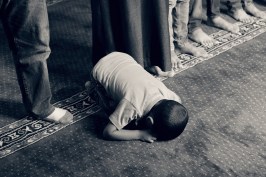
Not too long ago I was asked about facilitating a need for Islamic prayer. Easy day! I kid-1077793_1920acquired a Muslim prayer rug for the Religious Ministry Team (RMT) and gave the Service Member space for prayer. I have also given out copies of the Koran, the Book of Morman, Jewish prayer books, and yes, even Bibles, when Service Members let me know they have a need.

So no, the Chaplain Corps is not about making converts. Christians in the military are not hell-bent on making converts. Yes, it is perfectly acceptable for senior leadership to suggest Service Members engage in some form of prayer/meditation as a means to strengthen their spirituality.

On a final note, it is possible for us to hold to our own beliefs while still supporting the rights of others to have their beliefs. This is where we get to the biblical behavior lesson for the day. As Christians we are called to love our neighbors as ourselves. We are also called to treat people the way we wish to be treated. We don’t have to argue the rightness/wrongness of faith. We can be faithful to our own spirituality and still respect the faith and religions of those who disagree with us.

As the Apostle Paul writes in Colossians:

Let your speech always be gracious, seasoned with salt, so that you may know how you ought to answer each person.


God’s Big Ten: Christian Thieves

burglar-308858_1280Now let’s talk about thieves. Not just any thieves, but Christian thieves. It’s the next simple guideline in the Ten Commandments – just another single sentence.

You shall not steal.

You would think this should be simple, like the commandment against adultery. You would THINK that this isn’t something that needs to be stated. It seems like a no-brainer that we should not take thinks that don’t belong to us. Even so, here it is. And it’s not just here. The New Testament is just as plain about stealing.

While some of us may admit to stealing things (perhaps a paperclip here or there?), most would probably not admit to being a thief. Like everything else Jesus tries to tell us, it’s not just about behavior but about our heart and motivation that underlie all wrongful behavior. There are several ways to steal, but we need to come up with a working definition of stealing, something like this:

Intentionally depriving someone else of something of value to which he/she is entitled.

So I’m going to assume that, at some point of your life, everyone reading this has taken something that is not rightfully yours to take. I once read somewhere that there are different types of stealing. Let’s look at some different ways we engage in stealing.

~ Removing something that doesn’t belong to you

This could be something as small as a candy bar to something as large as robbing a bank. In the Old Testament, there’s a story of God leading Israel through fight after fight. When they get to one city, God tells them not to take any plunder from the city – NOTHING. They are to leave it all. Yet there was this one guy – Achan – who saw all this stuff sitting there and figured he would snag some of it for himself. He disobeyed God’s direct command and stole the loot and had to pay a steep price for disobeying God.

Sometimes we remove things that don’t rightfully belong to us.

~ Withholding something that should rightfully go to someone else.

For example, if you lie on your time card at work, you are withholding hours from your employer that you are being paid for. That’s stealing. Or if you withhold your kid’s birthday money from grandma because “he’s not mature enough yet,” it’s STILL stealing.

~ Using your words to manipulate others for your own benefit.

I lump cheating or other manipulation. Have you ever been the victim of a con man? I hands-966492_1920have. They can be pretty slick. Sometimes they talk so fact and move so quickly you have no idea what’s going on until they are LONG gone. Long story short, I ended up on a road side in Italy holding a ratty old jacket that somehow I ended up paying $50 for. He used his words to manipulate me. HE STOLE FROM ME!

Using your words to manipulate someone to get what you want is stealing. We can even include slander and gossip, because that steals credibility and character from the people we attach.

Proverbs 26:20 ~ Without wood, fire goes out; without a gossip, conflict dies down.

And then there’s:

Titus 3 ~ Remind them to be submissive to rulers and authorities, to obey, to be ready for every good work, 2 to slander no one, to avoid fighting, and to be kind, always showing gentleness to all people

~ Relying on others generosity rather than working for it.

pygmy-sloth-62869_1280This is to be a sloth, a bum – a mooch! Letting others take care of us without doing anything to earn it (basically your average teenager). The Apostle Paul says:

1 Thessalonians 4:10-12 ~ But we encourage you, brothers, to do so even more, 11 to seek to lead a quiet life, to mind your own business, and to work with your own hands, as we commanded you, 12 so that you may walk properly in the presence of outsiders and not be dependent on anyone.

And also:

2 Thessalonians 3:10-12 ~ 10 In fact, when we were with you, this is what we commanded you: “If anyone isn’t willing to work, he should not eat.” 11 For we hear that there are some among you who walk irresponsibly, not working at all, but interfering with the work of others. 12 Now we command and exhort such people by the Lord Jesus Christ that quietly working, they may eat their own food.

Even the Bible says that it’s not cool to live only off of the kindness of others. It’s a form of theft. Finally, we’ve got:

~ Holding back your time, talent, & treasure from God can amount to spiritual stealing.

We ALL have something we can give to God, the church, the community, and the world. The question is, are we utilizing the gifts God has given us or are we hoarding it for ourselves? Peter writes in his first letter:

Based on the gift each one has received, use it to serve others, as good managers of the varied grace of God. (1 Peter 4:10 ~)

Its all about intentionally depriving someone of something of value to which they are rightfully entitled. So What? It all comes down to this: How we treat others and How we trust God. If we really sought to treat people well, we would never take away from them. If we actually trusted God we would never have to steal.

If we fully trust God to be the King of our lives and to provide for all our needs, we would never take anything. It’s when we take our eyes off of God and focus on ourselves that we decide to take things that don’t belong to us – we try to take care of ourselves by our own means.

We don’t have to lie on our taxes. We don’t have to rob banks. We don’t have to be slothful and rely on others to take care of us.

The Bible says, “Do not steal.” This covers ALL forms of theft.

And this isn’t who God wants us to be.

Questions for Reflection
– What have you taken that doesn’t belong to you?
– How does your thievery relate to your trust in God to provide?

The Next Great Catholic Sin: Hoverboards

father-873830_1920Father Albert San Jose seems like a pretty cool dude. While many clergy are stand-offish and difficult to approach, San Jose strikes me as the kind of priest that really connects with people where they are.

Of course, I only have one example to go on – his mad hoverboard skills! Check this out:

Right? MAD skillz, yo. Because it seems a lot of adults can’t pull off what this priest makes look easy, and videos of adults wiping out have taking the internet by storm.

But it’s not all fun ‘n games for the good Father. You see, his diocese disapproved of his behavior. Not only did the diocese disapprove, but they suspended the minister.

The diocese wrote:

The Eucharist demands utmost respect and reverence. It is the Memorial of the Lord’s Sacrifice. It is the source and summit of Christian life. It is the Church’s highest form of worship. Consequently, it is not a personal celebration where one can capriciously introduce something to get the attention of the people.

Okay, sure, I understand what they’re getting at. And, to be totally honest, as one who has been labeled blasphemer for some of my religious humor I’m not sure I’m unbiased in this case. I have a pretty fair streak of irreverence in me. Of course, Father San Jose played ball with the diocese, apologizing and promising that it won’t happen again.

But I think it SHOULD! Here’s why:

A Worldwide Church (that’s all of us who are followers of Jesus) that is earth-683436_1280willing to embrace culture (in this case a hoverboard craze) WITHOUT compromising its content will have a greater impact in people’s lives. This is the church that will set the world on fire.

This is exactly what the good padre did. Did he change the liturgy? Nope. Did he alter the meaning and significance of the sacrament? Nope. All he did was carry out his usual service in an unusual way. In fact, is it so far out of the realm of reason to imagine a priest walking among the people while singing, “May the Good Lord Bless and Keep You”? If you can imagine him walking, why get upset when you add the tech? I applaud the priest for being creative in using elements from the world around him in a faith tradition that goes back thousands of years.

Even Jesus used the culture around him to make his points come alive. In the agricultural setting of the Ancient Near East, Jesus told stories of shepherds, farmers, and Samaritans. He used sticks, architecture, and the landscape to offer entryways to draw and keep people’s attention.

The Apostle Paul utilized the statue of a Pagan god to make a point about the one true God. Is singing God’s blessings on a hoverboard more outrageous than this?

Rather than shunning culture and trying to insulate the church, let us rather seek to engage culture in all of its insanity (yes, a hoverboard craze really is quite ridiculous). As long as we’re not changing the message of the cross, it shouldn’t matter what elements from the world around us we use.

The diocese talked about having the utmost respect and reverence for the Eucharist, but I’m not so sure Jesus himself was so full of reverence that he couldn’t appreciate the lighter side of faith.

While Father San Jose may never ride another hoverboard in church, I do hope that he continues to push the envelope and find ways to engage the people and culture around them – using their stuff to point to a timeless God.

———————————————————

Thanks for reading! I hope you enjoyed the piece. If it resonated with you in any way, please share it on your own social media platforms. Blessings!

When the KKK Infiltrates Your Church

churchSo there I was talking to another pastor about race issues in the church. He told me about a friend of his (yes, I know that this would never be admissible in a court of law, but it’s just a story, so chill) who was pastoring down south. The pastor was new to the church, and when a black family visited one Sunday the board later asked the pastor what he was going to do about it.

His response? “I’m not going to do anything about it.”

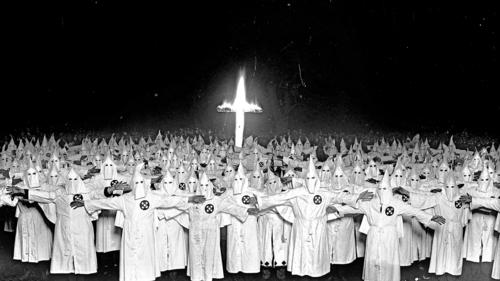
But the family visited again. And the pastor was summoned to a special meeting with the board. Upon entering the meeting, the board members pulled out their wallets and showed the pastor that they were all card-carrying members of the Ku Klux Klan. ku klux klan

I don’t know how that story ends. That wasn’t the point of our conversation. Our conversation revolved around people who consider themselves to be Christians yet behave in ways that many Christians believe to be contrary to how authentic disciples of Jesus behave.

But here’s the thing: we can’t tell people what they are. Or aren’t. people are allowed to self-identify however they like. Oh, sure, we can tell people that we don’t think their way of doing things fits into the mold, but people don’t usually listen when we try to tell them what they are.

Like an article I saw from not too long ago. A local KKK leader in Virginia claims that the KKK is a Christian organization. They just want to make sure that the white race stays white and isn’t diluted. As he says:

It’s not a hateful thing to want to maintain white supremacy.
Yet I would like to think that the majority of Christians in the world recognize that the KKK is NOT a christian organization. It’s not merely about history and heritage.ku klux klan with flag They’ve done some really atrocious things and propagate animosity and hatred towards other human beings.

But here’s the kicker: I think it IS possible for Christians to be card-carrying members of the KKK.

Don’t misunderstand me. I think the KKK is unequivocally evil. But humanity is predisposed to be evil. It’s in our nature. In theological terms we call it sin-nature. Left to our own devices there is no way we can ever achieve heaven – we will simply never be good enough. That’s the whole point of the cross – Jesus paid the price for sin because the price was TOO steep for us ever to pay.

For Christians, that means we’re all a bunch of sinners in the same boat. We’re simply on different places of our spiritual paths. Some of us are farther along than others. Some of us still have a long way to go. But faith in Christ isn’t predicated on a list of rules and behaviors. The Apostle Paul never said, “Give up all your old ways, come to Christ, and then you’ll be saved.” That’s getting the order mixed up.

We come to Christ FIRST. Then our behavior ought to be in an ever-evolving state as we grow in our Christ-likeness. I’m fond of saying:

God loves you as you are, but God does not love the way you are.

As we mature in our faith, the old way SHOULD die out. Can a Klansman be a believer? Sure, just like the Christian-murdering Paul could come to faith. But after Paul started the road of faith HE CHANGED. This is where the rubber meets the road. God loves everyone, but authentic faith brings us to a place where we are no longer the same.

Can the Christian church have Klan members in it? Yes. I would hope it did. Just as I would hope the church would have drug addicts, drug dealers, spouse abusers, porn addicts, tax-evaders, and any other horrible thing you can think of. If the church isn’t reaching sinners then we’re not doing our job.

But the beginning-of-the-journey sinner can’t stay that way. It’s not enough to come to Jesus if we refuse to change. When it comes down to it, though, it’s not our place to force change. We can welcome people and speak the truth as we know it. Then we need to trust God to do the real work of changing hearts. Because my words will most likely never change hearts. That’s not my job – it’s God’s.

That means we should treat people with a whole lotta grace, even when they’re on a different part of the journey than we are. You might have a Klansman in your church. Who knows where God will have him this time next year.

May God be patient with us all as we grow in the grace and knowledge of Him.