TV Show Review: Mercy Street

Mercy StreetEvery once in a while you’ll come across a tv show that captures your interest and imagination from the very first few minutes in. Downton Abbey was such a show.

Mercy Street is not.

Oh, I wanted to be a believer. I’m a history buff and a big fan of historical fiction. I enjoy seeing how writers can take real history and create fictional stories in and around real events and lives. I’m also a fan of PBS – it’s a terrific channel with some great programming. When I saw the trailers for Mercy Street, the first original series to come to PBS in years, I was excited.

It is executive produced by Ridley Scott. The cast includes Gary Cole and Donna Murphy. It should be EPIC! Right? Right? Yet it falls short.

The Rundown

The cinematography is fine. Not great, just fine. It’s a tv show, so normally you don’t go into it thinking you’re going to seeing something spectacular. Perhaps we’ve been spoiled with Downton Abbey, which DID have spectacular cinematography and came across more as art than television. I guess that’s my biggest beef with Mercy Street (well, that and the Union doctor who insists that the war isn’t about slavery at all but rather about preserving the Republic).

It’s just a tv show. It isn’t art.

The dialogue is painful in places. There were some questionable casting decisions. The delivery of the performances is bland at best and painful at worst. The story-line itself drags and we spend an hour really going nowhere. Some of the characters seemed better suited to be in a 21st century setting (which I’m not yet sure if the fault is with the actors or with the writing). And you can thank Ridley Scott, I’m sure, for the graphic gore of a Civil War era hospital. All said and done, it felt lackluster. My wife and I have yet to determine if we’re going to stick around for episode 2.

The Story

Mercy Street is about a Virginia hotel that is turned into a makeshift hospital. Well, I suppose it’s REALLY about the people in and around the hospital. Think ER in an 1864 setting.

Here’s the recipe:

  1. Doctors vs. Nurses
  2. Medical professionals do crazy things to save patients
  3. Romance and relationships develop throughout the whole thing
  4. Hospital personnel wrestle with personal drama/issues.
  5. Throw in a healthy mix of slavery and North vs. South story-line.
  6. Mix vigorously for 60 minutes. Pour into PBS-sized containers and served chilled.

From a biblical point of view, my favorite part is the discussion on the universality of humanity. One of the docs says something to the effect that there is no blue blood or grey blood – Soldiers are Soldiers. It’s a good point that Christians often forget. All humanity is made in God’s image. That means there is inherent value in every individual.

Where the show falls short, though, is that the doctor who espouses this “all blood is the same” ideology only applies it to white troops and fails to see how the same reasoning applies to people of color. There is no white blood or black blood – people are people. Yes, one of the nurses calls the doctor’s view of race “unenlightened,” but it goes beyond enlightenment. It’s about a basic biblical understanding of humanity and the image of God. I believe this can be a point all Christians can and should get behind.

Will I watch the next episode? I don’t know. Maybe. But I’m not excited about it.

Now ask me if I’m excited about the next episode of Downton Abbey…  😉


When Faith and the U.S. Military Collide

Let me begin by pointing out (yet again) that I speak for myself. These are my opinions soldier-708711_1280and reflections. I do not speak for the military or the government. Okay, ready?

This week I read an article saying that Michael L. “Mikey” Weinstein, founder of the Military Religious Freedom Foundation, is once again up in arms about a Christian in the military expressing his faith. This time his furor is directed against an Army Colonel who shared a story about his grandfather’s faith and encouraged Service Members to work on spiritual fitness through prayer. Weinstein’s statement says:

Apparently, Colonel Thomas Hundley can’t figure out whether he’s an active duty senior Army officer or an evangelical Christian missionary? Further, DoD can’t seem to, likewise, decipher whether they are paying him to be one or the other. Where the hell is the adult supervision for senior, active duty officer, Constitutional compliance at DoD?….

Colonel Hundley has absolutely no business or authority under American law to be conflating his Army officer rank, title and position with his professed evangelical Christian faith.

Let’s break down what’s really happening, okay?

1. The military recognizes that spiritual fitness is an important component in overall health. The Army defines spirituality:

Spirituality, as defined by Comprehensive Soldier Fitness, is strengthening a set of beliefs, principles or values that sustain a person beyond family, institutional, and societal sources of strength.

Did you see the part in there that defines spirituality as Christian faith? No? Because it isn’t there. What we’re talking about is the general concept that healthy and fit Service Members have a healthy spirituality WHATEVER THEIR PARTICULAR EXPRESSION LOOKS LIKE.

For the Colonel, his spirituality takes the shape of Christianity.

2. The Colonel did not tell people that his background needed to be everyone’s background. He related a story about his grandfather to share about his own journey, but there was no proselytizing – he wasn’t trying to convert anyone. Sharing personal stories isn’t the same thing as actively trying to convert others.

And finally,

3. Calling people to prayer is really the least offensive way of talking about spiritual growth. All the major religions have a form of prayer and/or meditation. I can encourage Christians, Muslims, Buddhists, Wiccans, Atheists, EVERYONE to engage in spiritual behavior through prayer/meditation. It’s not a behavior unique to Christianity.

Let me give you some personal examples from my own ministry as a military chaplain. My job as a chaplain is NOT to walk around finding people to whack on the head with my Bible and yell, “YOU NEED JESUS!” No, my job is to see to the free exercise of religion for ALL of the Service Members I come across.

Not too long ago I was asked about facilitating a need for Islamic prayer. Easy day! I kid-1077793_1920acquired a Muslim prayer rug for the Religious Ministry Team (RMT) and gave the Service Member space for prayer. I have also given out copies of the Koran, the Book of Morman, Jewish prayer books, and yes, even Bibles, when Service Members let me know they have a need.

So no, the Chaplain Corps is not about making converts. Christians in the military are not hell-bent on making converts. Yes, it is perfectly acceptable for senior leadership to suggest Service Members engage in some form of prayer/meditation as a means to strengthen their spirituality.

On a final note, it is possible for us to hold to our own beliefs while still supporting the rights of others to have their beliefs. This is where we get to the biblical behavior lesson for the day. As Christians we are called to love our neighbors as ourselves. We are also called to treat people the way we wish to be treated. We don’t have to argue the rightness/wrongness of faith. We can be faithful to our own spirituality and still respect the faith and religions of those who disagree with us.

As the Apostle Paul writes in Colossians:

Let your speech always be gracious, seasoned with salt, so that you may know how you ought to answer each person.


God’s Big Ten: Christian Thieves

burglar-308858_1280Now let’s talk about thieves. Not just any thieves, but Christian thieves. It’s the next simple guideline in the Ten Commandments – just another single sentence.

You shall not steal.

You would think this should be simple, like the commandment against adultery. You would THINK that this isn’t something that needs to be stated. It seems like a no-brainer that we should not take thinks that don’t belong to us. Even so, here it is. And it’s not just here. The New Testament is just as plain about stealing.

While some of us may admit to stealing things (perhaps a paperclip here or there?), most would probably not admit to being a thief. Like everything else Jesus tries to tell us, it’s not just about behavior but about our heart and motivation that underlie all wrongful behavior. There are several ways to steal, but we need to come up with a working definition of stealing, something like this:

Intentionally depriving someone else of something of value to which he/she is entitled.

So I’m going to assume that, at some point of your life, everyone reading this has taken something that is not rightfully yours to take. I once read somewhere that there are different types of stealing. Let’s look at some different ways we engage in stealing.

~ Removing something that doesn’t belong to you

This could be something as small as a candy bar to something as large as robbing a bank. In the Old Testament, there’s a story of God leading Israel through fight after fight. When they get to one city, God tells them not to take any plunder from the city – NOTHING. They are to leave it all. Yet there was this one guy – Achan – who saw all this stuff sitting there and figured he would snag some of it for himself. He disobeyed God’s direct command and stole the loot and had to pay a steep price for disobeying God.

Sometimes we remove things that don’t rightfully belong to us.

~ Withholding something that should rightfully go to someone else.

For example, if you lie on your time card at work, you are withholding hours from your employer that you are being paid for. That’s stealing. Or if you withhold your kid’s birthday money from grandma because “he’s not mature enough yet,” it’s STILL stealing.

~ Using your words to manipulate others for your own benefit.

I lump cheating or other manipulation. Have you ever been the victim of a con man? I hands-966492_1920have. They can be pretty slick. Sometimes they talk so fact and move so quickly you have no idea what’s going on until they are LONG gone. Long story short, I ended up on a road side in Italy holding a ratty old jacket that somehow I ended up paying $50 for. He used his words to manipulate me. HE STOLE FROM ME!

Using your words to manipulate someone to get what you want is stealing. We can even include slander and gossip, because that steals credibility and character from the people we attach.

Proverbs 26:20 ~ Without wood, fire goes out; without a gossip, conflict dies down.

And then there’s:

Titus 3 ~ Remind them to be submissive to rulers and authorities, to obey, to be ready for every good work, 2 to slander no one, to avoid fighting, and to be kind, always showing gentleness to all people

~ Relying on others generosity rather than working for it.

pygmy-sloth-62869_1280This is to be a sloth, a bum – a mooch! Letting others take care of us without doing anything to earn it (basically your average teenager). The Apostle Paul says:

1 Thessalonians 4:10-12 ~ But we encourage you, brothers, to do so even more, 11 to seek to lead a quiet life, to mind your own business, and to work with your own hands, as we commanded you, 12 so that you may walk properly in the presence of outsiders and not be dependent on anyone.

And also:

2 Thessalonians 3:10-12 ~ 10 In fact, when we were with you, this is what we commanded you: “If anyone isn’t willing to work, he should not eat.” 11 For we hear that there are some among you who walk irresponsibly, not working at all, but interfering with the work of others. 12 Now we command and exhort such people by the Lord Jesus Christ that quietly working, they may eat their own food.

Even the Bible says that it’s not cool to live only off of the kindness of others. It’s a form of theft. Finally, we’ve got:

~ Holding back your time, talent, & treasure from God can amount to spiritual stealing.

We ALL have something we can give to God, the church, the community, and the world. The question is, are we utilizing the gifts God has given us or are we hoarding it for ourselves? Peter writes in his first letter:

Based on the gift each one has received, use it to serve others, as good managers of the varied grace of God. (1 Peter 4:10 ~)

Its all about intentionally depriving someone of something of value to which they are rightfully entitled. So What? It all comes down to this: How we treat others and How we trust God. If we really sought to treat people well, we would never take away from them. If we actually trusted God we would never have to steal.

If we fully trust God to be the King of our lives and to provide for all our needs, we would never take anything. It’s when we take our eyes off of God and focus on ourselves that we decide to take things that don’t belong to us – we try to take care of ourselves by our own means.

We don’t have to lie on our taxes. We don’t have to rob banks. We don’t have to be slothful and rely on others to take care of us.

The Bible says, “Do not steal.” This covers ALL forms of theft.

And this isn’t who God wants us to be.

Questions for Reflection
– What have you taken that doesn’t belong to you?
– How does your thievery relate to your trust in God to provide?

It’s Not Hard to Make a Difference

In 2015 we took on an endeavor to help raise support for Jeff and Tammy, missionaries to Africa.

Thus far we have sent almost $3,200 to Africa, where they pastor a church in Zimbabwe.

But we can do more. We have such a great ability to give and we seldom realize it. Maybe you can go without your Venti Frappe once a week. A few dollars saved here and there really adds up.

Zimbabwe is in Southern Africa. It is one of the five poorest countries in the world, has one of the highest AIDS problems on the continent.Zimbabwe The average life expectancy is only 37 years and almost 10% of the population is orphaned. It is a country that desperately needs help.

Tammy says:

“One of my cousins said to me shortly before I left for Zimbabwe, ‘Tammy, I can only imagine all the prayers that went up to God by the dying parents asking Him to watch over their children and I think He is sending you there in answer to their prayers.’ That statement is what motivates me to do all that is in my power and ability by God’s AMAZING GRACE to help support these children any way I can.”

Tammy immediately began going to the orphanages in Bulawayo telling Bible Stories and doing Jana Alayra worship with them. As she began making relationships, two orphanages obtained property in September 2012 and they offered it to her, a 50+ California girl who never farmed a day in her life, to help them use the land to become self-sustainable.

Scorziell 3Thus was born “Fruitful Harvest,” a ministry with the mission of creating “Zimbabwean Products Helping Zimbabwean Children.”Scorziell 4

One of the Properties belongs to the Sandra Jones Centre. This is a home with over 70 sexually abused, abandoned, and orphaned children. Many of the young girls are between 11 and 17 years old. Most of them are victims of rape and incest and are pregnant. Many are also uneducated. Debbie Brennocks, the founder and director of the Centre, and Tammy took another leap of faith and applied for a grant that would help teach these girls a skill to help them support themselves and their baby (if they chose to keep them). It was approved and they now Sandra Jones Graduationteach the girls gardening skills and how to raise chickens.

There is no government support for these children. The orphanages feed, clothe, educate, pay medical bills, etc. for the children all by faith and the help from others God leads to them.

Please consider how you can help these children and this ministry.Scorziell 2 Whatever you donate through our GoFundMe campaign goes right to Fruitful Harvest Ministries and missionaries Jeff and Tammy Scorziell.

Click on the button to go to our fundraising campaign:

If you have any questions you can contact me or see the Fruitful Harvest Ministries website.

This holiday season, you can make a difference in the lives of children. Will you help?

God bless you all.

Chris Linzey

_ _ _ _ _ _ _ _ _ _
Please share this post on Facebook, Twitter, and Email. Even if you can’t donate, you can help spread the word and be praying for the ministry to Zimbabwe!

That’s How You Picked Your Baby’s Name? Really?

baby-84552_1920Sometimes we just look at the culture around us and shake our heads. Like last week when I heard about the top trending baby names for 2015. While some old names like Noah and Eleanor are making a comeback, there is a disturbing trend. Not disturbing theologically – just in terms of stupidity. People are naming their babies after the names of Instagram filters.iphone-1055371_1920

For those of you who are not familiar with Instagram, it’s an app that allows you to edit photos and apply different effects (filters) to your pictures.

Yes, this is how people are naming their infants. Names like Lux, Valencia, Willow, and Ludwig. And those who aren’t using a picture editing app are using teen fiction. Um…wow.

Call me a stick in the mud, but I think that names are important; to important to leave up to something silly to name a baby (if you’re named after something silly, I mean no offense – you’re a wonderful person). I like my name and it’s meaning. My wife and I put thought into naming our children. Names are important. This is especially true in the Bible. From the beginning of creation, humanity was given the task of naming.

Now out of the ground the Lord God had formed every beast of the field and every bird of the heavens and brought them to the man to see what he would call them. And whatever the man called every living creature, that was its name. ~ Genesis 2:19

Names are important.

A good name is to be chosen rather than great riches, and favor is better than silver or gold. ~ Proverbs 22:1

God himself has a thing with names. When God tells Moses to return to Egypt in order to free the enslaved Israelites, he has a naming discussion.

Then Moses said to God, “If I come to the people of Israel and say to them, ‘The God of your fathers has sent me to you,’ and they ask me, ‘What is his name?’ what shall I say to them?” ~ Exodus 3:13

The New Testament continues this understanding of the importance of names – especially the name of Jesus. Peter famously preaches:

And there is salvation in no one else, for there is no other name under heaven given among men by which we must be saved.” ~ Acts 4:12

xmas-1021208_1920As we’re now in the holiday season you’ll find a lot of Christians get bent out of shape when people remove the name of Christ from Christmas and replace it with an X. While there is no need to be upset (X is the Greek letter that has been used to abbreviate the name Christ since the beginning of the faith), it’s obvious that people CARE about names.

Names set us apart and give us identity. In a world that is constantly vying for our attention and is trying to assign us identities, it’s important that we choose our “names” carefully. Sometimes we get caught up in worldly names: Democrat, Republican, American, European, Male, Female…the list goes on and on.

But the only name that really matters is one that is given to us through faith: Christian.

How about you? What name do you want to be known by?


The Big 10: Genie in a Bottle

I’m not terribly good at it, but I love doing magic tricks.magician I love seeing kids’ eyes get big when you do something that utterly amazes them. All over the world, people are fascinated with magic and magicians. From Harry Houdini to Criss Angel, we desire to see them do the impossible.

Why do we love magic so much? Magic brings with it the idea of power and control. Somebody able to do something that nobody else can do. There’s something about magic that delights us because we like seeing people do something that nobody else can do.

The 2nd commandment is about finding that mystical power that controls the universe – that controls our lives. You see-real magic is about power. It’s about controlling the world. It’s about becoming a god. I mean people who really dabble in magic. It’s about controlling the universe.

God starts off by saying, “I am the Lord your God”. Now he continues:

2. You shall not make for yourself an image in the form of anything in heaven above or on the earth beneath or in the waters below. You shall not bow down to them or worship them; for I, the Lord your God, am a jealous God, punishing the children for the sin of the parents to the third and fourth generation of those who hate me, but showing love to a thousand generations of those who love me and keep my commandments.

There’s a lot of debate on what it means to make an image. Some traditions say no statues, no art work, no image of any kind. God says, “No images” and that’s it. Other traditions say, “Jesus on the cross is not an idol!” So what are we really talking about?

It really comes down to power and control. When the ancients made idols they would make it whatever image represented their God. They had an understanding that the idol wasn’t just an object, but that the idol was actually the resting place of that god. When the idol was sitting in the sanctuary the god was literally present in the idol. It became a home for the god.

In the ancient world in times of war, when nation would come against nation, they would go to the enemy’s temple and try to steal their gods. They thought, “If we can capture their god and bring him back to our land then we have their power and control. Their god is under our possession.”

Who controls the universe? Who controls the world? God is saying – don’t act this way with YAHWEH. God will not be contained in a box! You cannot control Me! You cannot build a statue of me and expect that to be my home. I am bigger than anything you puny little people can build! You cannot begin to contain the power that is YAHWEH!

No idols is not saying, “No foreign gods.” He already said that in the 1st commandment. We already got that out of the way. He’s saying, “Do not even think for a minute that you can contain me. I am bigger than you can imagine.”

As humans, we like to put everything in neat little boxes. We like to have control of our universe. We like to know exactly what’s going on, the one behind the wheel. My wife has never been in a wreck when I’ve been driving with her. She’s very cautious. I have no reason to doubt her ability. Even still, I like to be the one behind the wheel whenever we go anywhere. I like to be in control of where I am going.

We like to be in control of our lives, to have the power to say what we are going to do, when we are going to do it, and with whom we will do it. We live control and power. So we look for any edge to give us that control. And we treat God like a genie in a lamp.genie We live our lives independent of God, separate from his control, until we come to a roadblock that we cannot overcome ourselves. Then we pull out our lamp, rub it, and say, “Genie, I need your help…I mean, Lord, God, hear my prayer!”

Practically, we treat God as if he were no more than a genie in a lamp. He’s probably sick and tired of being used. It’s like the movie Aladdin. Genie is asked, “What would you wish for?” He wants freedom. Genie says I’m a slave to the lamp and I get tired of “Poof, what do you need?” Too often that’s how we treat God. We call on him only when we need him. We expect God to come at our beck and call to make life good for us.

But we cannot contain and control Him! He is not at our beck and call. He is God and we are not. One of my favorite stories in the Bible comes from Acts 8:

Now for some time a man named Simon had practiced sorcery in the city and amazed all the people of Samaria. He boasted that he was someone great,  and all the people, both high and low, gave him their attention and exclaimed, “This man is rightly called the Great Power of God.” They followed him because he had amazed them for a long time with his sorcery.  But when they believed Philip as he proclaimed the good news of the kingdom of God and the name of Jesus Christ, they were baptized, both men and women. Simon himself believed and was baptized. And he followed Philip everywhere, astonished by the great signs and miracles he saw.

When the apostles in Jerusalem heard that Samaria had accepted the word of God, they sent Peter and John to Samaria. When they arrived, they prayed for the new believers there that they might receive the Holy Spirit, because the Holy Spirit had not yet come on any of them; they had simply been baptized in the name of the Lord Jesus. Then Peter and John placed their hands on them, and they received the Holy Spirit.

When Simon saw that the Spirit was given at the laying on of the apostles’ hands, he offered them money and said, “Give me also this ability so that everyone on whom I lay my hands may receive the Holy Spirit.”

Peter answered: “May your money perish with you, because you thought you could buy the gift of God with money! You have no part or share in this ministry, because your heart is not right before God. Repent of this wickedness and pray to the Lord in the hope that he may forgive you for having such a thought in your heart. For I see that you are full of bitterness and captive to sin.”

Then Simon answered, “Pray to the Lord for me so that nothing you have said may happen to me.”

Peter says, “You and your money can go to Hell” You cannot buy and manage God. You cannot finance your way to heaven. God’s presence is not a commodity that can be bought, traded, or sold. You cannot keep him in a box.

What it really comes down to is, “Who’s will is going to be in control?” Are we going to bend our will to his? Or will we try to bend his will to ours? The 2nd command commandment is about humans trying to bend his will to ours. “God, here is your resting place. When I need you I’m gonna come get you,” and God says, “Uh uh! No way, brother. It don’t work like that.”

God cannot be contained in a little statue. Proverbs 3:5-6 says:

Trust in the Lord with all your heart and lean not on your own understanding; in all your ways submit to him, and he will make your paths straight.

Who’s in control of your life? Is He? He’s supposed to be. As you look at your life and the things you do, who do you bend your will to? Or can you admit that you’ve been treating God like a genie in a lamp. I do my thing until I’m in trouble and then pray, “Jesus, save me!”

Poof, what do you need?

That’s not the way it’s supposed to be. I think we learn 2 things from Simon: 1) God cares about what’s going on in the human world. So much so that he is willing to do the miraculous if we just open our eyes and ask him. God wants to work in our lives. He wants to make the sick whole. He wants to repair broken relationships. God wants you to be whole and complete. He cares about us. 2) But he is not a genie in a lamp. He is not at our beck and call when we need him only to be ignored when things are going well. That’s our tendency. It’s my tendency, so I assume it’s yours, too.

We let Jesus alone until trouble is upon us. Then we run to him and cry out, “Teacher! Don’t you care that we’re about to die?” And Jesus asks, “Where is your faith? Don’t you know who is in the boat with you?”

He’s not your genie. He’s the creator of the universe. The one who came, took our form, and calls us “friends.” What other god can say to his creation, “I desire to be in relationship with you”? No other god!

The 2nd commandment helps us understand who we are and who He is. We need God’s presence more than ever before. We struggle with illness. Relationships are broken and are struggling. We feel hurt and lost. We feel like we’re drowning and the waves are sweeping over the boat. The power of God can rescue us. Not because he’s a genie in a lamp, but because he cares about you and me.

Simon had no need for God as long as he had his magic. Let us stop turning to God only when we have needs. Stop treating him like a genie in a lamp. Let us eagerly pursue his presence and power every day, through the good and the bad.

Questions for Reflection

  • What do you hold on to that controls your life?
  • What “magic” do you use to keep order?
  • Is God first? Or is he merely one among many?

When the KKK Infiltrates Your Church

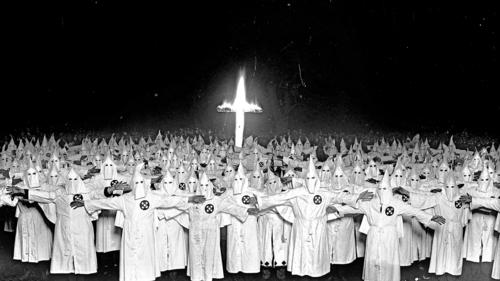
churchSo there I was talking to another pastor about race issues in the church. He told me about a friend of his (yes, I know that this would never be admissible in a court of law, but it’s just a story, so chill) who was pastoring down south. The pastor was new to the church, and when a black family visited one Sunday the board later asked the pastor what he was going to do about it.

His response? “I’m not going to do anything about it.”

But the family visited again. And the pastor was summoned to a special meeting with the board. Upon entering the meeting, the board members pulled out their wallets and showed the pastor that they were all card-carrying members of the Ku Klux Klan. ku klux klan

I don’t know how that story ends. That wasn’t the point of our conversation. Our conversation revolved around people who consider themselves to be Christians yet behave in ways that many Christians believe to be contrary to how authentic disciples of Jesus behave.

But here’s the thing: we can’t tell people what they are. Or aren’t. people are allowed to self-identify however they like. Oh, sure, we can tell people that we don’t think their way of doing things fits into the mold, but people don’t usually listen when we try to tell them what they are.

Like an article I saw from not too long ago. A local KKK leader in Virginia claims that the KKK is a Christian organization. They just want to make sure that the white race stays white and isn’t diluted. As he says:

It’s not a hateful thing to want to maintain white supremacy.
Yet I would like to think that the majority of Christians in the world recognize that the KKK is NOT a christian organization. It’s not merely about history and heritage.ku klux klan with flag They’ve done some really atrocious things and propagate animosity and hatred towards other human beings.

But here’s the kicker: I think it IS possible for Christians to be card-carrying members of the KKK.

Don’t misunderstand me. I think the KKK is unequivocally evil. But humanity is predisposed to be evil. It’s in our nature. In theological terms we call it sin-nature. Left to our own devices there is no way we can ever achieve heaven – we will simply never be good enough. That’s the whole point of the cross – Jesus paid the price for sin because the price was TOO steep for us ever to pay.

For Christians, that means we’re all a bunch of sinners in the same boat. We’re simply on different places of our spiritual paths. Some of us are farther along than others. Some of us still have a long way to go. But faith in Christ isn’t predicated on a list of rules and behaviors. The Apostle Paul never said, “Give up all your old ways, come to Christ, and then you’ll be saved.” That’s getting the order mixed up.

We come to Christ FIRST. Then our behavior ought to be in an ever-evolving state as we grow in our Christ-likeness. I’m fond of saying:

God loves you as you are, but God does not love the way you are.

As we mature in our faith, the old way SHOULD die out. Can a Klansman be a believer? Sure, just like the Christian-murdering Paul could come to faith. But after Paul started the road of faith HE CHANGED. This is where the rubber meets the road. God loves everyone, but authentic faith brings us to a place where we are no longer the same.

Can the Christian church have Klan members in it? Yes. I would hope it did. Just as I would hope the church would have drug addicts, drug dealers, spouse abusers, porn addicts, tax-evaders, and any other horrible thing you can think of. If the church isn’t reaching sinners then we’re not doing our job.

But the beginning-of-the-journey sinner can’t stay that way. It’s not enough to come to Jesus if we refuse to change. When it comes down to it, though, it’s not our place to force change. We can welcome people and speak the truth as we know it. Then we need to trust God to do the real work of changing hearts. Because my words will most likely never change hearts. That’s not my job – it’s God’s.

That means we should treat people with a whole lotta grace, even when they’re on a different part of the journey than we are. You might have a Klansman in your church. Who knows where God will have him this time next year.

May God be patient with us all as we grow in the grace and knowledge of Him.

When Middle School Students Are Forced to Study Islam

Tennessee’s Butt is in the news.

Seriously, Tennessee Representative Sheila Butt is making headlines. Go ahead and get the jokes and snickering out of the way right now. I’ll give you a minute.

Ready now?

Cool.

Here’s the deal – parents of middle school students got together to complain about the curriculum used to teach their students about Islam. It seems they thought there was more indoctrination than simple instruction. islamic-educationIf you read the whole article you will see that students aren’t subjected to Islam alone. The middle school curriculum takes them through several of the world’s major religions, including Christianity and Judaism.

Enter Ms. Butt. She’s trying to pass legislation prohibiting schools from teaching religious doctrine to students before 10th grade. Of course, the left is getting fired up over the issue. The Huffington Post politics page wrote about Rep. Butt’s attempt to push this legislation through. The feel of the piece is, “Those Islamophobic Christians are at it again!”

And they’re partly right.

Partly.

The legislation DOES seem to be anti-Islam in nature. But don’t let the Huffington Post article fool you. They quote an educator who lauds the contributions of Islam to the world (like the invention of algebra). The problem is that many of the contributions from Islam were actually from others cultures.

But here’s the thing: Christians don’t need to be up in arms about the world’s religions being taught in schools. Good parents are actively involved in the education of their children and should be having discussions about class material no matter what the content is. The “We don’t want the schools teaching this stuff to our kids” attitude only rears its head when parents take a hands-off approach to their kids’ education. Parents, find out what your kids are learning and talk about it at home. Teach them what the Bible says.

Here’s the other thing: Christians don’t need to be up in arms about the world’s religions being taught in schools (yes, I know I already said that). Jesus is big enough to handle middle school students hearing about other faith traditions. I can’t see the Apostle Paul getting his knickers in a twist when people offered competing world views. This is the guy who once wrote:

If someone who isn’t a Christian asks you home for dinner, go ahead; accept the invitation if you want to. Eat whatever is offered to you and don’t ask any questions about it. Your conscience should not be bothered by this. (1 Corinthians 10:27)

He wasn’t bothered by what other people believed – he simply continued to preach the truth that he always preached. I think we can do the same.

So be actively involved in your kids’ education, but trust that God is a big God and isn’t threatened by other faiths.

I’m Not Judging You, Jesus Is

This past week my wife and I were watching an interview with a celebrity when the interview asked about how she wanted religious people to respond to her when she was clearly living a life that conflicted with biblical values (granted, as read from a conservative Christian point of view).

The celebrity noted that she just wanted to be left to live her life without feeling judged by Christians.judging

There it is. That’s the kicker. What non-Christians really want from Christians is not to feel judged for who they are and what they do. Sounds simple enough, sure, but it’s an impossibility.

You see, the judging doesn’t come from people. The judging comes from the Bible. Yes, it might be communicated by people. Some do a better job at biting their tongues and not speaking the judgment, but the judgment originates with God, not with humanity.

People are quick to bring up Matthew 7:1 ~

“Stop judging, that you may not be judged.”

But they ignore the rest of the passage. Matthew 7:2 says,

“For as you judge. So will you be judged, and the measure with which you measure will be measured out to you.”

Then in Matthew 7:5 Jesus says,

“Remove the wooden beam from your eye first; then you sill see clearly to remove the splinter from your brother’s eye.”

These passages are not telling Christians to avoid judging. They are telling us to take care of our own lives before trying to deal with issues in the lives of others. Truth be told, the Bible DOES judge. It’s filled with stories of good and bad character examples. It’s filled with lists of sins to avoid and qualities to embrace.

It is impossible to be a follower of Jesus and avoid feeling judged on our behavior. You should just shut the Bible and toss it in the trash. If you’re looking for a religion that lets people do what they want without any judgment, keep on looking – Christianity isn’t for you.

As for the rest of us who are Christians, while God is the one who passes judgment and tells us about it through the Bible, we CAN exercise discretion and wisdom in how we talk about judgment to people. Non-Christians typically don’t want to be hit upside the head with talk about judgment. Usually that kind of talk works best when you have a relationship with someone and, through conversation, they give you an “open door” – a green light to talk about the Bible and about faith.

We can go a long way in improving the relationship between Christianity and the world if we would understand that God DOES judge but that we don’t always have to shout it from the rooftops.

You know, we can be shrewd as serpents yet innocent as doves. I think I read that somewhere once.

Dear Christian, How Can You Be in the Military?!

Let me begin with a disclaimer:

I do not represent the United States government or the Chaplain Corps. I speak for myself. My thoughts and opinions are just that – my own. 😉

Now that we got that outta the way, here we go!

A couple months ago a friend asked me about my chosen profession as a military chaplain

LT Chris Linzey, CHC, USN

(I’ve spent 5 years in the Army Reserve and am now an Active Duty Navy Chaplain). The questions went like this:

How can you carry out Christ’s commands to love our enemies, to not resist evil, to overcome evil with good, to not kill – now that you’ve taken an oath to the military and abide by its laws? What are you counseling the service men and women?

This post isn’t going to get into the ins and outs of Just War Theory. I’ve written about it elsewhere (as have MANY others who understand it a lot better than I do).

But I do want to address the idea that Christians should not be in the military because we are called by God to be set apart.

1) From a biblical perspective, all of the instructions in the New Testament about loving enemies, overcoming evil with good, etc. are not instructions to officials about the best way to run a government. They are instructions about how we ought to conduct ourselves in our personal relationships. Remember that in the Old Testament the God who commands, “Thou shall not kill” is the same God that allows capital punishment for certain crimes. There is a difference between our personal ethics and our corporate ethics – and this difference isn’t a bad thing. It’s what allows us to pursue peace and healthy relationships while still being a society that deals in justice and punishment.

2) Coming to faith has never meant resigning from military service. Even in the Bible, Soldiers were not condemned for their military service or told to quit. In fact, the Bible tells us about Soldiers coming to faith.

John went throughout the whole region of the Jordan, proclaiming a baptism of repentance for the forgiveness of sins…. “Produce good fruits as evidence of your repentance….” Soldiers also asked him, “And what is it that we should do?” He answered them, “Do not practice extortion, do not falsely accuse anyone, and be satisfied with your wages.” (Luke 3:3-14)

If being a Soldier in the Roman army were wrong, why are Soldiers not condemned? Rather, they are told to be satisfied with their wages. That means they’re staying in the service!

3) Finally, as a Chaplain, it’s not my job to fight. The two purposes of military Chaplains are a) to spiritually care for service members and b) to advise Command about ethics, moral, and spirituality. In that sense, John the Baptist was the first Chaplain beginning in the New Testament era! He spiritually cared for Soldiers and helped them move in a godly direction.soldiers-praying

I’m not making a case for or against any particular war or military action. We will be debating the morality of military action until the end of time. My only point is that there is nothing intrinsically immoral or ungodly about Christians serving in the military.

In the military we are taught to obey ALL lawful orders. Should the time come when the military gives Christians orders that are unlawful or conflict with personal morality and ethics, Service Members are free to disobey the orders – just know that you will have to face the consequences of that decision 😉

At the end of the day I believe the Chaplain Corps makes the military a better place. We get to speak to issues of ethics and morality. We get to help Service Members pursue spiritual health. And, since the Bible clearly has no problem with God-followers serving in the military, I will not feel guilty about wearing the cloth of my nation.

I proudly serve my God while I proudly serve in my country’s armed forces.

——————————————————————–

I welcome all discussion, just keep it civil and polite. If this post resonates with you in any way, please share it on Facebook, Twitter, or email!