The Best in the Biz

“Interestingly, although the chaplain has to be an ordained representative of an acknowledged faith group, the Chaplain Assistant does not have to be religious at all. We’ve worked with all kinds of Chaplain Assistants: religious and non-religious, Christian and non-Christian, ministry-minded and non-ministry-minded, personable and stand-offish, good and bad, male and female.”

~ Military Ministry: Chaplain in the Twenty-First Century

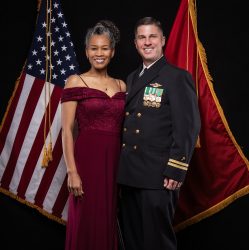
I was an Army Reserve Chaplain for 5 years and now an Active Duty Navy Chaplain going on 11 years. In my 16 years of uniformed service, I have been exceptionally blessed and fortunate to have some really good Chaplain Assistants! In the Navy we call them Religious Program Specialists and abbreviate it to RP. I maintain contact and relationships with almost all of the the Assistants and RPs I’ve ever had – the bond between Chaplain and RP can grow pretty significantly. You spend a lot of time together working towards a common goal.

One of the best I’ve ever served with was a young guy who was new to the Fleet when I arrived at 2D Marine Division. We hit the ground running as the Religious Ministry Team (RMT) at a Marine Corps infantry battalion. We went everywhere together. While doing workups for deployment, we participated in conditioning hikes, or humps/rucks, with every single company in the battalion. One time we even did two hikes in the same week! When the second hike was over, I promised my RP that we would never do two in one week again. 🙂

Processed with Focos

A good chaplain will make sure to take care of his/her assistant. For me, that meant making sure that my RP was present for every field exercise and training opportunity that the battalion had. The military chaplain can be hindered by a bad assistant, but our ministry is exponentially boosted by a a good assistant. I made sure that my RP was able to participate in every range the battalion had. One time one of our rifle companies was dropping mortars on a range, They asked if I wanted to drop rounds. Military policy says that chaplains will not do anything that would violate our non-combatant status. I politely told my Marines that, while I would LOVE to send rounds downrange, I could not in good conscience. I DID push for my RP to have an opportunity, and the Marines ran him through the safety and training and then let him drop mortars.

My RP was a Seaman at the time and was brand new to the Fleet. That didn’t slow him down at all. He managed all of the logistics for the Religious Ministry Team (RMT). He scheduled counseling appointments for me. He had a personal mission to make sure that the Ministry Team never brought disgrace upon the Chaplain Corps or made Chaplains and RPs look bad in the eyes of our Marines. He was the kind of assistant a Chaplain could trust to run the office no matter what happened or who was asking for help.

My RP and I deployed together with 2nd Battalion 8th Marines, an infantry battalion in the Marine Corps. While overseas, he never slowed down or missed a step. When he promoted to Petty Officer Third Class, he asked if I would pin on his rank. It was an honor to do so! After our deployment, 2D Marine Division split us up. He went to Headquarters and I went to a different battalion. When I learned that I was being extended in my tour to deploy again without an RP, I called Division and said, “Give me my RP back!” Then I jumped on the phone with my assistant and said, “Division is sending me out on another deployment. I don’t have an RP at the moment – do you want to deploy with me again?”

Without ANY hesitation, RP3 (Religious Program Specialist, Petty Officer Third Class) said, “Let’s go, chaps!” So we deployed again. My assistant and I had been together on both coasts of the U.S., deployed, to Asia, and now deployed to the Arctic. For three years, this man was my right hand. All of the logistics of the ministry team were handled with great skill. I wouldn’t have had the ministry success I had had it not been for the tireless work of my assistant.

A good chaplain will have their ministry exponentially enhanced by a great assistant. Because you never know who you will get, the savvy chaplain will make sure to pour as much time, effort, and energy into their assistant as they do into everyone else. It makes a difference in your success as a chaplain!

~ Chaplain Chris Linzey, United States Navy

See more about working with Chaplain Assistants in Chaplain Linzey’s new book, Military Ministry: Chaplains in the Twenty-First Century.

The Shape of Chaplain Ministry

“Ministry can take many shapes. Some chaplains work in a chapel environment. Some chaplains never preach from behind a pulpit. They might serve communion from the tailgate of a Hummer or a truck….” ~ Military Ministry: Chaplains in the Twenty-First Century (page 187)

I wasn’t always a Navy chaplain. In fact, I went to Bible college so that I could train to be a pastor. I joined the staff of a tiny church in 1997 when I was still a student working on my degree in biblical studies. From that point on, I had been involved in church ministry of various sorts. I was a youth pastor. I was a music/worship pastor. I was a preaching pastor. I was an associate pastor. I was a senior pastor.

None of that put in my head the different kinds of places where I would be providing ministry as a chaplain!

One of my assignments was the command chaplain of USS FORT MCHENRY (LSD 43). An LSD is a Navy dock landing ship, an amphibious ship designed to carry Marines and their equipment overseas.

We were deployed in 2019 and were in the middle of the Persian Gulf during the Easter season. Following the biblical story of Easter, many Christians participate in a sunrise service on Easter morning. I asked the Sailors and Marines who participated in religious services on the ship if they would be interested in a sunrise Easter service while we were underway. They all said yes!

So I got permission from the chain of command to use the ship’s flight deck for our service. My Religious Program Specialist (the Navy’s version of a Chaplain Assistant or Religious Affairs Specialist) set up a table on the flight deck for a make-shift altar. We set up our cross and communion elements. I had an iPod and speaker for the music part of our worship service, and one by one my Marines and Sailors made their way out to the flight deck. As the sun rose over the Persian Gulf, we read the Easter story and celebrated the resurrection together.

Military chaplains of all faiths and traditions have amazing opportunities to lead services in places we never thought we would be. What does the shape of chaplain ministry look like? There is no single shape. We bring our ministry wherever the Service Members are. There is no ministry like it!

Read more about the shape of chaplain ministry and other stories of life as a chaplain in Military Ministry: Chaplains in the Twenty-First Century.

If you have questions or comments, please feel free to ask! I absolutely LOVE talking about ministry in the military!

Holding On to Your Why: Finding Strength in Purpose

Life in the Marine Corps is extremely challenging. From the moment you step onto the yellow footprints at recruit training you are tested physically, mentally, and emotionally. There are days, maybe even weeks, when you feel overwhelmed. Exhaustion threatens to consume you and doubt whispers in your ear, urging you to quit. It’s not any different in the Fleet. Sure, the particulars and details change, but life still has difficulties and challenges. There are times when we think it would just be easier to throw in the towel and quit. In these moments, it is crucial to remember why you started this journey in the first place. Holding on to your “why”—your personal sense of purpose—will give you the strength to press forward when the road ahead seems impossible.

In the Bible, Proverbs 3:5-6 reminds us, “Trust in the Lord with all your heart and lean not on your own understanding; in all your ways submit to him, and he will make your paths straight.” This verse speaks directly to the importance of faith and perseverance. There will be times when your understanding fails, when you can’t see the finish line, and when the hardships of life in the military seem too great. But if you hold onto your purpose and trust that you have been placed on this path for a reason, you can find the strength to keep going.

Your “why” is personal. Maybe you joined to serve your country, to challenge yourself, or to provide a better future for your family. Maybe you felt a calling to be part of something greater than yourself. Whatever your reason, it is what gives meaning to your sacrifices. When you are standing in the rain during a tough field exercise, when you are struggling to master a difficult skill, or when the weight of leadership feels too heavy, your purpose will be your anchor. It can be that higher purpose that gives you inner strength. This is what spiritual fitness looks like.

At times, life will feel like a battlefield, both physically and spiritually. But hardship is not meant to break you—it is meant to shape you. In my faith tradition, Saint Paul writes in Romans 5:3-4, “Not only so, but we also glory in our sufferings, because we know that suffering produces perseverance; perseverance, character; and character, hope.” The struggles you endure now are forging you into a stronger, wiser, and more resilient person.

So when you feel overwhelmed, take a moment to remind yourself of your “why.” Write it down. Speak it out loud. Perhaps even pray about it. Remember that your purpose is greater than any single obstacle you face. And above all, trust in your higher purpose to guide you and give you inner strength. Keep moving forward, one step at a time, knowing that perseverance will lead to victory.

When Faith and the U.S. Military Collide

Let me begin by pointing out (yet again) that I speak for myself. These are my opinions soldier-708711_1280and reflections. I do not speak for the military or the government. Okay, ready?

This week I read an article saying that Michael L. “Mikey” Weinstein, founder of the Military Religious Freedom Foundation, is once again up in arms about a Christian in the military expressing his faith. This time his furor is directed against an Army Colonel who shared a story about his grandfather’s faith and encouraged Service Members to work on spiritual fitness through prayer. Weinstein’s statement says:

Apparently, Colonel Thomas Hundley can’t figure out whether he’s an active duty senior Army officer or an evangelical Christian missionary? Further, DoD can’t seem to, likewise, decipher whether they are paying him to be one or the other. Where the hell is the adult supervision for senior, active duty officer, Constitutional compliance at DoD?….

Colonel Hundley has absolutely no business or authority under American law to be conflating his Army officer rank, title and position with his professed evangelical Christian faith.

Let’s break down what’s really happening, okay?

1. The military recognizes that spiritual fitness is an important component in overall health. The Army defines spirituality:

Spirituality, as defined by Comprehensive Soldier Fitness, is strengthening a set of beliefs, principles or values that sustain a person beyond family, institutional, and societal sources of strength.

Did you see the part in there that defines spirituality as Christian faith? No? Because it isn’t there. What we’re talking about is the general concept that healthy and fit Service Members have a healthy spirituality WHATEVER THEIR PARTICULAR EXPRESSION LOOKS LIKE.

For the Colonel, his spirituality takes the shape of Christianity.

2. The Colonel did not tell people that his background needed to be everyone’s background. He related a story about his grandfather to share about his own journey, but there was no proselytizing – he wasn’t trying to convert anyone. Sharing personal stories isn’t the same thing as actively trying to convert others.

And finally,

3. Calling people to prayer is really the least offensive way of talking about spiritual growth. All the major religions have a form of prayer and/or meditation. I can encourage Christians, Muslims, Buddhists, Wiccans, Atheists, EVERYONE to engage in spiritual behavior through prayer/meditation. It’s not a behavior unique to Christianity.

Let me give you some personal examples from my own ministry as a military chaplain. My job as a chaplain is NOT to walk around finding people to whack on the head with my Bible and yell, “YOU NEED JESUS!” No, my job is to see to the free exercise of religion for ALL of the Service Members I come across.

Not too long ago I was asked about facilitating a need for Islamic prayer. Easy day! I kid-1077793_1920acquired a Muslim prayer rug for the Religious Ministry Team (RMT) and gave the Service Member space for prayer. I have also given out copies of the Koran, the Book of Morman, Jewish prayer books, and yes, even Bibles, when Service Members let me know they have a need.
So no, the Chaplain Corps is not about making converts. Christians in the military are not hell-bent on making converts. Yes, it is perfectly acceptable for senior leadership to suggest Service Members engage in some form of prayer/meditation as a means to strengthen their spirituality.

On a final note, it is possible for us to hold to our own beliefs while still supporting the rights of others to have their beliefs. This is where we get to the biblical behavior lesson for the day. As Christians we are called to love our neighbors as ourselves. We are also called to treat people the way we wish to be treated. We don’t have to argue the rightness/wrongness of faith. We can be faithful to our own spirituality and still respect the faith and religions of those who disagree with us.

As the Apostle Paul writes in Colossians:

Let your speech always be gracious, seasoned with salt, so that you may know how you ought to answer each person.


Dear Christian, How Can You Be in the Military?!

Let me begin with a disclaimer:

I do not represent the United States government or the Chaplain Corps. I speak for myself. My thoughts and opinions are just that – my own. 😉

Now that we got that outta the way, here we go!

A couple months ago a friend asked me about my chosen profession as a military chaplain

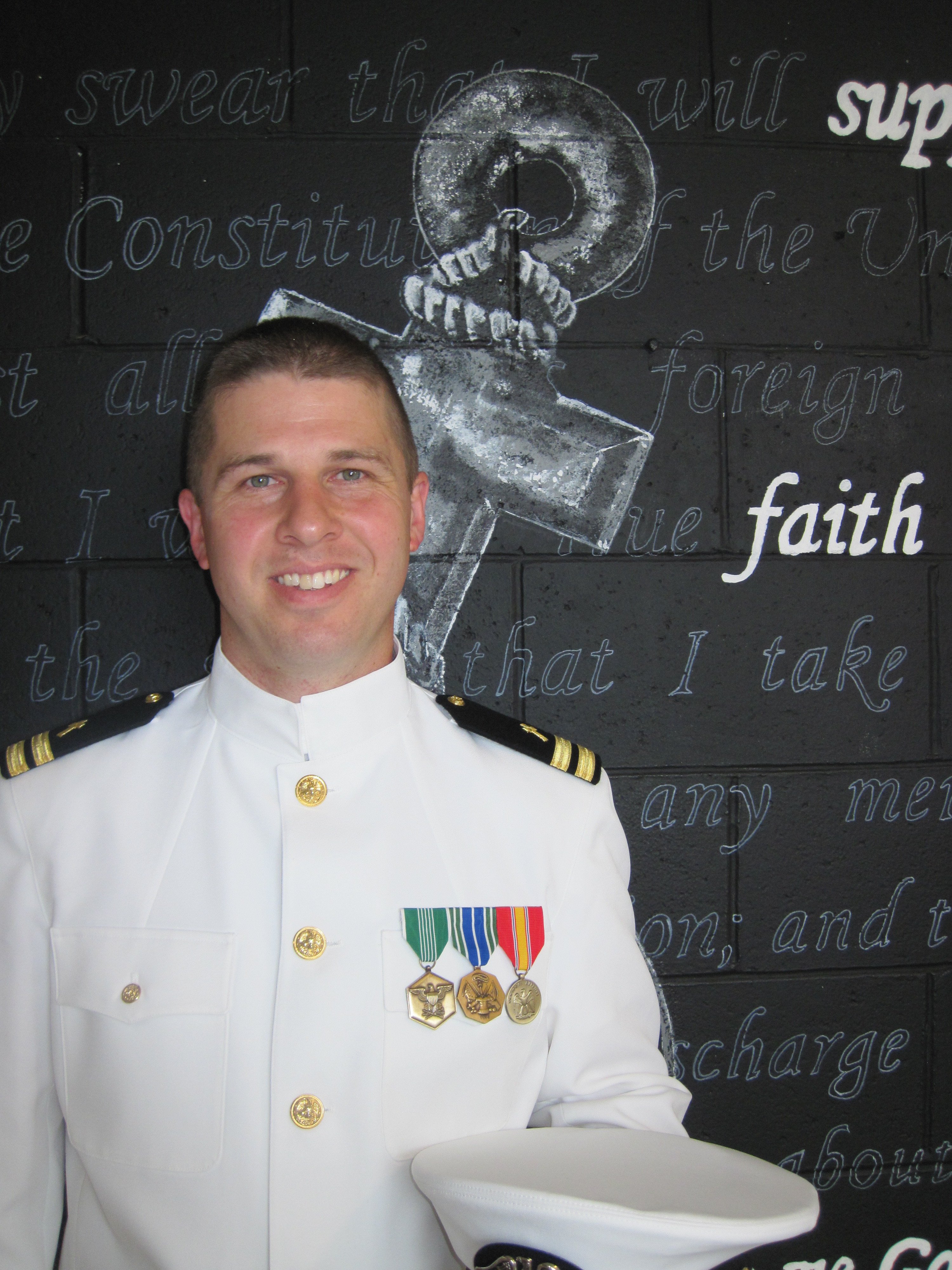
LT Chris Linzey, CHC, USN

(I’ve spent 5 years in the Army Reserve and am now an Active Duty Navy Chaplain). The questions went like this:

How can you carry out Christ’s commands to love our enemies, to not resist evil, to overcome evil with good, to not kill – now that you’ve taken an oath to the military and abide by its laws? What are you counseling the service men and women?

This post isn’t going to get into the ins and outs of Just War Theory. I’ve written about it elsewhere (as have MANY others who understand it a lot better than I do).

But I do want to address the idea that Christians should not be in the military because we are called by God to be set apart.

1) From a biblical perspective, all of the instructions in the New Testament about loving enemies, overcoming evil with good, etc. are not instructions to officials about the best way to run a government. They are instructions about how we ought to conduct ourselves in our personal relationships. Remember that in the Old Testament the God who commands, “Thou shall not kill” is the same God that allows capital punishment for certain crimes. There is a difference between our personal ethics and our corporate ethics – and this difference isn’t a bad thing. It’s what allows us to pursue peace and healthy relationships while still being a society that deals in justice and punishment.

2) Coming to faith has never meant resigning from military service. Even in the Bible, Soldiers were not condemned for their military service or told to quit. In fact, the Bible tells us about Soldiers coming to faith.

John went throughout the whole region of the Jordan, proclaiming a baptism of repentance for the forgiveness of sins…. “Produce good fruits as evidence of your repentance….” Soldiers also asked him, “And what is it that we should do?” He answered them, “Do not practice extortion, do not falsely accuse anyone, and be satisfied with your wages.” (Luke 3:3-14)

If being a Soldier in the Roman army were wrong, why are Soldiers not condemned? Rather, they are told to be satisfied with their wages. That means they’re staying in the service!

3) Finally, as a Chaplain, it’s not my job to fight. The two purposes of military Chaplains are a) to spiritually care for service members and b) to advise Command about ethics, moral, and spirituality. In that sense, John the Baptist was the first Chaplain beginning in the New Testament era! He spiritually cared for Soldiers and helped them move in a godly direction.soldiers-praying

I’m not making a case for or against any particular war or military action. We will be debating the morality of military action until the end of time. My only point is that there is nothing intrinsically immoral or ungodly about Christians serving in the military.

In the military we are taught to obey ALL lawful orders. Should the time come when the military gives Christians orders that are unlawful or conflict with personal morality and ethics, Service Members are free to disobey the orders – just know that you will have to face the consequences of that decision 😉

At the end of the day I believe the Chaplain Corps makes the military a better place. We get to speak to issues of ethics and morality. We get to help Service Members pursue spiritual health. And, since the Bible clearly has no problem with God-followers serving in the military, I will not feel guilty about wearing the cloth of my nation.

I proudly serve my God while I proudly serve in my country’s armed forces.

——————————————————————–

I welcome all discussion, just keep it civil and polite. If this post resonates with you in any way, please share it on Facebook, Twitter, or email!