Sorry, Charlie – Racism Is Real

I just saw this short video from Brave New Films. It’s totally worth the 3 minutes to watch it.

So let’s speak frankly. I’m not naïve, and I understand that statistics can be skewed to meet particular agendas. Statistics also don’t give the REASONS behind statistics. By that I mean that some racial discrepancies COULD be attributed to factors unrelated to race.

Still, you can’t negate the EXPERIENCE of many minorities in the USA, and experience (even my experience being a white guy married to a brown-skinned woman) shows us that racism is still a problem in our nation. No, this isn’t a post to justify the violence in Baltimore. The other day Barnabas Piper said:

Random violence and theft isn’t ever the right response to oppression. Neither can it be used as an excuse to overlook the oppression.

That’s it right there. Was the rioting, looting, and violence acceptable? Absolutely not. But that response doesn’t excuse the rest of the nation from hearing the complaints behind the poor response. We get into a dangerous circle of violence and blindness when we ignore the valid concerns. Many of our responses to the riots have been equally violent – not physically but mentally, psychologically, and, yes, even spiritually.

“What kind of hippie-dippy nonsense are you spouting, Chris?”

Just this – I’ve seen a lot of hatred and animosity directed towards rioters. I’m talking about pictures, memes, and posts that spew further racist idiocy. ObamaThis includes accusing Mr. Obama of WANTING the riots – one of the most idiotic accusations I’ve ever heard in my life. And that’s NOT okay. Why do we expect anything to change when we continue the violence against others?

This isn’t the Christian way.

Christians are called to rise above racial differences and be people who humble ourselves, strive to serve others, and consider others BETTER than ourselves (I didn’t make any of that up – it’s from the Bible).

It’s time to knock off the racist garbage and listen to the complaints. It’s time to engage in authentic dialogue. It’s time to pursue the well-being of people who feel oppressed.

This is the Christian way.

_ _ _ _ _ _ _ _ _
I welcome all discussion, just keep it civil and polite. If this post resonates with you in any way, please share it on Facebook, Twitter, or email!

Searching For Sunday: A Review of Rachel Held Evans’s Book

Rachel Held Evans I’ll admit it; I’ve got a love/hate relationship with Rachel Held Evans. Not that she knows it – we’ve never met. But I read her blog and her stuff on social media.

Some of the questions she has for and about how the church behaves are right on. I’ve wrestled with some of the same issues myself. At the same time, she gets a lot of it wrong, goes too far on some issues, and completely misses it on other issues. She has a tendency to get tunnel vision – she’s got her couple core issues that get played on repeat over, and over, and over, and…well, you get it.

Searching for Sunday
So when I heard she had a new book out about “loving, leaving, and finding the church,” I thought I’d give it a read. Before even reading it I’d seen liberals praising it and conservative lambasting it. So I read it for myself.

Ms. Evans divides her book into a prologue and 7 sections, following the sacraments of the Church: Baptism, Confession, Holy Orders, Communion, Confirmation, Anointing of the Sick, and Marriage. Since she wrote in this order, my review will take one section at a time in the same order. Here’s my take on it.

Prologue:

Ms. Evans begins laying the groundwork for the rest of the book, setting the stage for her own journey away from the evangelical church. As I expected, she starts right in by bringing up her pet peeves with evangelical faith: biblical interpretation, religious pluralism, sexuality (feminism and LGBTQ issues), racial reconciliation, and social justice. These issues come as no surprise, for they are the resounding gong of all of her work.

The problem for me comes a few pages into the prologue where she writes:

The truth is, I don’t even bother getting out of bed many Sunday mornings, especially on days when I’m not sure I believe in God or when there’s an interesting guest on Meet the Press.

She finishes the prologue with similar words:

It’s about why, even on days when I suspect all this talk of Jesus and resurrection and life everlasting is a bunch of bunk designed to coddle us through an essentially meaningless existence, I should still like to be buried with my feet facing the rising sun. Just in case.

This is the problem. The entire rest of the book isn’t coming from a place of faith. It’s coming from a place of un-faith (yes, I know that’s not a real word). I’m not against asking God questions – even difficult questions. I firmly believe that God is big enough to handle any questions we may have. But we’re not talking about mere questions here. We’re talking about lack of faith.

People like Ms. Evans like to use the example from the Gospels when a Jesus has a conversation with a man (see Mark 9):

Jesus: All things are possible to him who believes.
Man: Lord, I believe, help my unbelief!”

But this case is different. The man comes from a place of belief and is asking help to get the rest of the way. Ms. Evans admittedly approaches much of her life beginning with unbelief.

If you spend much time doubting the resurrection actually happened can you really consider yourself a Christian? Ms. Evans seems to like the IDEA of church when it works to serve people and the issues she cares about, but she doesn’t seem to like the faith that is the FOUNDATION of that church. While some of her criticisms may have validity, it is difficult for me to receive criticisms from someone who doubts in the resurrection or the existence of God.

I don’t judge her for her lack of faith. I don’t judge anyone who is a non-believer. But I think Ms. Evans is fooling herself to say she doubts the existence of God and the resurrection yet still makes a claim to be Christian. She seems to fit better in the category (I know she hates labels, but they help us make sense of the world) of agnostic.

My other problem with the prologue is that Ms. Evans claims:

My aim in employing these seven sacraments is not theological or ecclesiological, but rather literary.

Yet the book IS theological and ecclesiological. My problem is not that she claims not to but then does write on theology and ecclesiology (theology as applied to the nature and structure of the Christian Church) but that I think she gets some of the theology wrong. So here we go…

Baptism: Baptism

From the get-go I don’t think Ms. Evans has the right view of baptism. As she tells her own story she lists various baptism traditions that could have been had she not been born to an evangelical family. But among the list of baptismal traditions she mentions the Mormon tradition. It’s mixed right in there with evangelicals, Orthodox, Catholic, and Presbyterian.

But Mormonism is NOT a branch of Christianity. The fact that she includes Mormonism is another indicator that she falls under the agnostic column more than the Christian.

Mormonism notwithstanding, Ms. Evans and I disagree with the nature and significance of baptism. She writes:

In the ritual of baptism, our ancestors acted out the bizarre truth of the Christian identity: We are people who stand totally exposed before evil and death and declare then powerless against love.

While I agree that baptism is about identity, her language about love doesn’t sit right with me. Baptism ISN’T about declaring evil and death powerless against love. Baptism is about sin, repentance, death, and resurrection. John the Baptist was baptizing people before Jesus even came on the scene, preaching a baptism of repentance for the remission of sins (see Mark 1:4). In our baptism we are putting to death our old identity and emerging from the water with a new identity. Love beating evil and death is too generic, too “new age-y.”

Baptism says, “I have a new life as a follower of the risen Christ.”

Of course, nothing from Ms. Evans would be complete without vocal support of the LGBTQ community, so she includes a chapter dedicated to the baptism story of a gay young man. She concludes the section with the statement:

…baptism is done at the beginning of your faith journey, not the middle or the end. You don’t have to have everything together to be baptized.

She is absolutely right on this point. You DON’T have to have it together to be baptized. The problem with many who fall in the liberal camp is that they have no expectation of spiritual growth and development post-baptism. God accepts us the way we are. That doesn’t mean God is content we STAY the way we are.

Finally, Ms. Evans uses this section to blast evangelicals on a couple points. She presents her criticisms as though they are universally representative of evangelical churches, but they are not. I was raised in the Assemblies of God my entire life (though I am now non-denominational). Contemporary Christian Music (CCM) was never banned in my church or home. The King James Version was not the only allowed Bible. I was allowed to watch movies and television. I never once heard women’s breasts referred to as “stumbling blocks” (an expression Ms. Evans uses a couple of times). My church tradition ordains women (my own mother is ordained) and recognizes their place in ministry.

Since my evangelical story is vastly different from hers, I suggest Ms. Evans refine her definitions and terminology and stop leveling generic accusations that don’t hold water across the evangelical spectrum.

Confession: Confession

In the section on confession, Ms. Evans seems to be confessing her own story – why she really started turning away from the Christian Church. Part of her split is due to the role of women in the church. Her background is in a church where she felt relegated to baby showers and ladies’ teas when she wanted to be leading a Bible study or theological discussion. Not to beat a dead horse, but she levels accusations at evangelicalism that aren’t true across the board. My wife has led Bible studies and has NEVER constructed a diaper cake. But these peripheral issues seem to be simply excuses for the real issue – a loss of faith. She writes:

I couldn’t pretend to believe things I didn’t believe anymore.

So she talks about singing “Great Is Thy Faithfulness” with an unraveled faith (even though the “shadow of turning” line in the song isn’t about OUR faith but about GOD’S faithfulness through it all). Still, she gets it right when she talks about the practice of confession.

The practice of confession gives us the chance to admit to one another that we’re not okay, and then to seek healing and reconciliation together, in community.

The contemporary American evangelical church does NOT do a good job with confession. We’re too busy pretending we’ve got it all together. Heaven forbid we admit to each other that we’re struggling with something. Heave forbid our pastors show flaws or weaknesses! Ms. Evans is right when she notes that our churches feel more like country clubs than Alcoholics Anonymous. Church ought to be the place where we are free to be broken with one another.

But then she devolves from a good conversation about confession into a litany of historical grievances against Christians, beginning with the Crusades and including Western empire building (although that was political behavior behind a veneer of religion, not religious behavior). I don’t agree with the liberal re-interpretation of the history, and I won’t spend time arguing about that here. It just seems out of place in this book and wasn’t tied into the larger story being developed.

She ends the section with the liberal call to stop judging people and to love them instead. Not surprising. I happen to think the Bible calls us to love people AND to judge them. We can point out sin without being unloving. And just because we wrestle with our own sin doesn’t mean we must shut up about talking about other sins.

Holy Orders: Holy Orders

Ms. Evans uses the sacrament of holy orders to talk about her experience being part of a church plant. Most of the section is personal narrative of her experience with planting a church. It’s tough to be part of a church plant, which she and her husband experienced first-hand. Ministry is difficult in ANY setting.

She is right that all Christians share the same calling. We are kingdom of priests and should be serving and ministering to one another. What amazes me is that she would even attempt to be part of a ministry team and a faith leader when she admittedly lacks faith.

Communion: Communion

Ms. Evans is big on doing as opposed to believing. The mainstay of evangelical churches is belief. She believes we miss the mark because we prefer to believe rather than do. When it comes to communion writes:

‘Do this,’ he said–not believe this but do this–in remembrance of me.

But what she misses is that the doing was a result OF the believing. Jesus said DO this to remember me. Without the believing communion is simply shared meal time. Even in the early church gatherings, the communal meal wasn’t the totality of the gathering. They gathered for the apostles’ teaching (doctrine and belief) and to prayer (elements of faith and belief). It was BECAUSE of their belief that they continued to meet together. You cannot separate believing and doing. Indeed, believing must precede the doing, or else we’re just Boy Scouts looking to do good deeds for others.

Ms. Evans seems to relegate communion to the act of feeding one another and table fellowship. She writes:

Certainly nonbelievers can care for one another and make one another food. But it is Christians who recognize this act as sacrament, as holy.

NO! Communion isn’t about caring for one another and making food for each other. It’s about the sacrifice Jesus made on the cross, giving up his body and blood to pay a price we couldn’t afford to pay. She de-theologizes communion when she makes it about food rather than the work of Christ on the cross. Because she makes it about table fellowship rather than Christ’s substitutionary work, she can talk about welcoming all to the table.

“Welcome! There’s bread and wine. Come eat with us and talk.” This isn’t a kingdom for the worthy; it’s a kingdom for the hungry.

While we will never be worthy (which is why we couldn’t pay the price for our sins ourselves), communion is about Jesus paying the price for us. When we come to faith we begin a shift, though, and cannot remain the same. The Church that should be welcoming to all still needs to be the Church that quotes God, “Be holy as I am holy.”

Confirmation: Confirmation

Now addressing the issue of denominations within Protestantism, Ms. Evans notes:

…our various traditions seem a sweet and necessary grace.

Well…not ALL of them. Not the denominations that go against what she holds near and dear to her heart, namely women’s ordination and exclusion of the LGBTQ community from communion. But other than those groups, a sweet and necessary grace.

And so Ms. Evans clings to the Apostles’ Creed as the end-all of Christianity. To an extent, I agree. I think that there are more things that unite Christians than divide us. We like to get bogged down in the differences, but the basic elements of faith are identical from group to group.

But there is more to faith than the ancient creeds – things like sin lists and virtue lists (both in the Bible in multiple places). Christianity is more than reciting a creed. It’s about a faith that leads us to be more Christ-like. But what happens when you don’t have that faith? As she puts it, when you’re

swallowing down the bread and wine, not believing a word of it.

Not a word.

Then all you have is a creed. Dead words that mean nothing in the grand scheme of eternity.

Anointing of the Sick: Anointing of the Sick

This is another point where I think Ms. Evans gets it completely wrong. She makes a distinction between healing and curing. We’re called to heal, not to cure. She says:

The thing about healing, as opposed to curing, is that it is relationship. It takes time.

I don’t know where she’s coming up with this stuff, but it isn’t biblical. When Jesus sends his disciples out with his authority to preach and heal, the disciples HEALED THE SICK and cast out demons. It wasn’t relationship. It was about the power of God breaking through to our reality. It was a sign that the kingdom of God is HERE! In the New Testament we see other examples of the church laying on hands and praying for healing – for people to be cured of what ailed them. It is dishonest to the Bible to pretend that there is a difference between healing and curing.

While God doesn’t always answer prayer the way we’d like, we cannot pretend that biblical healing is anything other than God changing and repairing physical bodies. Can healing take place emotionally and relationally? Yes. But don’t downplay the power of God and what the Bible says about healing. Otherwise you turn God’s healing power into one big Kumbaya sing-along where we end up crying and hugging each other.

Marriage: Marriage

Here again I find myself agreeing with Ms. Evans. Following Jesus is a group activity and wasn’t ever intended to be a solo event. But it goes beyond that. The Church is called the Bride of Christ. Turning from Jesus is infidelity. There is no other way to the Father. The Church is His, and those who believe are called to be a part of it.

She gets it right when she says:

And the church universal is sacramental when it knows no geographic boundaries, no political parties, no single language or culture, and when it advances not through power and might, but through acts of love, joy, and peace and missions of mercy, kindness, humility.

So, yes.

THIS is what the church is supposed to look like in the world.

All said and done, the book can give you a good insight into what a lot of young people go through when they realize that the faith of their parents is not their own. The book will help you see Christianity from a liberal vantage point. In the end, I think the vantage point is hollow, substituting social action for genuine faith.

The local church will always be flawed because humans are flawed. That doesn’t mean the institution is flawed or that faith is lost. The Church belongs to Jesus, and we should do our best to be faithful to him and His Church.

_ _ _ _ _ _ _ _ _
It has not been my intention to misrepresent the views or writings of Rachel Held Evans in any way. This has simply been my interpretation and response to what I read.

I welcome all discussion, just keep it civil and polite. If this post resonates with you in any way, please share it on Facebook, Twitter, or email!


Earth Day: A Liberal Hoax?

Today is Earth Day!Earth

I hope you remembered to buy her something nice this year. And no, she doesn’t want a box of chocolates.

While liberals are getting all lovey-dovey over Mother Earth, hard core conservatives are doing their very best to expose this green fraud of a day! I’ve seen conservative Christian even use biblical justification for why we SHOULDN’T practice conservation and celebrate Earth Day. The Bible DOES say, after all, “Heaven and earth shall pass away…” (Matthew 24:35) and God DOES command us to have dominion over the earth, not to be tree-hugging pansies.

These are great examples of misusing the Bible to suit your own purposes. It’s called “proof-texting,” finding a few verses (almost always out of context) to PROVE whatever point you already believe.

Except the Bible doesn’t give the thumbs up to destroying the earth for the sake of humanity. In fact, there is biblical justification for playing an active role in conservation.

In the creation account, humanity is tasked with overseeing God’s creation – to fill the earth and subdue it and to have dominion over the animals. This is not carte blanche to run amuck and destroy things. Whose creation is it?

GOD’S!

Humanity is merely tasked to be the managers and stewards of God’s creation. King David once wrote:

The earth is the Lord’s, and all its fullness, the world and a those who dwell therein. For He has founded it upon the seas, and established it upon the waters (Psalm 24:1-2)

If Christians were to take seriously the idea that God created the world and has put us in place as managers of HIS property, shouldn’t that impact how we care for the environment?

Christians should be LEADING THE CHARGE when it comes to conservation. Earth Day shouldn’t be something we see Christians arguing against – Earth Day should be a celebration of the creative God who set this world into motion and entrusted humanity to care for it!

So here’s to you, Earth, and the God who created you.

May we do right by God and his creation.

_ _ _ _ _ _ _ _ _
I welcome all discussion, just keep it civil and polite. If this post resonates with you in any way, please share it on Facebook, Twitter, or email!

God Doesn’t Want Tim Tebow to Play Football

So Tim Tebow is signing with the Philadelphia Eagles. Tebow Tim is one of those players that causes a lot of controversy in America. And the controversy isn’t because of bad behavior off the field like so many other football players. He hasn’t beat his child or his girlfriend. Hasn’t been arrested for anything. No drunken bar brawls.

He’s just flagrantly Christian.

This little fact has set football fans against each other. Non-Christian football fans seem fed up with Tebow’s holiness (the clean-cut, wholesome, praying on the field young man). Many Christian football fans seem bent on declaring the Lord’s favor upon Tebow’s football career BECAUSE Tim is a Christian.

I’m not a Tebow hater. I think he’s an incredible guy. I like who he is as a human. His Christian behavior and attitude seems authentic and not just a façade. But I don’t think he’s blessed as a football player because of his faith. I don’t think God really has a vested interest in football.

God watches HockeySo Christians: keep in mind, an athlete’s success probably has very little to do with the hand of God. Non-Christians: give Tebow a break. He’s the kind of guy that would thank God for anything, on or off the field. It’s just who is as a person of faith.

He lives out the words of Colossians 3:17 ~

And whatever you do, whether in word or deed, do it all in the name of the Lord Jesus, giving thanks to God the Father through him.

This is the way we should all be living – no matter what our job is. We can be football players, school teachers, plumbers, or anything else. Live life for Jesus, giving thanks to God.

Will people scoff at us? Probably. Non-believers don’t get it.

That’s okay – do it anyway.

If you have a sense of humor, you can see a funny sketch from Saturday Night Live about Tebow and Jesus here. If you don’t have a sense of humor about religious things, just avoid the sketch.

_ _ _ _ _ _ _ _ _
I welcome all discussion, just keep it civil and polite. If this post resonates with you in any way, please share it on Facebook, Twitter, or email!

Dear Christian, Can You Be More Bigoted Please?

Look up any single word in a dozen dictionaries and you may find a dozen varying definitions. IntoleranceThe other day I saw someone on social media calling Christians bigots.

It made me want to look up the word to see the variations. While you will find definitions that fit the way liberals use the term against Christians, dictionary.com had this:

big-ot [big-uh t]

noun

1. a person who is utterly intolerant of any differing creed, belief, or opinion.

In some sense, then, I believe that Christians SHOULD be bigoted.

Yes, we need to be utterly intolerant to a different creed, belief, or opinion. In Acts 4:12 we see the Apostle Peter preaching:

And there is salvation in no one else, for there is no other name under heaven given among men by which we must be saved.

Peter is merely reflecting the words of Jesus in John 3:18:

Whoever believes in him is not condemned, but whoever does not believe is condemned already, because he has not believed in the name of the only Son of God.

There is no room for allowing other creeds to coexist along side of the Christian creed. Jesus is not A way to God.

Jesus is THE way to God.

So yes, call me a bigot. I won’t waver in my belief that the Christian way is right and any other way is wrong.

Where Christians and non-Christians get confused, though, is understanding that we can treat people well in spite of religious differences. I can believe that my way is the only way and still treat people decently. A difference of beliefs does not necessitate anger and animosity towards those who differ.

Liberals tend to see this as a cop out. I’ve been told if Christians really treated people decently we’d allow people to believe what they want to believe (ironically, they are refusing to allow me to believe what I want to believe).

Conservatives tend to see this as a sell-out.Sellout If we hold firm to our beliefs then we will separate from the world around us and shun evil. This is why so many Christians are up in arms about selling wedding supplies to gay couples. This is why Christian doctors are refusing to treat infants of gay couples.


I will be blunt: THIS IS NOT TREATING PEOPLE WELL!

We can disagree theologically and still be decent human beings. So I will do my best to treat people well.

But don’t ask me to cave on my belief about salvation just because you feel excluded. 🙂

_ _ _ _ _ _ _
I welcome all discussion, just keep it civil and polite. If this post resonates with you in any way, please share it on Facebook, Twitter, or email!

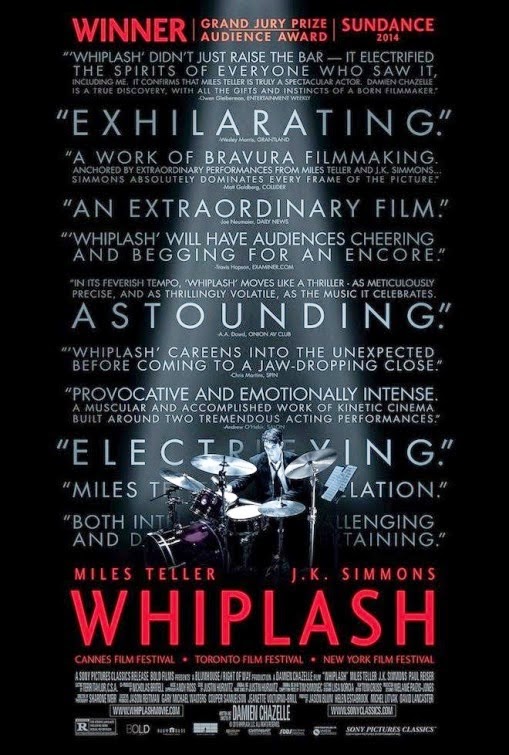
DVD Review: Whiplash – A Conversation With My Father

My wife and I recently watched the award winning Whiplash.Whiplash It is a phenomenal movie and stirred something in me. I found at times that I was holding my breath and my heart was racing. I watched a few scenes over again and had the same effect (you can watch one of my favorite scenes at the end of this review). If you’re going to watch it, though, know that the language is raw and graphic – clearly a reason the movie is rated-R. After making a comment about the movie on social media, my dad, Paul Linzey, mentioned that he and my mom had also recently watched it. Then I had a great idea: Why don’t I co-write a review with my dad, looking at some of the themes of the movie from a biblical perspective? So today’s review is actually from an ongoing email conversation he and I have been having over the past couple days. I’ve enjoyed it immensely and hope you find some value in it. 🙂

Chris: I’d like to kick off with the theme of relationships since I’m doing this with my you. There are three primary relationships I can identify in the movie:

– Andrew and his dad
– Andrew and his girlfriend
– Andrew and Fletcher

I think it’s pretty clear that Andrew’s relationship with Fletcher overrides the others. Here’s what I find interesting, though. While the girlfriend moves on and finds someone else, the dad is constant throughout Andrew’s ups and downs. They go to movies together. Dad stocks Andrew’s apartment with snacks. When the lawyer is trying to convince Andrew to testify against Fletcher, Andrew asks his dad, “Why are you here?” Dad’s response? “Don’t you know there’s nothing in the world I love more than you?” Even when Andrew returns to play with Fletcher for JVC after both had been kicked out of the conservatory, his dad was at the performance and ran backstage to hug the son in his most embarrassing moment. I’m very much reminded of the father in the Prodigal Son story. No matter what the son did, the dad is still there to throw his arms around his son and proclaim his love.

Paul: Yeah, the relationships are a powerful part of the story. And at times they’re pretty painful. Like in the scene at the family dinner table. It’s obvious the whole family is so proud of the football star and totally unimpressed with Andrew’s musical ambitions. You can feel his pain and anger when he points out that the football player is merely at a Division III college. In other words, it’s not worth bragging about. But nobody gets it, and Andrew is still considered the oddball whose goals and values are meaningless. But you’re right about the dad’s loyalty. Even though he didn’t understand his son, he was always there, like you pointed out. There’s a verse in the Bible that says

“Train a child in the way he should go, and when he grows up he will not stray from it.”

Some commentators point out that the terminology in the text is farm language, agricultural terms, specifically having to do with shaping and growing trees. If this is so, they believe the point of the verse is that good parents will find out their child’s interests, callings, and personality and adjust their parenting methods to bring out the best in the child – to help the child discover his or her direction in life. It’s not telling parents to make sure they raise the child the way they want the child to turn out. There’s more to parenting than that. It’s an art. It requires diligence, attention, getting to know the child intimately. It calls for relationship patterns that allow the child to explore and experiment. And the wise parent guides the child in the process of becoming. I didn’t see Andrew’s family fostering this kind of emotional-psychological freedom to be. We typically use that verse to tell parents how to raise their kids, and to tell our kids what we want them to do. Very controlling, very heavy-handed, very condescending. But maybe it was actually designed to liberate parents and liberate children, freeing all of us to discern what the Lord might want us to do, and to become. And then support each other in that process.

Chris: Let’s talk for a second about Andrew’s intense desire to be the best. In one scene, he tells his girlfriend, “I want to be great.” She responds, “You’re not great?” He comes back, “I want to be one of THE greats.”

Paul: Why are people who excel in almost any field edgy, quirky, OK — weird? Do we have to be so intensely focused and driven in order to be the best? Is it even possible to be “normal” and still be the best in the world at something? It’s true that in order to succeed, we have to make sacrifices. We have to prioritize. But is there a limit to how far we should go?

Chris: I was really pondering this one. I had a friend some years back who thought that all competition was contrary to Christ-like behavior. I’m not inclined to go that far, but I see his point. When you hear Jesus using expressions like “servant of all,” “the last shall be first,” and “the least of these,” it’s easy to see that Jesus has a heart for the underdog. The question is, “How far do Jesus’s teachings call us to care for the underdog vs. how far do Jesus’s teachings call us to BE the underdog?” I’m don’t think Jesus is calling us to eschew success, but there needs to be a healthy balance between success and humility, and my personal opinion is that such humility prevents us from ever achieving the status as “best in the world.”

Paul: It seems clear biblically that the Church will be the underdog societally, especially as we move towards the Eschaton. It’s also true, if I understand James 1:27 correctly, that we are called to care for the underdog. And it is true that we are called to be servants of all. However, that doesn’t necessarily mean we are called to be underdogs, impoverished, or less than the best in our chosen vocation. To follow that logic, each of us would need to be orphaned and widowed to truly be Christian. But that is clearly not the case. Jesus told at least one person that he would need to sell all his possessions and give to the poor, but there were quite a few other rich people he did not tell that to. In fact, there were some wealthy folks who supported him and his disciples so they could do the work of the Kingdom. Same with Paul and his ministry team. I don’t think humility per se is contrary to being the best. Many would agree that Moses would be considered one of the greatest leaders of all time. Yet Numbers 12:3 specifically says he was the most humble man in all the earth. I think you and I would agree that Jesus was the greatest person of all time. Yet, he was humble, according to Philippians chapter 2. And St. Paul was a pretty impressive apostle. Perhaps the best? Yet he displayed some impressive humility. Perhaps understanding of the word “meek” can be helpful here: “Power or greatness under control.” So I don’t believe that humility ought to prevent a Christian from being the best at what he or she hopes to achieve in life, whether as a musician, an athlete, a teacher, a pastor, a plumber, or anything else. In fact, the Bible says,

“Whatever your hand finds to do, do it with all your might.”

Don’t we usually understand that to mean “do your best”?

Chris: I don’t think humility NECESSARILY prevents us from greatness, only when pursuing greatness requires trampling on others.

Paul: Absolutely. I agree. And this is what we see happening in Whiplash. People trampling all over each other. Dog eat dog. Get mine. do what it takes to self-promote. I guess you could say Osteen’s teaching applied to the music industry. It’s all about you.

Chris: BWAHAHAHA! Joel Osteen applied to the music industry – now that.is.funny. Making sure that “I get mine” regardless of how it affects others flies right in the face of biblical principles:

Whatever you want men to do to you, do also to them (The Golden Rule) Matthew 7:12

and

Let nothing be done through selfish ambition or conceit, but in lowliness of mind let each esteem others better than himself. Let each of you look out not only for his own interests, but also for the interests of others. (Philippians 2:3-4)

Switching gears again, how did you guys respond to the language? It was incredibly harsh.

Paul: The profanity was indeed overwhelming. But we knew going in that the main reason for it’s R rating was raw language. More importantly, however, being in the world means we rub elbows with real people, real heathens, real scoundrels. We’re called to be in the world, though not “of” the world. Jesus didn’t avoid sinners. That included prostitutes, tax collectors, and cussers. Besides, there’s not a single word or phrase in the movie that I haven’t heard in the Army . . . . . . . or in the church! An aspect of human existence that I thought the movie showed pretty well was that every one of us has our own pain, our own problems, and our disillusionments. This was true of just about every character in the show. Would you comment on that?

Chris: You hit the nail on the head. The director has even said he approaches life from a dark place and I think the characters reflected that. But each gets so caught up in his own trouble he fails to find the relief that can be found in community. It’s the attitude that greatness only comes through suffering and, while there may be some truth to that, authentic relationships can help heal wounds.

Paul: And that’s where art and the gospel begin to intersect.

Chris: Thanks, Dad.

_ _ _ _ _ _ _
As always I welcome your thoughts and opinions. did you see the movie? What did you think?

Paul Linzey is a pastor, writer, and mentor. A retired Army chaplain, he and his wife live in Lakeland, Florida.
Chris Linzey is a husband, dad, pastor, and writer. Currently an Army Reserve Chaplain, he and his family Illinois.
Chris Linzey is a husband, dad, pastor, and writer. Currently an Army Reserve Chaplain, he and his family live in Illinois.

Help Me Buy an Orphanage

Okay, not really “buy” an orphanage, but for only $8 we can do something REALLY cool and make a significant impact in kids’ lives – here, check out the story…

Scorziell 1Jeff and Tammy were missionaries to Africa from 1984 to 1989. Moving back to the U.S., they lived, worked, and raised their family. They planted a church in Orange County, California, which is where my wife and I met them. I joined the pastoral staff in 2004. Jeff and Tammy are some of the best people I know. Their love for Jesus and their heart for people is incredibly authentic – there is nothing false or pretentious about them. In the six years I spent in ministry with them, they and their daughters and sons-in-law became like family to us.

Then, in 2011, they were asked to pastor the Bulawayo Baptist Church in Zimbabwe. The pastor was retiring and some friends of theirs submitted their names and they got the job. They sold everything and immigrated to Zimbabwe. Talk about a leap of faith!

Zimbabwe is in Southern Africa. It is one of the five poorest countries in the world, has one of the highest AIDS problems on the continent.Zimbabwe The average life expectancy is only 37 years and almost 10% of the population is orphaned. It is a country that desperately needs help.

Tammy says:

“One of my cousins said to me shortly before I left for Zimbabwe, ‘Tammy, I can only imagine all the prayers that went up to God by the dying parents asking Him to watch over their children and I think He is sending you there in answer to their prayers.’ That statement is what motivates me to do all that is in my power and ability by God’s AMAZING GRACE to help support these children any way I can.”

Tammy immediately began going to the orphanages in Bulawayo telling Bible Stories and doing Jana Alayra worship with them. As she began making relationships, two orphanages obtained property in September 2012 and they offered it to her, a 50+ California girl who never farmed a day in her life, to help them use the land to become self-sustainable.
Scorziell 3

Thus was born “Fruitful Harvest,” a ministry with the mission of creating “Zimbabwean Products Helping Zimbabwean Children.”Scorziell 4

One of the Properties belongs to the Sandra Jones Centre. This is a home with over 70 sexually abused, abandoned, and orphaned children. Many of the young girls are between 11 and 17 years old. Most of them are victims of rape and incest and are pregnant. Many are also uneducated. Debbie Brennocks, the founder and director of the Centre, and Tammy took another leap of faith and applied for a grant that would help teach these girls a skill to help them support themselves and their baby (if they chose to keep them). It was approved and they now teach the girls gardening skills and how to raise chickens.Scorziell 5

Currently they are raising 1000 chickens every 9 weeks and sell the chickens to the community. They raised three batches last year and because of the generous help from a local chicken farmer they are able to generate a profit of $4,500 a batch – and the girls are learning a trade in the process.

The goal for 2015 is to raise six batches and, if all goes well, they are poised to raise $27,000 for the Centre. This is very exciting but it costs us $18,000 a month to run the centre plus they still owe $250,000  for the remaining payment of the property (they have paid $300,000 to date).

The other property belongs to an orphanage called Harvest Family Village. Jenny Hensman, the founder and director of this orphanage, has taken in AIDS orphans as well as the costly and difficult to care for handicapped children. The handicapped child is often the most poorly cared for of all orphans.

At this orphanage, Tammy began with 500 Rhode Island Red chicks to help them generate income from selling of eggs. The first hen house was built using scraps found around the property. Scorziell 7They raised funds to secure the fencing against wild dogs and other animals that could harm the birds. They are now making plans to expand and raise our next batch of 1000 hens which could add an additional $1250 per month.Scorziell 8

There is no government support for these children. The orphanages feed, clothe, educate, pay medical bills, etc. for the children all by faith and the help from others God leads to them.

I’ll be honest – this is the most ambitious ministry fundraiser I’ve ever tried. But I’m not asking you to buy me a gulfstream jet. I’m asking you to help pay for an orphanage. It would be incredible if we, the worldwide Church, could fund this ministry. The most “viral” blog post I’ve ever written was viewed 35,000 times. And that had no greater significance on people’s lives. Here we have an opportunity to make a HUGE impact in the lives of children. If this post were seen by 35,000 people it would only take those people making a ONE-TIME contribution of $8.00 to fully pay-off the Sandra Jones Centre property.

Please consider how you can help these children and this ministry.Scorziell 2 Whatever you donate through our GoFundMe campaign goes right to Fruitful Harvest Ministries and missionaries Jeff and Tammy Scorziell. The Church Plant does not hold on to any of it.

Click on the button to go to our fundraising campaign:

If you have any questions you can contact us through The Church Plant or see the Fruitful Harvest Ministries website.

God bless you all.

Chris Linzey

_ _ _ _ _ _ _ _ _ _
Please share this post on Facebook, Twitter, and Email. Even if you can’t donate, you can help spread the word and be praying for the ministry to Zimbabwe!

DVD Review: I, Frankenstein

Now available on DVD (or streaming on Netflix) is the 2014 film I, Frankenstein. I, FrankensteinThe IMDB user reviews give this movie 5.2 stars out of 10. I was surprised, because the movie’s premise is the eternal struggle between gargoyles and demons, and who doesn’t love storylines like that?!?

Honestly, I thought 5.2 stars was generous. The movie was everything I expected it to be. For some reason, I enjoy watching cheesy apocalyptic movies showcasing the forces of good vs. the forces of evil. Since I was expecting a terrifically terrible movie, I was not disappointed!

– Affected acting.
– Poor writing.
– Ridiculous plot lines.

It’s everything you’d see in an MST3K movie. MST3K

Here are the basics of the movie:
– Demons exist and are trying to take over the world
– God created the order of the gargoyles to fight off the demons
– Frankenstein’s monster (named Adam in the movie) is a soulless, ageless creature roaming Earth for hundreds of years.
– The demons realize that the soulless Adam is the key to possessing the dead and bringing legions of demons to Earth to finally conquer everyone.
– Adam and the gargoyles fight off the demon horde.

Enough about the film-making elements – let’s talk about the film from a biblical perspective.

I’m always amused by these kinds of films because there is a segment of humanity that is greatly fascinated with the idea of angels and demons (true, the gargoyles aren’t exactly angels, but they’re supposed to fill the role of some kind of angelic protector-figure). The demons are your traditional Hollywood demons Demon Prince – they growl a lot and when they are dispatched go out with a burst of fire.

But there’s nothing quite like that in the Bible. In fact, the biblical accounts of demons never show us a visual image. The horned-headed, spikey-tailed, pitchfork-wielding demon of the screen is not biblical. The biblical image of possessed people is always of the human. While demons cause people to cut themselves and behave like lunatics, we never get to SEE them. When Jesus talks to demons, it is always through the voice of the possessed person.

So why our fascination with demons and angels?

I believe it’s because there is something in us that recognizes the reality of the spiritual realm even though the Western world denies it. In biblical studies and missiology (the study of missions) we talk a lot about worldview and how we perceive reality. The reality of the Western world tends to be one of rational thought. Angels, demons, and spiritual things are relegated to the heaven and hell but have little to do with human reality. It can be represented in this graphic of the “excluded middle.” The Excluded Middle

But there is no exclusion in the Bible. The spiritual world interacts with the human world. And Jesus takes dominion over it – in a powerful and final way. There is no power that counters God. The Bible is not about cosmic dualism, yin and yang. While there are evil forces, they are not equal to God’s good. God is superior and none can compare.

But we love to make movies about spiritual forces fighting tremendous battles for humanity. It can be disturbing to realize that the Bible DOES talk about demonic interaction with humanity. And the Bible never says that demons went away once the New Testament was completed. Yet the truth remains that God has fought the battle for us. Jesus conquered death, and because of his sacrifice we are assured of our final destination – the presence of God.

There is no power that rivals God’s.

So take movies like this for what they are: complete fiction.

And poorly done fiction at that.

_ _ _ _ _ _
If this post resonates with you in any way, please share it on Facebook, Twitter, or email!

DVD Review: Noah

Noah

Last night my wife and I finally caved and watched Noah. I had heard a lot about it from Christian and secular sources, but wanted to see it with my own eyes. So here’s the BLUF (Bottom Line Up Front): This is quite possibly one of the worst movies of all time.

I mean all time.

As in the entire history of the world.

It’s that bad.

Remember how bad Waterworld was?

Noah was worse. At least Waterworld knew it was campy, with the “Smokers,” “jet skis,” and hilarious performance from Dennis Hopper. In fact, the best “end of the world” films always have that campy element.

But Noah seemed to think that it was a serious film, and that was a big blunder.

The biggest problem of the film was that it was confused. The writer/director claimed he wasn’t trying to make a biblical story on film – he simply used the Noah narrative as a foundation for his sci-fi/fantasy movie. This is where the confusion came in.

The story of Noah RELIES on the audience having prior knowledge of the biblical narrative. Without prior knowledge, the movie becomes completely disjointed and bizarre.

What’s with the snake?
What’s with the rainbow shockwaves in the sky?

Viewers familiar with the Old Testament will understand, but a secular audience misses these cues without prior knowledge. Therein lies the problem.

The writer/director needs prior knowledge for his story to work, yet he makes the mistake of deviating from the original story. I’m not just talking about taking artistic license with telling the story. This movie goes WAY beyond artistic license. I’m talking about adding elements that simply never existed.

– the villain who hacks a hole in the side of the ark and escapes the flood
– the strong vegetarian vibe (the animals are the only innocent ones) when the Bible CLEARLY says that God gives animals to humanity to eat
– the exclusion of Ham and Japheth’s wives when the Bible CLEARLY says that they were on the ark
– Noah wrestling with annihilating his family for God (because all humanity is evil) when the Bible says God chose to spare Noah and his family because Noah was righteous

See what I mean? The writer/director needs the biblical narrative to make sense of his story. The writer/director blatantly disregards the biblical narrative. The film is schizophrenic from the get go.

This doesn’t even begin to address the anachronistic elements like medieval knights and Old Navy wardrobe choices, fallen angel rock monsters that can be sent back to heaven with a hot spear, and Noah’s wife creating the first EPT (I wish this were a joke but, alas, it is not). EPT

As my wife said about two-thirds of the way into the movie:

This.is.odd.

Yup, that was an understatement, sweetheart.

If you care about the biblical narrative, you won’t want to see this movie. If you care about decent cinema and the art of filmmaking, you won’t want to see this movie.

Noah is a total dog.

Woof.

_ _ _ _ _ _
If this post resonates with you in any way, please share it on Facebook, Twitter, or email!

Off With Her Head! A Biblical Response to the Death Penalty

Queen of Hearts

The Queen of Hearts is quite a memorable character in literature. She’s prone to rage and has one punishment for any offense: death.

The death penalty is again being hotly debated due to the pending execution of death row inmate Kelly Gissendaner. Gissendaner was found guilty of plotting her husband’s murder. While incarcerated, her supporters state Gissendaner has turned her life around and is a pastoral presence in the prison. They are seeking clemency.

Christians, meanwhile, are back to debating the merit and justification of the death penalty. Let’s note from the outset that there is no monolithic Christian perspective on this issue. Some adamantly believe the death penalty is wrong while others (just as adamantly) proclaim that the death penalty is biblically justified.

One’s position on the death penalty is not an indicator of piety or faithful Christian discipleship.

I looking at the issue from a biblical perspective we run into a big problem: the Bible is not a guide for running a democratic republic. Let’s break it down a bit.

The Old Testament

Death penalty proponents point to passages in the Old Testament that call for death as the penalty for certain offenses. It’s true – we can’t deny that the Law did indeed embrace for the death penalty. Just a couple quick examples:

He who strikes a man so that he dies shall surely be put to death. (Exodus 21:12)

If a man acts with premeditation against his neighbor, to kill him by treachery, you shall take him from my altar, that he may die. (Exodus 21:14)

But here’s the thing – the Old Testament was designed to govern the ancient theocracy that was Israel. It was not a political guide for all time. We cannot say, “The Old Testament endorses the death penalty so we should as well.” It’s not that simple. We don’t live in that society and are not governed by those rules. The Old Testament might demonstrate principles that certain crimes are worthy of death, but we cannot bring in ancient theocratic law to rule a modern democratic republic.

The New Testament

In the New Testament we see a strange reversal – Jesus seems to take the understanding of Old Testament retribution and turn it on its head. One of the most striking examples is John 8, where a woman who, by Old Testament law, deserved death, receives a pardon from Jesus. Grace and forgiveness take the place of judgment and condemnation.

But the New Testament makes no claim to represent political power – in fact, quite the opposite. The New Testament tells believers how to behave on a personal level no matter what the government might do. The New Testament does not address how to run a government. The whole penal system, while necessary to an ordered and civilized society, is never really addressed in the New Testament (although the NT does reference authorities being put in place by God to punish evil-doers).

So where does that leave us? We can see principles for righteous judgment and punishment. We can see principles for forgiveness and leniency. But we have to be honest and say that there is no direct guidance for how to run a penal system in a democratic republic.

That being said, we need to approach the topic with sensitivity to how God leads and directs us without belittling people who disagree. Good Christians might favor the death penalty. Equally good Christians might oppose it. And some Christians might vacillate between the two positions in the course of their lives.

Life is more complicated than simple black and white dichotomies.

_ _ _ _ _ _ _
How about you – do you or don’t you support the death penalty? What is your reasoning for your position?

I welcome all discussion, just keep it civil and polite. If this post resonates with you in any way, please share it on Facebook, Twitter, or email!