I didn’t think I was being controversial. I wasn’t trying to be inflammatory. But this past week I saw a video that gave the statistics of the top 10 lynching states over a span of 8 decades. I shared the video on my Facebook page and added the message:
2,751 confirmed lynchings over 8 decades in ONLY 10 states. There’s NO WAY the Civil Rights Movement can undo all of the damage to race-relations. We have a lot of work to do…
Here’s the video…
While everyone who saw it agreed that the content was horrific, a couple people chastised me for sharing it, saying that I was stoking the fires of hate and that I should allow people to forget and move on. One said:
Absolutely disgusting….and tell me what purpose you serve in playing a video like this? Show me in the Bible what you are teaching? Sometimes I wonder what it is that you are trying to do with your posts…inspire people to be led to God or be inspired to be led by hate…
And another:
[D]welling on it is like not forgiving. How long can we live the sins of some one else’s father. I grew up in Atlanta, in the 70’s. I remember the bitterness. It was still there. Did it help, in moving forward with change, to bring up things, like lynchings? No. It just stirs up strife. The Bible talks about moving forward. Let’s follow what it says, instead of beating ourselves up in the 21st century, for things that happened over a hundred years ago.
I was astounded that people I know to be Christians would rather ignore the past than to deal with it. It’s not even as though this issue was long since over. This was still happening 49 years ago. It’s NOT ancient history. In Matthew 18, Jesus’s own model for resolving conflict when someone sins against you is to deal with it – not to simply bury it or sweep it under the rug. How do you plan to help reconcile people if you never address wrongs that were done?
“My husband had an affair on me!”
“Yes, but that was last week. Don’t dwell on it. Move on.”
ABSOLUTELY RIDICULOUS!
Remember when Jonah was on his way to rebuke Nineveh and God said, “You know what, that’s in the past. Let’s just let it go and move on. It doesn’t do any good to dwell on old things.”
Yeah, neither do I.
The Bible is literally FILLED with examples of God calling out unrighteous behavior that needs to be changed. Racism is STILL a prevalent problem in our nation, and these sins of the past that some seem to want to forget only ended 49 years ago. People are still alive that witnessed and participated in such behavior. It is ABSOLUTELY okay with God to tell people that this is not righteous behavior/thinking and needs to be fought.
I care about reconciling people and that doesn’t happen unless we address the wrongs from the past. You can’t bury your head in the sand and move forward in ignorant bliss.
We need to move away from hate, but we need to acknowledge history and the wrongs we have done so we can move forward.
Shining light into darkness makes it harder for people to hide in the dark.
What do you think? Have you heard people advocating for a “forgive and forget” attitude when it comes to America’s racist past? How does this make you feel?
When it comes to debate, there are a few key verses that Christians always have on standby. If you want to argue with people about predestination and election, pull out Romans 9. If you want to talk about Gifts of the Spirit, pull out 1 Corinthians 12 and 14. If you want to eliminate women from Christian leadership, pull out 1 Timothy 2.
It is no different when we’re talking about the church calendar. Yes, Lenten season is upon us. Catholics, Eastern Orthodox, and Anglicans observe Lent, but so do Lutherans, Methodists, and some Evangelical traditions.
But then there are those who ADAMANTLY oppose Lent. They throw around phrases like “Papist traditions” and “traditions of man.” As proof-texts they will read you Mark 7:8-9 –
“You leave the commandment of God and hold to the tradition of men.” And he said to them, “You have a fine way of rejecting the commandment of God in order to establish your tradition!”
Lent, however, is not a human tradition intended to supplant God’s commands. No one I know pushes Lent as a means of salvation or a ticket to heaven. It’s not about righteousness through works. And Christian traditions are not INHERENTLY bad. They are only bad when we use them in place of God’s work. Lent is one of the oldest observations in Christianity and, though it has morphed over the centuries, is about aligning our hearts with God. Doug Ponder writes:
The heart of Lent is a season of fasting, which Jesus seemed to expect for his followers to do. After all, he said “when you fast,” not “if you fast” (Matt. 6:16). In Lenten fasting we abstain from worldly pleasures to realize their power over us, to remind ourselves of our frailty and continual need of grace, and to rejoice that our appetite for sin has been forgiven and will one day be erased. I know of no Christian who would object to that!
In the Bible, Paul says that certain days are special to one person and not to another (see Romans 14). The point is not to judge each other, but in Christian liberty allow for a wide variety of how we honor and celebrate Christ. Rather than lamenting the “Papal tradition” of Lent, Christians everywhere should commend other Christians who desire to set aside human appetites in order to give space for God’s work in their lives.
Isn’t this the point of any fasting?
When our fasting (at any time of year) is centered on and motivated by God, no one should condemn it. Richard Foster wrote: “More than any other Discipline, fasting reveals the things that control us.” Since there are so many works examining the BIBLICAL practice of fasting, I’m not even going to waste space defending it. It’s an expected part of the life of a disciple of Christ.
This Lenten season, get off your high horse. Examine your life and see where your appetites control you. What can you put aside in order to create space to listen to God?
Some people just don’t get it. They SHOULD get it but, for whatever reason, they simply don’t get it.
The disciples are those kinds of people. Even though these are the guys who follow Jesus around and are his closest companions, the Gospel stories show time and again that they just.don’t.get.it.
I can imagine Jesus dealing with them. They say or do something so ridiculous he can’t help but facepalm. We see one of these instances in Mark 8,
In those days, when again a great crowd had gathered, and they had nothing to eat, he called his disciples to him and said to them,“I have compassion on the crowd, because they have been with me now three days and have nothing to eat.And if I send them away hungry to their homes, they will faint on the way. And some of them have come from far away.”And his disciples answered him, “How can one feed these people with bread here in this desolate place?”
Here we start the facepalm. The scenario is eerily similar to the earlier story where Jesus fed 5,000 people with loaves and fish. This has led some people to conclude that there were two versions of the story circulating in Mark’s time, and that Mark mistakenly included both. While this might be a viable possibility for some people, it fails to account for two things: 1) the standard Christian understanding of the inspiration of Scripture and 2) the differences between the stories actually set up different points/purposes of each narrative.
As to our understanding of inspiration, our belief that the Bible has Divine origin and spark within it means that there is a godly intentionality that underlies the text. Our concept of inspiration is not something that can be proven or disproven by science – it’s a statement of faith. If you don’t believe it, I can’t convince you otherwise.
As to the different points of each narrative, that is more easily demonstrable. The first story highlighted Jesus as a new Moses. The people sat in groups in the wilderness just as Moses and the Israelite nation split into various groups/camps in the book of Exodus. Jesus providing his crowds echoes God providing for Israel in the desert.
By the time we get to the second story here in Mark 8, the story is set against the first story, almost as a check on learning for the disciples. Picture Jesus saying, “You were with me the first time. What’s gonna happen here and now?”
But the disciples fail the quiz. “Where can we get enough bread?!?”
And he asked them, “How many loaves do you have?” They said, “Seven.”And he directed the crowd to sit down on the ground. And he took the seven loaves, and having given thanks, he broke them and gave them to his disciples to set before the people; and they set them before the crowd.And they had a few small fish. And having blessed them, he said that these also should be set before them.And they ate and were satisfied. And they took up the broken pieces left over, seven baskets full.And there were about four thousand people. And he sent them away.
In addition to some of the numerical details being different in the stories (numbers of bread, fish, and people) Jesus is in a different location. While he spoke to Jewish people in the first narrative that had echoes of Moses and the Exodus, here Jesus is working in a Gentile area. Jesus’s ministry and blessing extends beyond the Jews and is for Gentiles as well. That Jesus extends his ministry to non-Jews is brought up previously when the Syrophoenician woman approaches him for help. Just as before, Jesus is able to abundantly bless and provide for those who follow him.
And immediately he got into the boat with his disciples and went to the district of Dalmanutha. The Pharisees came and began to argue with him, seeking from him a sign from heaven to test him.And he sighed deeply in his spirit and said, “Why does this generation seek a sign? Truly, I say to you, no sign will be given to this generation.”
Cue the facepalm. Immediately after performing this incredible things, the religious leaders come and ask for a sign. When Jesus says that no sign will be given, part of me wonders if he’s really saying, “There’s not sign that you will recognize.” Jesus HAS been giving signs, but people are too blind to see what is right in front of their faces.
And he left them, got into the boat again, and went to the other side. Now they had forgotten to bring bread, and they had only one loaf with them in the boat.And he cautioned them, saying, “Watch out; beware of the leaven of the Pharisees and the leaven of Herod.” And they began discussing with one another the fact that they had no bread.And Jesus, aware of this, said to them, “Why are you discussing the fact that you have no bread? Do you not yet perceive or understand? Are your hearts hardened?Having eyes do you not see, and having ears do you not hear? And do you not remember?When I broke the five loaves for the five thousand, how many baskets full of broken pieces did you take up?” They said to him, “Twelve.”“And the seven for the four thousand, how many baskets full of broken pieces did you take up?” And they said to him, “Seven.”And he said to them, “Do you not yet understand?”
And the disciples continue in their blindness. They have seen Jesus provide in times of need, and they continue to fret about their lack. So Jesus warns them about being like the Pharisees. “I’m giving you stuff, but are you going to stay blind, too?!?” So Mark gives us a miracle story that acts as a living parable, illustrating his whole point.
And they came to Bethsaida. And some people brought to him a blind man and begged him to touch him.And he took the blind man by the hand and led him out of the village, and when he had spit on his eyes and laid his hands on him, he asked him, “Do you see anything?”And he looked up and said, “I see people, but they look like trees, walking.”Then Jesus laid his hands on his eyes again; and he opened his eyes, his sight was restored, and he saw everything clearly.And he sent him to his home, saying, “Do not even enter the village.”
After his initial encounter with Jesus this blind guy sees, but only in part. It’s kind of like the religious leaders and disciples. They should be able to see Jesus clearly, but clearly they can’t! Jesus might as well be a walking tree in front of them. So Jesus touches the guy again and he finally sees clearly. Cut to the disciples:
And Jesus went on with his disciples to the villages of Caesarea Philippi. And on the way he asked his disciples, “Who do people say that I am?”And they told him, “John the Baptist; and others say, Elijah; and others, one of the prophets.”And he asked them, “But who do you say that I am?” Peter answered him, “You are the Christ.”And he strictly charged them to tell no one about him.
FINALLY! Peter’s vision is clearing up and he sees Jesus for who he is.
He.Is.The.Christ.
This is the Gospel message for Jews and Gentiles alike. This Jesus is the one who came to provide abundant life, even when we’re in the wilderness. This Jesus is the one to lead the new exodus, taking these slaves into the spiritual promised land. Don’t miss the signs that are right in front of you. Don’t mistake the people for trees.
Christians do a great job of judging the state of other people’s souls. We’re mind readers, really. We know the condition of your life just by looking at the things you do. If we like the things you do, you’re obviously heaven-bound. If you do things we don’t approve of…well, you’re headed the other way. Some of things that reveal the state of your salvation? Well:
you like beer? You’re not really saved.
you like R-rated movies? You’re not really saved.
you struggle with addiction? You’re not really saved.
you have tattoos? You’re not really saved.
you got pregnant out of wedlock? You’re not really saved.
you got divorced? You’re not really saved.
you voted Democrat? You’re not really saved.
you don’t read the King James Bible? You’re not really saved.
you smoke cigarettes? You’re not really saved.
The list of taboo things can go on and on. But in reality, most of the list really comes down to this:
You disagree with how I interpret the Bible and live a Christian life? You’re not really saved.
And that’s a shame. The Bible is actually not as black-and-white about all of these side issues as Christians are. Salvation really comes down to faith in Jesus. Can you smoke weed and have a saving faith in Jesus? Can you vote a certain political party and have a saving faith in Jesus?
I think so.
In the end the “You’re not really saved” lists that we all have come down to us – what we dislike or disapprove of. Don’t get me wrong – the Bible does talk about sin and Christian behavior. But we seem to add a lot of things to the lists. Look at the Mark 7:
Now when the Pharisees gathered to him, with some of the scribes who had come from Jerusalem, they saw that some of his disciples ate with hands that were defiled, that is, unwashed. (For the Pharisees and all the Jews do not eat unless they wash their hands properly, holding to the tradition of the elders, and when they come from the marketplace, they do not eat unless they wash. And there are many other traditions that they observe, such as the washing of cups and pots and copper vessels and dining couches.) And the Pharisees and the scribes asked him, “Why do your disciples not walk according to the tradition of the elders, but eat with defiled hands?” And he said to them, “Well did Isaiah prophesy of you hypocrites, as it is written,
“‘This people honors me with their lips, but their heart is far from me; in vain do they worship me, teaching as doctrines the commandments of men.’
You leave the commandment of God and hold to the tradition of men.”
And he said to them, “You have a fine way of rejecting the commandment of God in order to establish your tradition! For Moses said, ‘Honor your father and your mother’; and, ‘Whoever reviles father or mother must surely die.’ But you say, ‘If a man tells his father or his mother, “Whatever you would have gained from me is Corban”’ (that is, given to God)— then you no longer permit him to do anything for his father or mother, thus making void the word of God by your tradition that you have handed down. And many such things you do.”
That’s pretty powerful. Jesus tells these upstanding religious elite that they’re holding on to human traditions and letting go of God’s commandments. Won’t we be surprised when we reach eternity and find people who didn’t live the way we wanted them to live?
Might we have some good ideas about how to life a righteous life? Sure. You might have your own list of things that you feel you need to do to stay in right standing before God. There is nothing wrong with that. The Holy Spirit works in each of us at different times, convicting us of some things and freeing us to do other things. But our personal conviction, even if it’s from God, doesn’t mean that it’s supposed to be imposed on EVERYONE. Even within Christianity, there is a lot of room for Christian freedom.
Don’t get me wrong – some things are downright forbidden. Adultery is always wrong in God’s eyes. Murder is always wrong. Idolatry is always wrong. The Bible does relay to us concrete do’s and do not’s. But if it’s not specifically spelled out in the Bible, God gives us a lot of latitude to work within our consciences. It doesn’t make you less of a Christian. It doesn’t make you a better Christian.
This is actually a call to unity. We are unified as believers, even if we disagree on some of the peripheral issues. How we live out our faith on these other issues shouldn’t cause us to break fellowship with people. Our Christianity is bigger than these issues – we are united in our faith in Christ and it’s time to let go of our pet issues.
If you’ve ever had your salvation doubted because of this or other issues – I’m sorry. Christians mean well (usually) but we have a horrible way of judging anything that doesn’t fit our mold. And if you’ve ever doubted or questioned the salvation of someone else because of some behavior you disapproved of it’s time to repent.
The condition of someone’s salvation is really up to God.
So there I was at the library and the “new arrivals” end cap had this book on it. As someone whose university work was in biblical studies and manuscripts, this sounded like an interesting book. I like manuscripts. I like libraries. I like librarians. I like the word Timbuktu. And I like having a way to type “bad-ass” without my conservative Christian readers getting to upset! I might ruffle a couple feathers, but c’mon, people – I didn’t create the book title.
I will take umbrage at Joshua Hammer’s subtitle, though. “And their race to save the world’s most precious manuscripts” is a highly subjective opinion. That is to say, I would not put the value of these manuscripts above the value of biblical manuscripts. From my worldview, ancient Jewish and Christian manuscripts are the world’s MOST precious. But in the book, Mr. Hammer doesn’t use comparative language to talk about Timbuktu’s texts and other religious texts, so the subtitle seems to be more click-bait writing than assertion of fact.
The book itself is primarily the history of the textual tradition of Timbuktu, which was to West Africa what Alexandria was in Egypt, a giant repository of learning, thinking, and writing. What makes the librarians of Timbuktu so incredible is that they have been in a long-term struggle to collect and preserve the manuscripts for nearly 700 years. Time and again, the region was overcome by extremists who disliked the idea of wide and varied learning being stored and disseminated, so there has been continual struggle between those who love the texts and Muslims who believe the texts pull people away from Islam.
In that sense, the book almost becomes a defense against moderate Islam, portraying moderates and lovers of learning and embracing of a plethora of ideas.
So the radical Muslims who want to destroy the books are the bad-guys. Mr. Hammer digresses in his story of the librarians to devote quite a few pages to the history of the extremist Muslims and Al Qaeda in the region. Regardless of one’s faith, I think we can all appreciate the bravery and daring of the people who worked to hide, recover, and salvage these ancient manuscripts.
All said and done, I found the book to be very interesting and it taught me things about Africa I never knew. The literary tradition in Africa, contrary to some Western thought, was not nonexistent. People of all cultures are more alike than we sometimes give them credit for, and Western and Northern Africa has had its fair share of poets, mathematicians, doctors, and philosophers who believed in committing to paper (or animal skin, or whatever) thoughts, words, sentences, and books. I also enjoyed learning more about the history of the region.
Finally, the book helps remind me of the painstaking work Christian scholars have done (and continue to do) with biblical manuscripts. If you’re interested, take some time to look into the work of Bruce Metzger and others who write about the New Testament and our own textual traditions.
This being the third week of Advent, Joy Sunday, we were naturally talking about joy. It’s one of those things that the Apostle Paul talks about as “The Fruit of the Spirit.” That is to say, when the Spirit of God is in us one of the things that should be produced in us is joy.
So we tried something different on a Sunday morning and split into groups (2 men’s groups and 1 women’s group) to come up with the top 5 things we think would bring us joy (being a small church, breaking into groups wasn’t very difficult – I don’t think I would have tried this in a large church).
What about you? If you had to pick 5, what would you think the average person would say?
Here’s what our younger men came up with:
a good job. The idea of having a job that both provides abundantly AND fills you with a sense of accomplishment/achievement was a big factor in people’s ideal of a joy-filled life.
a new truck. I’m not sure which young man came up with this one, but I agree – a new truck would make me pretty happy, too!
having the family together. Perhaps the Christmas season makes people long for family and community. Perhaps it’s being part of a military community where we are separated from family more than other communities. Either way, having our loved ones around is important.
being able to play my instrument whenever I want. I think we had one young man who would rather be rocking out than attending class, but that’s not unusual. 😉
success. I think this is really connected to #1, but it goes beyond a job and into an attitude that encompasses all of life.
our kids’ laughter. I agree, nothing delights me quite like hearing my own kids laughing when they don’t know I can hear them.
a healthy family. We live in a world with so much sickness and disease, sometimes it feels as though it will never end. A healthy family can be a real joy to those of us with sickos in the family. Wait…that didn’t come out right…
a relationship with God – okay, another Jesus-juke, and they were trying to jump into my sermon notes.
healthy mothers – I think this one was spawned from one dad who was at church with his sons and mom was home recovering. Being a single parent is always tough – add on the responsibility of being a care-giver for a spouse or adult parent and the burden multiplies.
And here’s what our women came up with:
making others happy. I think the women are much more altruistic than we are (at least that’s how it is in my marriage!).
being more involved in church. These ladies really know how to push all the right buttons for the pastor. I see some new ministries and leaders developing here! 😉
good weather. If you’re the kind of person who is affected by weather changes, this could be a BIG deal for your sense of joy.
exercising. I’m not sure if exercise would give ME joy, but I sure do enjoy the benefits of it 🙂
the little things in life. The ladies wouldn’t get specific about WHICH little things, but apparently it’s these little things that bring them joy.
Were these close to what you came up with?
The problem with most of these answers we come up with that our idea of joy is often connected to temporary things. None of them is permanent. Cold weather, bills, people, health, and good feelings all come and go. If we look to these things for our joy then we’re always going to be chasing.
That kind of joy is a pipe dream.
It’s not the kind of joy we see in the Bible when Peter writes:
He has caused us to be born again to a living hope through the resurrection of Jesus Christ from the dead, to an inheritance that is imperishable, undefiled, and unfading, kept in heaven for you…. In this you rejoice, though now for a little while…you have been grieved by various trials. (1 Peter 1:3-6)
Finding joy in the middle of trials and tough time feels impossible, yet time and time again the Bible talks about joy in the midst of suffering. You see, from the Bible’s perspective, joy isn’t based on temporary things and events. Though such things might give us joy for a bit they will eventually fade. It is when we are able to shift focus and take our eyes off of this world and focus on what’s coming for us later that we can know joy no matter what we face in this life.
Real joy is rooted not in our circumstances but in GOD and his activity. He has worked in the past, he works in our lives now, and he has promised us a better tomorrow. We may not see that better tomorrow in this life, but the Christian faith realizes that there is more to life than this flesh and blood.
Joy is about holding on to our eternal circumstances over our temporary trials.
I might not know what you’re going through. It may be excruciating. But we know and believe that one day we will rest easy in the presence of Yahweh. All the wrongs will be made right. All the hurts will be healed. We will know a permanent and lasting joy unlike anything we have ever experienced.
Until that day, that hope anchors us here and now. May we learn to say with the Apostle Paul:
I have learned in whatever situation I am to be content. (Philippians 4:11)
We’ve arrived at the second week of Advent, the time of year we prepare our hearts for the coming of the Messiah at Christmas. This week we’re talking about hope. But what is hope? To many people, hope seems to be nothing more than a pipe dream – a wish.
“I hope that I get a raise.”
“I hope Uncle Frank doesn’t say anything offensive at Christmas dinner this year.”
“I hope….”
It’s nothing more than an expression of a wish or a desire. But that’s not the biblical understanding of hope. Hope is not a wish. It’s not human desire. Hope is intimately connected to faith. Hope is trusting and expecting something beneficial to come sometime in the future. It is a compelling positive view of things to come.
Romans 8:23-25 – Though we have already tasted the firstfruits of the Spirit, we are longing for the total redemption of our bodies that comes when our adoption as children of God is complete— 24 for we have been saved in this hope and for this future. But hope does not involve what we already have or see. For who goes around hoping for what he already has? 25 But if we wait expectantly for things we have never seen, then we hope with true perseverance and eager anticipation.
“Where there is no vision, there is no hope.” ~ George Washington Carver
But it’s not about something we manufacture. It’s not under our control. Hope is the proper response to the promises of God.
Psalm 119:49 – Do not forget Your promise to Your servant; through it You have given me hope. 50 This brings me solace in the midst of my troubles: that Your word has revived me.
Hope lies in God’s activity, not our own. The foundation of hope is not our own desire but an understanding that God HAS been active in human history and our lives, God IS actively working in our lives, and God WILL continue to work in our lives. This three-fold understanding of God’s behavior is the bedrock on which all hope lies. No matter what happens, we know that God is present and active. That puts is in a practical place – hope has real effects on human behavior.
Psalm 31:24 – Love the Eternal, all of you, His faithful people! He protects those who are true to Him, but He pays back the proud in kind. Be strong, and live courageously, all of you who set your hope in the Eternal!
2 Corinthians 3:12 – In light of this hope that we have, we act with great confidence and speak with great courage.
Godly hope empowers us to live courageously. It’s not about taking away all of the negative possibilities in life. It’s not about avoiding all dangers and troubles. It’s about knowing who is in control. Faith in God’s tomorrow removes our fear today. If we know that, no matter what happens, God’s plan will still come to fruition, it frees us to act without fear. Our decisions are not going to derail God’s will. Other people cannot change God’s plan. We are emboldened to act knowing that God wins. Even through the difficult times, we can still hope.
Romans 5:3-5 – We also celebrate in seasons of suffering because we know that when we suffer we develop endurance, which shapes our characters. When our characters are refined, we learn what it means to hope and anticipate God’s goodness. And hope will never fail to satisfy our deepest need because the Holy Spirit that was given to us has flooded our hearts with God’s love.
Hope isn’t diminished in bad times, it’s built in them! This may seem counterintuitive at first, but people living the good life have no need for hope- they have everything they need now.
“We must accept finite disappointment, but never lose infinite hope.” ~ Martin Luther King, Jr.
Infinite hope. It removes our fear. It compels us to act. It sets us apart from the lost and hopeless people in the world. It’s not because of us – it’s all because of Him. This Advent season, as we prepare ourselves for his arrival, let God’s actions in the past, his behavior today, and his promises for tomorrow, be your source of hope. In a dismal and decaying world, we have this hope that builds within us fearless faith to face whatever may come.
“Hope is being able to see that there is light despite all of the darkness.” ~ Desmond Tutu
Friends who know me know that I’m not really a fan of FoxNews. While I am theologically conservative, I tend to lean more to the left than Fox does when it comes to social issues and politics. That being said, I have not spent a lot of time watching Megyn Kelly on Fox. But I saw that she had a book published, Settle for More, and saw an interview she did regarding the book. Then, by chance, our base library had a copy of it on display. That’s when I thought I’d pick it up and give it a read.
I will admit that it is not what I thought it would be. After all, Ms. Kelly is hardly older than I am. How could she possibly have a memoir? Additionally, I knew that a good portion of her book was dedicated to Donald Trump. A book on Trump doesn’t really seem like it’s memoir-worthy. But the book wasn’t just about Trump. It wasn’t just about Megyn Kelly. The book really was about the last year of Megyn Kelly’s life under fire from the Trump organization/followers, her response to it, and the life that brought her to the point where she responded the way she did. In short, it’s an apologetic
From her telling, Ms. Kelly has endured quite a bit from Trump and his followers. The book gets into a bit of the details. In fact, the last fourth of the book is all about her chaotic experiences with Trump. But the first three-fourths of the book set up the reader to understand the life that gave Ms. Kelly the convictions and determination that allowed her to deal with the hardships of her past year.
She had dealt with bullies as a child. She endured the sudden death of her father when she was a teen. She worked diligently in college and law school. She went through a divorce. All of the negative experiences in her life prepared her (ultimately) to deal with the Trump organization and the grief of her last year. She sums up her attitude in this paragraph:
Adversity is an opportunity, and one that has allowed me to flourish. It has made me stronger, my skin a little thicker. And as with any turmoil in your life, none of it is for nothing if you survive it and take stock.
And THAT is a principle that we would all do well to learn. It’s what the Bible is teaching believers when James writes:
Count it all joy, my brothers, when you meet trials of various kinds, for you know that the testing of your faith produces steadfastness. And let steadfastness have its full effect, that you may be perfect and complete, lacking in nothing. (James 1:2-4)
There is more to our suffering than simply suffering. There is something that happens within us when we endure suffering – we grow. We learn. Get get better. We get stronger. Let’s not be naive, sometimes this world tears us down. Plenty of faithful believers have gone to their graves without ever seeing an end to their suffering. This is where our hope that comes from our faith plays a big role in enduring troubles.
One day the trouble will cease. One day the pain will end. Revelation 21:4 proclaims:
He will wipe away every tear from their eyes, and death shall be no more, neither shall there be mourning, nor crying, nor pain anymore, for the former things have passed away.
When you go through difficult times, please know that you’re not the only one. Others have gone before you. Others walk with you. And people will endure hardships until this world passes away. But hold fast, knowing that God is working something within you. He may not remove the troubles, but you can be changed for the better because of them. And one day, God will ease all of your troubles.
Advent Season is here! I know that there a few churches that don’t follow the liturgical calendar, so people who are part of those churches don’t fully get Advent. Advent is simply an old word that means “coming.” Advent Season is the time leading up to Christmas when we prepare our hearts for the coming of the Messiah. Each week we focus on a different Advent theme. This week let’s talk about love.
My problem with love is that the world gets it completely wrong. Love is often seen as sappy. It’s touchy-feely. But what happens when the feelings fade? We can’t base any reality on feelings because they come and go like the tide. You can wake up one morning and not “feel” love towards your spouse (especially if you’ve had a fight the night before). But next week you can feel like the luckiest person alive to have your spouse in your life. I go through periods of liking and not liking my own kids (a lot of it depends on their behavior)! But those feelings are not an appropriate way to determine my behavior.
If feelings were the basis for our behavior, we would only be good when we feel positive things towards others. When the feelings fade then we would bail on the relationship.
That’s garbage.
Jesus gives us a different understanding of love. It’s not some sappy, touchy-feely emotion. I don’t think that was Jesus’s personality at all. He was a hard-workin’ man. The Greek word in the Bible for Jesus’s occupation is tekton, which is simply translated “builder.” Looking at construction in the Ancient Near East, it’s highly likely that Jesus did a lot of work with stone. He’s not a soft man at all. He’s hard, toughened, with rough hands. He’s the man. He’s like John Shaft – this cat Jesus is a bad mother (shut yo’ mouth!). I’m just talkin’ about Jesus (oh, I can dig it!). When Jesus talks about love it’s a very concrete, real thing that is about sacrifice – not about feelings.
He said:
I have loved you as the Father has loved Me. Abide in My love. Follow My example in obeying the Father’s commandments and receiving His love. If you obey My commandments, you will stay in My love. I want you to know the delight I experience, to find ultimate satisfaction, which is why I am telling you all of this. My commandment to you is this: love others as I have loved you. There is no greater way to love than to give your life for your friends. (John 15:9-13)
Love isn’t weak and soft – it’s tough as nails and enduring. The greatest expression of love is self-sacrifice. This is heroism at its finest, and we understand that. Our art is FILLED with examples of heroic sacrifice as a symbol of genuine love.
This kind of Love is what Jesus is talking about.
Real love says, “I got your back.”
Real love says, “You’re not fighting alone.”
Real love says, “I will jump on the grenade if it means you survive.”
THIS is how we kick off Advent – with this kind of raw, powerful, action-based discussion of love. Jesus came to give us this kind of love. This is EXACTLY what the Apostle Paul was trying to tell the church in Rome:
For one will scarcely die for a righteous person—though perhaps for a good person one would dare even to die—but God shows his love for us in that while we were still sinners, Christ died for us. (Romans 5:7-8)
There was nothing we did to deserve God’s love. We didn’t earn it. But God shows the depth of His love by self-sacrifice even when we were broken and unworthy. Jesus was the kind of guy to jump on the grenade for us so that we could carry on in the fight.
But it doesn’t end there. The real question comes to our response. Now that we have received this kind of love, how will we take it to the world around us? As believers called by His name, we need to be examples of love in this world. Regardless of feelings, which are transitory, we need to be people of love – people who are known to be self-sacrificial for the behalf of those around us.
Love is not my feelings. Love is concrete behavior. Love is Spock sacrificing his own life while telling Kirk, “Live long and prosper.” This is how God treated us. Now let’s be those kind of people to the world.
I know there are quite a few who don’t believe it, but racism is still alive and well in the USA. I’ve seen people flat out deny it. The racism-deniers are, in my experience, always white. And all day today I’ve seen white people CONTINUE to act in racist ways.
In North Carolina, people of color had been called the n-word while trying to go into a store.
I’m not saying that racism is back on the scene in a new way. I AM saying that the current climate in the USA has created a place where racists feel free to express their views. Go read the comments section on ANY social media site or News story and you cannot avoid the racist comments, slurs, and insults.
And this is NOT to say that everyone who voted Republican is racist. Not at all. I know good Christian men and women who are Republicans and regularly vote that way. But we cannot deny that the Republican Party has become the landing zone for terrible attitudes, thoughts, and actions. These are the kinds of people Hillary Clinton infamously put in “a basket of deplorables.” Not every Republican – just the deplorable ones.
The problem is that many Republicans approach the current issue of racism from their own lens and say, “I’m not racist, and my family members aren’t racist, so people who complain about racism are just inventing problems.” White people are STILL not listening.
The Bible uses the word “listen” over 600 times. There’s something to be said about hearing – really listening and not missing out on the conversation. For example:
If you listen for Lady Wisdom, attune your ears to her, and engage your mind to understand what she is telling you… (Proverbs 2:2)
All who have ears to hear, let them listen. (Mark 4:9)
And what conservative whites need to hear is that people of color are genuinely concerned. The safe space created for racists to speak openly is a threat to brown-skinned people. I cannot tell you (literally) how many times I’ve seen people talk or write about “white genocide” and that we need to save the white race. But behavior that pushes away and harms people of color is NOT a biblical attitude or characteristic. The Bible IS filled with words about helping outsiders and loving the outcast.
He enforces His justice for the powerless, such as orphans and widows, and He loves foreigners, making sure they have food and clothing. (Deuteronomy 10:18)
It’s time for white Christians to ACTUALLY listen. It’s time to recognize that we have for too long been dismissive of the thoughts and feelings of anyone who is different – the outsiders. Then it’s time to act in solidarity and say, “We have heard your voice, and we stand in solidarity that this is not acceptable.”
Denounce white pride/white power movements.
Look for ways where we can actually listen to the voice of the “other” and not be dismissive.
Be an active participant in bringing reconciliation between all people.
What do you think? Have you heard any of these racist remarks or seen any racist behavior? Share your story! Just be polite – I will not tolerate rudeness.
** Author’s Note – the original post mentioned a KKK march in North Carolina. Those reports have been debunked – it was a pro-Trump group participating in the “Flagging 40” event. There was no connection there to the KKK.


 I care about reconciling people and that doesn’t happen unless we address the wrongs from the past. You can’t bury your head in the sand and move forward in ignorant bliss.
 It is no different when we’re talking about the church calendar. Yes, Lenten season is upon us. Catholics, Eastern Orthodox, and Anglicans observe Lent, but so do Lutherans, Methodists, and some Evangelical traditions.
 In the Bible, Paul says that certain days are special to one person and not to another (see Romans 14). The point is not to judge each other, but in Christian liberty allow for a wide variety of how we honor and celebrate Christ. Rather than lamenting the “Papal tradition” of Lent, Christians everywhere should commend other Christians who desire to set aside human appetites in order to give space for God’s work in their lives.
 help but facepalm. We see one of these instances in Mark 8,
 began discussing with one another the fact that they had no bread.
 So there I was at the library and the “new arrivals” end cap had this book on it. As someone whose university work was in biblical studies and manuscripts, this sounded like an interesting book. I like manuscripts. I like libraries. I like librarians. I like the word Timbuktu. And I like having a way to type “bad-ass” without my conservative Christian readers getting to upset! I might ruffle a couple feathers, but c’mon, people – I didn’t create the book title.
 The book itself is primarily the history of the textual tradition of Timbuktu, which was to West Africa what Alexandria was in Egypt, a giant repository of learning, thinking, and writing. What makes the librarians of Timbuktu so incredible is that they have been in a long-term struggle to collect and preserve the manuscripts for nearly 700 years. Time and again, the region was overcome by extremists who disliked the idea of wide and varied learning being stored and disseminated, so there has been continual struggle between those who love the texts and Muslims who believe the texts pull people away from Islam.
 What makes you joyful?
 ather changes, this could be a BIG deal for your sense of joy.
 We’ve arrived at the second week of Advent, the time of year we prepare our hearts for the coming of the Messiah at Christmas. This week we’re talking about hope. But what is hope? To many people, hope seems to be nothing more than a pipe dream – a wish.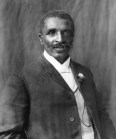
 Friends who know me know that I’m not really a fan of FoxNews. While I am theologically conservative, I tend to lean more to the left than Fox does when it comes to social issues and politics. That being said, I have not spent a lot of time watching Megyn Kelly on Fox. But I saw that she had a book published,
  Jesus gives us a different understanding of love. It’s not some sappy, touchy-feely emotion. I don’t think that was Jesus’s personality at all. He was a hard-workin’ man. The Greek word in the Bible for Jesus’s occupation is tekton, which is simply translated “builder.” Looking at construction in the Ancient Near East, it’s highly likely that Jesus did a lot of work with stone. He’s not a soft man at all. He’s hard, toughened, with rough hands. He’s the man. He’s like John Shaft – this cat Jesus is a bad mother (shut yo’ mouth!). I’m just talkin’ about Jesus (oh, I can dig it!). When Jesus talks about love it’s a very concrete, real thing that is about sacrifice – not about feelings.
 I know there are quite a few who don’t believe it, but racism is still alive and well in the USA. I’ve seen people flat out deny it. The racism-deniers are, in my experience, always white. And all day today I’ve seen white people CONTINUE to act in racist ways.
 And this is NOT to say that everyone who voted Republican is racist. Not at all.
  Chris Linzey