No Superficial Relationships Please!

old-ladies-texting

My kids have 14 grandmas. Not biologically, of course, but 14 grandmas in our spiritual family. Our community.

Reality television has a strange love for jamming a bunch of strangers together and watching chaos ensue as these strangers attempt to do life, overcome obstacles, lose weight, cook (or whatever the theme of the show is) together. Invariably someone is voted off, tempers flare, and relationships are damaged. You know how the story goes.

But that’s faux community – it’s a cheap, Hollywood-ized version of what people living in community is supposed to look like. Because it’s a sham of what real community is supposed to be the relationships are superficial and short-term. It doesn’t matter who gets the rose, because the odds are that they will not be together long after the reunion show wraps up.

God doesn’t care too much for faux community. He prefers the real deal. He prefers to see people who live together, love together, laugh together, and weep together. Real community is so much more than simply occupying adjacent space to other people. Community is family.

In the Old Testament, community was based on bloodlines and there was a clear hierarchy of how community was based: family -> clan -> tribe -> nation. This is what solidified the Israelites together as the original community of faith. Then Jesus radically changed things up.

As he was gaining fame and attention he was causing embarrassment to his immediate family. The Gospel According to Mark tells us that one time his family even came to his house when there were a ton of people there to see him. The family had one goal – remove Jesus from the public eye and end the embarrassment. So the people told Jesus, “Hey, your mother and brothers and sisters are here!” To that Jesus looks around and says, “Here are my mother, and my brothers, and my sisters – the ones who do the will of God.” He gives a completely new spin on the definition of community. It’s no longer about blood – it’s about a shared spirituality and kinship of faith.

At our church there is a group of ladies, mostly grandmas with a few great-grandmas, who have intentionally taken on the role of surrogate grandparents to me and my kids. It’s wonderful. Even though my parents, grandparents, and in-laws are thousands of miles away God has given us a family to look after us and care for us. I’m glad that my children have those kinds of godly people in their lives to look after them and assist us in raising them. This is real community.

Real community is not content to live in shallow relationships but strives to make meaningful connections where we care for and ARE cared for by others. Here’s the kicker – real community takes a lot of work to build and to maintain. You don’t get it by attending a worship service once a week and sitting in the same row as someone else. You don’t get it by seeing the same parents when you drop off and pick up your kids at school. Real community requires time and energy to know and be known. It requires vulnerability – sharing your life and yourself with others.

It’s not easy – but it’s worth it. I’m glad that my kids have 14 grandmas. Their lives will be richer because of it. My burden as a parent will be lessened because of it. It’s not perfect, and all family has issues, but a family we are. So my question to you is this: Will you accept Jesus’ radical notion of a remade family? Will you put in the time and effort to establish and maintain community with others around you? If so then I’m sure you’ll find your grandmas too.

Not As Random As You Think

People seem to love coincidences. A good coincidence will really tweak our brains. Sometimes we react wildly – “Oh, man! Can you believe that?!? No way!” It’s almost like a magic trick played on us by the cosmos.

optical illusionIt’s not a trick…it’s an ILLUSION!

I had an amazing encounter not too long ago. Our church was hosting an American Red Cross blood drive. After I had given my precious DNA to them and downed a can of juice, I was about to walk out when I saw a guy who attends my church sitting in the waiting area. I stopped to chat with him. I got to learn some things about him that I hadn’t know before, specifically that he is nearing the end of his paramedic studies and has the goal of eventually becoming a firefighter. I didn’t think too much of the conversation at the time. About an hour later my Twitter feed had a job posting from our hometown regarding an open position for a firefighter. I could not believe the coincidence! So of course I sent him the link to the job posting. Coincidence?

The notion of coincidence is troubled by two key factors: 1) the human freedom to act and behave however we see fit and 2) the biblical concept of an omniscient and omnipotent God.

One of my favorite passages in the Bible is a story near the end of the book of Joshua (the leader of Israel after Moses). One time Joshua was talking to the people about their tendency to forget God and to return to the idols and false gods of the Egyptians. Joshua says, “Choose the path you’re going to take – follow Yahweh or follow those others. As for me and my family, we will serve the Lord.” While God has made the initial steps towards humanity, we have the chance to respond. How does this connect to coincidence? If we have the freedom to choose our paths, then our choices are going to come with consequences (good or bad). That means that human behavior is not random coincidence but a series of results from our choices and behavior.

But sometimes coincidences happen that have NO rational explanation. These are the things that really boggle and mystify us. This is where an omniscient and omnipotent God comes in. The Bible is clear that Yahweh is a God who cares about humanity and interacts in human history. He is not a far-removed deity who merely watches Earth like a little kid watches his ant farm. God chooses to direct the course of human history. This means that sometimes God puts people and situations in our lives for specific reasons. There is no such thing as coincidence. Either we are seeing the result of human behavior and choices or we are seeing the result of an active God steering the course of the world. In Hebrews 13 the writer states:

Do not forget to show hospitality to strangers, for by so doing some people have shown hospitality to angels without knowing it.

You never know what is going to come down the path. The Bible says that our ways are not God’s ways, so we may never understand the big picture. What I do understand is that I need to seize every God-moment and look for his activity in my life and in the world. Sometimes we will face great coincidences. Sometimes we’ll face crummy ones. In the end it’s not about the amazing coincidences that we see in life – it’s about having the perspective that God is at work in the world.

The World in His Hands

Life is not as random as you think, and you never know when God is putting people and circumstances in your life for specific reasons. Don’t think “coincidence” – think, “This is a God thing!” Be open to his possibilities.

May I Ask Who’s Calling?

phone

I’ve picked up a pet peeve from my father. At least I think I got it from him. Let’s just say that it’s an annoyance we share. It really aggravates me when people call me and, as soon as I pick up the phone, launch into conversation without ever identifying themselves. I like people. I really do. But I find it impossible to memorize the voice of everyone I know. Actually, sometimes I even have trouble telling which of my brothers is calling me if he doesn’t identify himself.

But I don’t have any trouble identifying the voices of my wife or my parents. They are probably the three people I have spent the most time with and have the most intimate relationships with. In fact, I can hear my English professor mother’s voice correcting the previous sentence because I ended it with a preposition!

And that’s how intimate relationships work. Not only do you recognize the voice of the one talking to you but you get to the point where you can hear the other person’s voice commenting and talking to you without them even having to be around you.

Recently someone asked me how she could know the will of God for her life and how she could be sure that she was doing the right things to be in the will of God. I understand the difficulty of what she’s asking. Very few people I know have burning bush experience like Moses where God tells us unequivocally what he wants us to do. It seems that many of us have to go through life practicing discernment when it comes to God’s will. And sometimes it’s just plain tough to figure out.

We want the “Wizard of Oz” experience – Dorothy is given only one road to follow (the yellow brick one, of course). But I think the key is not in finding the one road God would have us take but in developing the intimate relationship with him that allows us to recognize his voice and to be able to hear his voice in our circumstances, know what he would say to us, even before he says it. This is the kind of relationship I envision the Apostle Paul is talking about in Romans 12:

I appeal to you therefore, brothers, by the mercies of God, to present your bodies as a living sacrifice, holy and acceptable to God, which is your spiritual worship. 2 Do not be conformed to this world, but be transformed by the renewal of your mind, that by testing you may discern what is the will of God, what is good and acceptable and perfect.

The more we allow God to transform us, and the more we are like him and the less we are like the world, we are better able actually to recognize his voice and to know what he would say. But such intimacy only happens over time. Not just quality but quantity as well. Do you want to know God’s will for your life? Do you want to hear his voice and understand his direction? Have you put in the time and effort to build an intimate relationship with him?

Because when he calls, it’s not so great to stop him mid-sentence and ask, “May I ask who’s calling?”

Will You Dance?

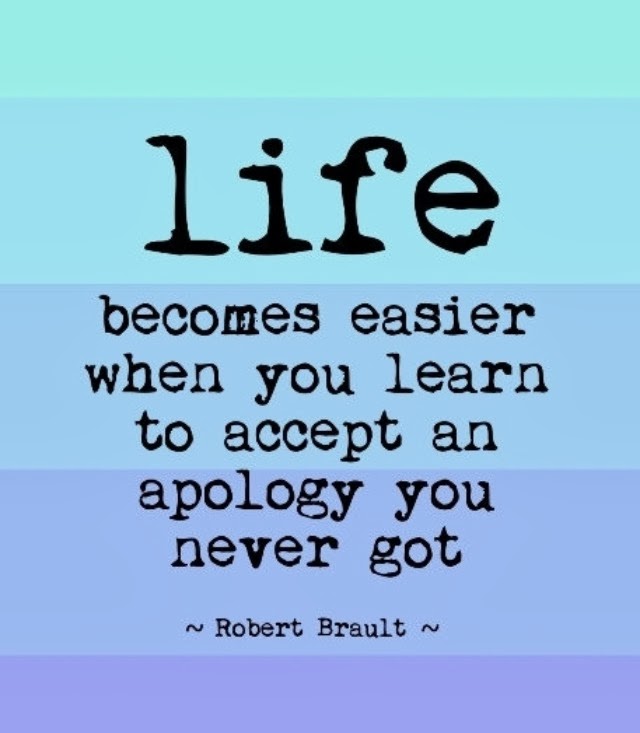
forgiveness

Humans are funny creatures. We have a unique ability to hear selectively. It really comes down to our circumstances in life. Grace vs. Justice. Forgiveness vs. Consequences. Often it feels like these are binary opposites – completely unable to mesh one with the other. We especially see these concepts in opposition when it comes to relationships and personal conflict. And our selective hearing comes into play.

If we are the person who has wronged or hurt another person our selective hearing turns to the Bible and hears GRACE and FORGIVENESS! We cling to these words as life-giving words. We may have sinned against God and against another person, but there is hope and newness is Jesus Christ: we can know grace and forgiveness.

If we are the person who has been hurt or wronged by another person our selective hearing turns to the Bible and hears JUSTICE and CONSEQUENCES! We cling to these words as sustaining words in our misery, knowing that God will repay others for the wrongs they have done to us and he will eventually vindicate us. We can know justice and see others face consequences for their actions.

But in our selective hearing we miss the major elements of what the Bible actually would say to us: that there is grace AND justice, and we may simultaneously experience forgiveness AND consequences. The offender will find grace and forgiveness through Jesus, while still suffering the consequences for past behavior.

I’m reminded of one of my favorite scenes in the movie “O Brother, Where Art Thou?” In the scene, three escaped felons come across a church’s baptism service at a river. One felon gets caught up in the moment and rushes in to get dunked. He comes out proclaiming that no man has anything on him now for the preacher “done warshed away my sins.” The other felons end up having to tell him that, though he might be right with God, the state is still going to hold him accountable. That’s us, isn’t it?!? When we get right we God we expect (or hope?) that the person we wronged will welcome us with open arms.

We forget that we will still have to own up to the damage done by our actions.

On the flipside, when we are wronged and the offender repents, we often have a hard time accepting the fact that Jesus has cleansed that person and given him a new start. “Jesus might forgive, but I’m not ready yet!” That’s too often our attitude. The funny thing is, Jesus never put a limitation on forgiveness. How often should we forgive? 70×7 is what Jesus tells the Apostle Peter. And, hard as it may be, God calls us to be people of forgiveness just as he is a God of forgiveness.

It’s a difficult dance these binary pairs dance – the movement between grace and justice, forgiveness and consequences. When it comes to personal conflict each side needs to be willing to put down his word and pick up the other’s word for a while. Put it on and wear it for a bit. If you have been wronged, remember that Jesus has forgiven the offender. If you have done the hurting, remember that forgiveness does not mean avoiding the consequences of our behavior.

Wherever you fall, dance the dance. Repent. Forgive. Show grace. Accept consequences. And in the end we will find that relationships only really move beyond conflict when each side is willing to dance.