DVD Review: The Theory of Everything

theory of everythingMy wife and I recently watched “The Theory of Everything,” the biopic about famed physicist Stephen Hawking. Here’s the rundown:

  • Cast

The acting was superb. Eddie Redmayne doesn’t just portray Stephen Hawking – he BECOMES Hawking. The physical transformation in incredible to watch, and quick research will tell you that Redmayne studied and talked to many people who suffer with ALS. He also trained with a dance coach in order to learn how to better control his body so that his physical performance was accurate. I wouldn’t necessarily call the film a happy film, but the actors do an excellent job of drawing the audience into the struggles (and triumphs) of the characters.

  • Score

The musical score for the movie was excellent. I know most people reading reviews don’t really care about the music, but my wife and I both noticed it. It is the kind of music one would want as a stand-alone album.

But let’s get down to brass tacks – what people REALLY want to talk about when it comes to movies like this: the thematic elements.mathematics

  • Themes

The first, and most easily identifiable, theme, is the back and forth between Atheism and Theism. This theme was a point of contention within the Hawking marriage, Jane being a Christian with the Church of England and Stephen being an atheist. I won’t spend much time debating this theme myself – blog posts about atheism/theism never convince anyone on the opposite side to change positions. Clearly I believe in God, and I think Hawking is wrong.

The movie actually does a decent job of portraying the different viewpoints of Jane and Stephen without demonizing one or the other. One of my favorite scenes is when Jane is explaining how science views God differently depending on whether one is looking through the lens of relativity or quantum physics.

Don’t get me wrong – it’s not a Christian film, and the director clearly portrays Hawking’s bias against God, but the theme can make for interesting conversation and should prompt us all to think more deeply about the interplay of faith and science (yes, they CAN coexist).

The second theme I noticed was that of the suffering servant. Suffering Servant is a phrase I’ve come across only in biblical studies, but it seemed appropriate for this movie. At the beginning of Stephen’s diagnosis, his father tells Jane (who is not yet married to Stephen) that she doesn’t realize what she’s in for. It’s not a fight, because there’s no positive outcome. It will only be a brutal beating. She stays the course and decides to pursue a relationship with Stephen.

For 30 years she was married to him and helped care for him. The movie portrays the kind of toll being a caregiver can take on family. It’s hard on spouses who care for each other. It’s hard for parents who care for children. It’s hard for children who care for parents. It’s hard on ANYONE who provides full-time care for loved ones. Emotional and relational damage are all too common, and the movie shows such damage; damage to the point of the eventual divorce of Jane and Stephen. It should cause us to ask difficult questions about our level of care and commitment towards our loved ones – even when things get tough.

Once upon a time weddings used to use the phrase, “For Better or For Worse.” Being a full-time caregiver for a family member with special needs can definitely run the gamut of better to worse. In an age where it’s all too easy to put loved ones in homes and institutions, how far does our care, commitment, and yes, even love, take us?

The final theme I want to talk about is that of hope. At the end of the movie there’s a neat scene where Stephen is asked, since he doesn’t believe in God, what drives him to carry on day after day. In the scene, Eddie Radmayne suddenly shifts his feet, stands up from the wheelchair, and walks down some steps to pick up a pen dropped by a student. Cinematically it’s a neat way of showing the imagination of Hawking and leads us to his answer. What drives him day after day? Hope. As a physicist who believes in a world with no boundaries and endless possibilities, he says, “As long as there is life, there is hope.” Of course the audience stands and erupts in applause.

But life isn’t enough for hope, because when life ends, then what? Paul writes in 1 Corinthians 15:19 ~

 If we have put our hope in Christ for this life only, we should be pitied more than anyone.

Those who believe in God know that hope is so much MORE than the idea of possibilities in this life. Hope goes beyond life into the great beyond. Hope is the anticipation we have that this life WILL end and that God will make all things right.

At the end of the day, The Theory of Everything is an excellent film that is worth watching. Talk about the themes with your family and friends. Don’t be afraid to ask the difficult questions raised by the film.

Enjoy the show!



The Big 10: So’s Your Old Man!

For those of you who have been tracking along with our Big 10 series, today we hit the mid-point. We’re now half-way through the ten commandments. The 5th commandment has to do with mothers and fathers.

“Honor your father and your mother, so that you may live long in the land the Lord your God is giving you.”

This is the first commandment that has a promise attached to it. If you follow this instruction, then the promise is this: you’ll have a long life in the Promised Land. There is a connection between how they treated their elders and how God blessed them.

This is somewhat of a foreign concept in western culture. We love people as long as people love us. But God doesn’t put conditions on this command. It’s not always easy. Have you ever had a parent who knows everything and, no matter what you say or do, nothing is ever right or good enough? But we are STILL called to honor the parents that drive us crazy.

When you’re 10 you might have disagreements with your parents that drive you bananas. When you’re 50 years old you might have life-long issues with your parents that have never been resolved. I’m reminded of a joke I once read:

child-355176_1920– When a child is six her words are, Daddy I love you.”

– When she is 16 her words are, “Daddy you have no idea what you’re talking about!”
– When she’s 26 it’s, “Daddy, you’ve got some good ideas.”
– When she’s 36 it’s, “Daddy, I should have listened to you from the very beginning.”

The Bible says to honor our parents but this is not about domination. Parents, we cannot use this commandment to batter our children and demand obedience. God isn’t talking to minors about how to deal with parents while we’re living in their home. The readers here are adults. God is telling those of us who are grown that we still need to honor mother and father.

But it goes far beyond that.

In Hebrew, the words mother and father go beyond the parental units that birthed us. people-852423_1920The words can be used for grandparents and ancestors. It really comes down to the family as a whole. God’s promise to a long life in the Promised Land isn’t about obeying the people who raised us – it’s about creating a culture that honors those who have gone before us. It’s about the entire community sticking together and thriving.

In Deuteronomy 6:1-9 we’re told about what the family is supposed to do.

These are the commands, decrees and laws the Lord your God directed me to teach you to observe in the land that you are crossing the Jordan to possess, so that you, your children and their children after them may fear the Lord your God as long as you live by keeping all his decrees and commands that I give you, and so that you may enjoy long life. Hear, Israel, and be careful to obey so that it may go well with you and that you may increase greatly in a land flowing with milk and honey, just as the Lord, the God of your ancestors, promised you.

Hear, O Israel: The Lord our God, the Lord is one. Love the Lord your God with all your heart and with all your soul and with all your strength. These commandments that I give you today are to be on your hearts. Impress them on your children. Talk about them when you sit at home and when you walk along the road, when you lie down and when you get up. Tie them as symbols on your hands and bind them on your foreheads. Write them on the doorframes of your houses and on your gates.

It’s the responsibility of the family to teach about God and his covenant. It’s the responsibility of the children (adult children, mind you) to say, “I will be a covenant keeper.”

What does it mean to honor parents and family? It can be a vague commandment, but it wasn’t difficult in the ancient world: you don’t curse your parents, you don’t strike your parents, you don’t disobey your parents, and you provide your parents with a proper burial.

Our culture has trained us to think of community in a different way. Instead of family units making up the community, we are now communities of strangers. In the ancient near east, the smallest family unit was the nuclear family. They would live with the larger unit: the clan. The clans stuck together to make up the tribe. The tribes then made up the nation.

Without strong families, the nation ultimately fails. When the family falls apart, the community falls apart. It’s not just about honoring parents because this is a nice thing to do. God tells us that a strong community is predicated on how we honor the family.

In the New Testament Jesus radically changes the notion of familybaby-772439_1920 and community. Instead of flesh and blood, Jesus now makes faith the common bond that unites the new community. In the church we used to call each other “Brother So-and-So” and Sister such-and-such.” Flesh and blood doesn’t matter anymore because we have a new bond.

We have the same obligation to honor those who have come before us. We have an obligation to respect and listen to our fathers and mothers. Children, obey your parents. Honor your father and mother. Jesus is pulling directly from the 10 commandments and he reiterates the same principles. But he flips the table on the parents and elders: Don’t exasperate your kids but bring them up in the right way. This is the essence of discipleship! We are all called to help disciple those who come after us.

It’s not enough to go to church and get our spirituality on. We’re called to parent and to raise up the next generation. If the community is going to be strong it starts with the family unit. When we fail to disciple those who come after us, the community will weaken and ultimately fail.

Parent to child, are we doing what we ought to be doing to establish healthy families? Are we raising our children to be covenant keepers? Are we honoring those who have gone before us – not just our biological parents but our spiritual elders? The church is designed to BE the new family unit. It’s a sad state of affairs when people can go to church and feel completely isolated. It’s time to revitalize the community; the family; the community of God.

When we work on developing the Christian family, we’ll see happier and healthier homes. We’ll see stronger churches. We’ll see stronger communities of faith that actively honor the elders while simultaneously raising up the next generation.


Questions for Reflection

  • How can I honor my biological parents? How can I honor my spiritual elders?
  • What can I do to build and foster a healthy family and community?

Hello – The Gospel of Adele

hand-977641_1280It’s difficult to go anywhere and not hear Adele. She’s everywhere. The other night my wife and I saw a Target commercial that was simply 60 seconds of the newest Adele music video. Her new hit that’s taking the world by storm is “Hello.”

Hello from the other side
I must’ve called a thousand times
To tell you I’m sorry, for everything that I’ve done
But when I call you never seem to be home

Hello from the outside
At least I can say that I’ve tried
To tell you I’m sorry, for breaking your heart
But it don’t matter, it clearly doesn’t tear you apart anymore

The lyrics are rather sad. woman-1006102_1920They are about loss. They are about heartache. They are about a broken relationship. They are about missed opportunities. Those themes resonate with all of us, for we’ve all experienced them in our own way.

In fact, they are actually themes that Jesus speaks to. Throughout the Bible, God demonstrates that his primary passion when it comes to humanity is restoration. From the Garden of Eden to the Book of Revelation, God is in the process of restoring humanity to himself.

But God ALSO cares about restoration when it comes to human relationships! Jesus says:

If you bring your gift to the altar, and there recall that your brother has anything against you, leave your gift at the altar, go first and be reconciled with your brother, and then come and offer your gift. (Matthew 5:23-24)

Later on Jesus says:

If your brother sins against you, go and tell him his fault between you and him alone. If he listens to you, you have won over your brother… (Matthew 18:15)

While the second passage is about a Christian model for handling disputes and conflict, these passages show us the basic principle that restoration of broken human relationships matters to Jesus. Instead of letting brokenness win the day, Jesus calls us to be proactive in fixing broken relationships. Integral in the process of restoration is forgiveness, which the Apostle Paul talks about:

Be kind to one another, compassionate, forgiving one another as God has forgiven you in Christ. (Ephesians 4:32)

How we treat each other is important to God. Human relationships are important to God. And that means that we cannot be passive when things are broken. Sorry, Adele, but it’s not enough to wait and call from the other side – to apologize long after the fact.

Be active in reconciling and repairing relationships before it’s too late and the damage is too great.


The Big 10: Chill Out, Man!

Thanks for joining us on our journey through God’s Big 10 – the ten commandments. We’ve got the first three commandments out of the way – let’s press on and tackle number four. This time we’re gonna hear God tell us, “Chill out, man!”cat-98359_1920 Let’s talk about what it means to rest and what it means to cease from activity.

“Remember the Sabbath day by keeping it holy. Six days you shall labor and do all your work, but the seventh day is a sabbath to the Lord your God. On it you shall not do any work, neither you, nor your son or daughter, nor your male or female servant, nor your animals, nor any foreigner residing in your towns. For in six days the Lord made the heavens and the earth, the sea, and all that is in them, but he rested on the seventh day. Therefore the Lord blessed the Sabbath day and made it holy.

Sabbath is a Hebrew word that simply means, “rest.” We’re told from the beginning that the context for our taking a rest is that it is the model given us when God created the world. He spends six days creating and rests on the seventh. That’s kind of funny – does God need a rest? Sometimes I get this funny picture of God sweaty and out of breath after spending 6 days working. I can imagine God saying,

“Hey, Gabriel, I just need to chillax for a second.”

We treat Sabbath like a mini-vacay. I’m not going to do anything! God told me to take a break! But that’s not what we’re talking about. God is not so weak that he needs to catch his breath. God is not so puny that he can’t go more than 6 days without a breather.

commandments-159649_1280Sabbath means ceasing from activity. It’s not about God being tired. It’s not about God needing a break. It’s about God having brought to completion all he set out to do, so he simply stops his activity. That is what Sabbath is – to pause, cease, and terminate your activity.

There are no other parallels with any other ancient culture. The idea of Sabbath rest is unique to God’s people. He tells us that it’s one of the ways that his people are set apart from everyone else. It’s not about kicking back and putting your feet up – it’s about stopping our work to focus on Him. It’s holy time.

Everything and everyone is supposed to stop. In the same way that God said, “I’ve done what I set out to do – this is good,” we’re supposed to step back from our activity and say, “God is good.” It’s not to catch up on sleep but to focus on God.

It’s easy to feel overloaded. Our schedules burden us. We are like a crazy little surge protector that is loaded to the max with plugs and wires. It’s a mess, about to start a fire. That’s what our lives are like without Sabbath. We become so overloaded. God asks, “Where do you make time for me? Where do I fit into your life? Let’s create a special place – a sacred space for you and me.”

You get all these days to do your work, but every seventh day humanity is supposed to unplug. We create special space to be with God. There are no other distractions. No one else gets that space. It’s his.

In the New Testament we get a little different picture of Sabbath. All God said in the Old Testament was to set apart the Sabbath – create the space. But there isn’t a whole lot of detail as to what it looks like. So God-fearing religious people set up rules and regulations about what it looks like. What can we do? Is it okay to save somebody’s life? Sure, we can do that. What about if my donkey falls into a hole? Well, if it’s within a certain radius of your home, sure, but if it’s outside the radius, no. What about lighting a fire in my home? No, that’s creative work – no making fires.

More and more I’ve seen that God has given us simple religion yet humanity comes along and mucks it up. Where God says something small, we turn it into a massive thing. Rigid observers of Sabbath law won’t even flip on a light switch on Sabbath. They bring in a gentile to do the work for them.

There’s a story in the New Testament where Jesus breaks Sabbath law by plucking grain to eat.

 23 One Sabbath Jesus was going through the grainfields, and as his disciples walked along, they began to pick some heads of grain. spike-143373_192024 The Pharisees said to him, “Look, why are they doing what is unlawful on the Sabbath?” 25 He answered, “Have you never read what David did when he and his companions were hungry and in need? 26 In the days of Abiathar the high priest, he entered the house of God and ate the consecrated bread, which is lawful only for priests to eat. And he also gave some to his companions.” 27 Then he said to them, “The Sabbath was made for man, not man for the Sabbath. 28 So the Son of Man is Lord even of the Sabbath.”

It’s about the heart, not the letter of the law. Are we creating sacred space for God? Are we making room in our busy and hectic world to stop and focus on God? If you unplug everything this world is going to keep driving on. It doesn’t need me to keep turning. What are we REALLY losing if we unplug and say, “God, I’m giving this time to you”?

The New Testament does not give us Sabbath as a command to obey. Paul says, “Some people consider one day special…” but the principle of Sabbath still applies. Are we making sacred space for God? The principle of ceasing is still good. More rest means more productivity later on. More rest now means less stress-related problems later on.

There are physical benefits to Sabbath rest. God’s not trying to demand time because he doesn’t want us to do nothing else. He cares about us! More rest means a better, healthier us. Jesus was in the habit of unplugging and resting. Jesus took time by himself or with his disciples to get away to go rest. But it wasn’t about watching the game and having a cold one. Anyone can have a secular day off. Sabbath is about unplugging from the world so that you have that God-space.

But how do you build Sabbath time into your life? It starts with a conscious decision. We have to decide make that space. In our world we have a disease called “When I have time.” I’ll do that “when I have time.” I’d love to learn another language. I’d love to clean out the garage, sweetheart. I’d love to…

Pretty soon our lives are so cluttered that there is no time for anything! Is it any wonder that God tells us to take Sabbath rest? I’ll focus on God when I have time. God’s reply is, “Hey, dummy, I’ve built that time into the week for you.” So we cease all regular activity so we can unplug and focus on God. Spend the time in prayer. Put on a Christian cd and meditate. Go to worship services. Don’t worry about the world – it will keep spinning. If we let it, the world will keep driving us.

Get centered mentally and spiritually. It’s not about legalistically saying, “I can’t do XY&Z on Sunday.” It’s about finding sacred space. It’s about finding time to unplug from the world and plugging into God.

We will be happier. We will be healthier. We will see better homes, better families, and a better us. This week examine your schedule. Where can you find time to unplug from the regular world and make Sabbath space? It doesn’t matter what day or hour – we’re not going to be legalistic about it. But we need to learn to unplug from regular activity and make sacred space.

Questions for Reflection

  • What controls and drives my days and weeks?
  • When was the last time I tried to unplug in order to create sacred space?
  • Am I willing to drop everything on a regular basis to cease from activity and focus on God?

The Big 10: Swear to God

Welcome back to our journey through the 10 Commandments! We’ve already looked at the first two commandments. Now God continues with the 3rd commandment.

“You shall not misuse the name of the Lord your God, for the Lord will not hold anyone guiltless who misuses his name.

How many of you have ever been taught that the commandment means “Don’t have a potty mouth” swearingand don’t swear and curse. But it’s not about profanity. It’s about making oaths and promises.

At some point, most of us have been lied to by someone. Sometimes the liar declares with total conviction that he’s telling the truth. Have you been in a situation like that? You don’t believe the story and they tell you, “SWEAR TO GOD!” In the military, Sailor’s stories often start with, “I s*** you not.” Military member’s stories are less believable than any other stories – maybe only 20%!

Just because someone says, “Swear to God!” doesn’t mean that their words are going to be true. They can say that and still tell you lies. I asked some people about jobs that have reputations for being filled with liars: lawyers, contractors, politicians… It’s impossible to go through an election season without hearing both sides declaring the other guy is a liar! “He’s a lying lying-pants.”

I genuinely believe that most politicians are not trying to deceive the public. I think that they hear and believe spin and then repeat bad info without ever hearing the truth. Then they sully their name with “lies.”

Dale Carnegie talks about the power of the name. Our names are the most important word in our language. If you have an unusual name or a name that’s spelled or pronounced oddly, how do you respond when people say it incorrectly? Or when people are writing your name and misspell it? Like having the last name Linzey with no “d” and no “s.” Or when telemarketers call for my wife…

When I was in Chaplain School we had a Nigerian national whose name was 6 syllables long . Chaplains and Chaplain Assistants would approach him, look at his name, and resort to simply calling him “Chaplain O.” They would never learn how to say his name. In his culture it was an insult.Name He took it as an insult every time someone refused to learn his name, so I took it upon myself to learn his name and the proper pronunciation. When I said it his eyes got wide and his jaw dropped open.

The name of God is more important. God is saying, “Don’t take my name lightly. Don’t think you can throw my name around in your lying and in your declarations. My name is not cheap. My name is not dirt – don’t treat it as such. My name is holy. My name is sacred.”

He’s saying, “Don’t use my name to add weight to your words.” That’s what oaths are all about. It saying that our words alone are not trustworthy, so we give them added weight. “I swear….” If that’s not enough we’ll swear on the Holy Bible. As though throwing God into the mix will increase the truthfulness. Have you ever heard, “Swear on a stack of Bibles!” As though each Bible increases the truthfulness of your statements. If we have to swear on a stack of Bibles to convince people, what does that say about all of the other words that come out of our mouths?

It tells me that we’re untrustworthy people. It tells me that people think we’re full of it – that people think we’re habitual liars unless we swear on a stack of Bibles. Don’t use God’s name. It really comes down to our character and our honor. Deuteronomy 25:13-16 says:

Do not have two differing weights in your bag—one heavy, one light. Do not have two differing measures in your house—one large, one small. You must have accurate and honest weights and measures, so that you may live long in the land the Lord your God is giving you. For the Lord your God detests anyone who does these things, anyone who deals dishonestly.

The scales were used to buy things. Some shop owners would put bogus weights on the scales to make the cost seem greater than it should be. But God is calling us to live a life that is so sparkly that resonates with honesty in every fiber that nobody EVER requires us to swear any kind of oath.

Even kids learn early on: “Do you pinky-swear?” Why the pinky? pinky-swearWhy not the thumb? Who knows. What about “Scout’s honor”? Is if my credibility as a Scout gives my words MORE weight than normal. Why do we swear? To give our words weight. Even the Apostle Peter, when being accused of being a follower of Jesus, swore that he wasn’t part of Jesus’s crowd (Matthew 26:72; Mark 14:71).

We are people who will swear false oaths to protect ourselves from trouble. Sometimes we do it to manipulate others (used car salesmen, anyone?). We make all sorts of oaths, but it all comes down to adding credibility to our words because we feel that what we’re saying isn’t trustworthy enough. It’s a problem when we feel we have to call God in to lend weight to what we’re saying.

Integrity matters. Character matters. Why? 1) God is a person of integrity and character, so we need to be. 2) Relationships thrive on honesty and integrity but shrivel up and die without it. In marriage, it means that your spouse believes your behavior when you’re by yourself is the exact same as it would be if he/she were right beside you. That’s integrity. Honesty and integrity breeds trust.

People will never have to wonder or question our words when we live lives of integrity and honesty. How do we live swear-free lives (not profanity, but integrity)? It comes down to a yes/no lifestyle. Jesus says in Matthew 5:33-37:

Again, you have heard that it was said to the people long ago, ‘Do not break your oath, but fulfill to the Lord the vows you have made.’ But I tell you, do not swear an oath at all: either by heaven, for it is God’s throne; or by the earth, for it is his footstool; or by Jerusalem, for it is the city of the Great King. And do not swear by your head, for you cannot make even one hair white or black. All you need to say is simply ‘Yes’ or ‘No’; anything beyond this comes from the evil one.

Jesus says don’t try to back up your words with something stronger. You’re saying that you’re not normally trustworthy, so you’re bringing in your big guns. Jesus says it’s not supposed to be that way. We’re supposed to live lives of honesty and integrity that does not throw around God’s name lightly. No oaths necessary. You should know that my character backs up my words.

I want to be known as a person of honesty and integrity. This world trains us to gloss over the truth. We are okay with “partial truths” and “white lies.” We train ourselves to be dishonest. We must start living a yes/no lifestyle. Forget about oath-making, just live honestly. “Do what you say you’re going to do, when you say you’re going to it, to an agreed upon standard.”

Practice being honest in the little things. Practice being honest in the big things. No promises and oaths needed – we just live as people of our words in everything we say and do. When we become people of integrity, people will notice. They will take our words seriously. Don’t misuse the name of the Lord. Instead, live a life of honesty, regardless of the consequences. Let us be trustworthy people.

Questions for Reflection

  • Am I a person of integrity?
  • Can people trust my words or do I need to add weight to convince people?

The Big 10: Genie in a Bottle

I’m not terribly good at it, but I love doing magic tricks.magician I love seeing kids’ eyes get big when you do something that utterly amazes them. All over the world, people are fascinated with magic and magicians. From Harry Houdini to Criss Angel, we desire to see them do the impossible.

Why do we love magic so much? Magic brings with it the idea of power and control. Somebody able to do something that nobody else can do. There’s something about magic that delights us because we like seeing people do something that nobody else can do.

The 2nd commandment is about finding that mystical power that controls the universe – that controls our lives. You see-real magic is about power. It’s about controlling the world. It’s about becoming a god. I mean people who really dabble in magic. It’s about controlling the universe.

God starts off by saying, “I am the Lord your God”. Now he continues:

2. You shall not make for yourself an image in the form of anything in heaven above or on the earth beneath or in the waters below. You shall not bow down to them or worship them; for I, the Lord your God, am a jealous God, punishing the children for the sin of the parents to the third and fourth generation of those who hate me, but showing love to a thousand generations of those who love me and keep my commandments.

There’s a lot of debate on what it means to make an image. Some traditions say no statues, no art work, no image of any kind. God says, “No images” and that’s it. Other traditions say, “Jesus on the cross is not an idol!” So what are we really talking about?

It really comes down to power and control. When the ancients made idols they would make it whatever image represented their God. They had an understanding that the idol wasn’t just an object, but that the idol was actually the resting place of that god. When the idol was sitting in the sanctuary the god was literally present in the idol. It became a home for the god.

In the ancient world in times of war, when nation would come against nation, they would go to the enemy’s temple and try to steal their gods. They thought, “If we can capture their god and bring him back to our land then we have their power and control. Their god is under our possession.”

Who controls the universe? Who controls the world? God is saying – don’t act this way with YAHWEH. God will not be contained in a box! You cannot control Me! You cannot build a statue of me and expect that to be my home. I am bigger than anything you puny little people can build! You cannot begin to contain the power that is YAHWEH!

No idols is not saying, “No foreign gods.” He already said that in the 1st commandment. We already got that out of the way. He’s saying, “Do not even think for a minute that you can contain me. I am bigger than you can imagine.”

As humans, we like to put everything in neat little boxes. We like to have control of our universe. We like to know exactly what’s going on, the one behind the wheel. My wife has never been in a wreck when I’ve been driving with her. She’s very cautious. I have no reason to doubt her ability. Even still, I like to be the one behind the wheel whenever we go anywhere. I like to be in control of where I am going.

We like to be in control of our lives, to have the power to say what we are going to do, when we are going to do it, and with whom we will do it. We live control and power. So we look for any edge to give us that control. And we treat God like a genie in a lamp.genie We live our lives independent of God, separate from his control, until we come to a roadblock that we cannot overcome ourselves. Then we pull out our lamp, rub it, and say, “Genie, I need your help…I mean, Lord, God, hear my prayer!”

Practically, we treat God as if he were no more than a genie in a lamp. He’s probably sick and tired of being used. It’s like the movie Aladdin. Genie is asked, “What would you wish for?” He wants freedom. Genie says I’m a slave to the lamp and I get tired of “Poof, what do you need?” Too often that’s how we treat God. We call on him only when we need him. We expect God to come at our beck and call to make life good for us.

But we cannot contain and control Him! He is not at our beck and call. He is God and we are not. One of my favorite stories in the Bible comes from Acts 8:

Now for some time a man named Simon had practiced sorcery in the city and amazed all the people of Samaria. He boasted that he was someone great,  and all the people, both high and low, gave him their attention and exclaimed, “This man is rightly called the Great Power of God.” They followed him because he had amazed them for a long time with his sorcery.  But when they believed Philip as he proclaimed the good news of the kingdom of God and the name of Jesus Christ, they were baptized, both men and women. Simon himself believed and was baptized. And he followed Philip everywhere, astonished by the great signs and miracles he saw.

When the apostles in Jerusalem heard that Samaria had accepted the word of God, they sent Peter and John to Samaria. When they arrived, they prayed for the new believers there that they might receive the Holy Spirit, because the Holy Spirit had not yet come on any of them; they had simply been baptized in the name of the Lord Jesus. Then Peter and John placed their hands on them, and they received the Holy Spirit.

When Simon saw that the Spirit was given at the laying on of the apostles’ hands, he offered them money and said, “Give me also this ability so that everyone on whom I lay my hands may receive the Holy Spirit.”

Peter answered: “May your money perish with you, because you thought you could buy the gift of God with money! You have no part or share in this ministry, because your heart is not right before God. Repent of this wickedness and pray to the Lord in the hope that he may forgive you for having such a thought in your heart. For I see that you are full of bitterness and captive to sin.”

Then Simon answered, “Pray to the Lord for me so that nothing you have said may happen to me.”

Peter says, “You and your money can go to Hell” You cannot buy and manage God. You cannot finance your way to heaven. God’s presence is not a commodity that can be bought, traded, or sold. You cannot keep him in a box.

What it really comes down to is, “Who’s will is going to be in control?” Are we going to bend our will to his? Or will we try to bend his will to ours? The 2nd command commandment is about humans trying to bend his will to ours. “God, here is your resting place. When I need you I’m gonna come get you,” and God says, “Uh uh! No way, brother. It don’t work like that.”

God cannot be contained in a little statue. Proverbs 3:5-6 says:

Trust in the Lord with all your heart and lean not on your own understanding; in all your ways submit to him, and he will make your paths straight.

Who’s in control of your life? Is He? He’s supposed to be. As you look at your life and the things you do, who do you bend your will to? Or can you admit that you’ve been treating God like a genie in a lamp. I do my thing until I’m in trouble and then pray, “Jesus, save me!”

Poof, what do you need?

That’s not the way it’s supposed to be. I think we learn 2 things from Simon: 1) God cares about what’s going on in the human world. So much so that he is willing to do the miraculous if we just open our eyes and ask him. God wants to work in our lives. He wants to make the sick whole. He wants to repair broken relationships. God wants you to be whole and complete. He cares about us. 2) But he is not a genie in a lamp. He is not at our beck and call when we need him only to be ignored when things are going well. That’s our tendency. It’s my tendency, so I assume it’s yours, too.

We let Jesus alone until trouble is upon us. Then we run to him and cry out, “Teacher! Don’t you care that we’re about to die?” And Jesus asks, “Where is your faith? Don’t you know who is in the boat with you?”

He’s not your genie. He’s the creator of the universe. The one who came, took our form, and calls us “friends.” What other god can say to his creation, “I desire to be in relationship with you”? No other god!

The 2nd commandment helps us understand who we are and who He is. We need God’s presence more than ever before. We struggle with illness. Relationships are broken and are struggling. We feel hurt and lost. We feel like we’re drowning and the waves are sweeping over the boat. The power of God can rescue us. Not because he’s a genie in a lamp, but because he cares about you and me.

Simon had no need for God as long as he had his magic. Let us stop turning to God only when we have needs. Stop treating him like a genie in a lamp. Let us eagerly pursue his presence and power every day, through the good and the bad.

Questions for Reflection

  • What do you hold on to that controls your life?
  • What “magic” do you use to keep order?
  • Is God first? Or is he merely one among many?

When the KKK Infiltrates Your Church

churchSo there I was talking to another pastor about race issues in the church. He told me about a friend of his (yes, I know that this would never be admissible in a court of law, but it’s just a story, so chill) who was pastoring down south. The pastor was new to the church, and when a black family visited one Sunday the board later asked the pastor what he was going to do about it.

His response? “I’m not going to do anything about it.”

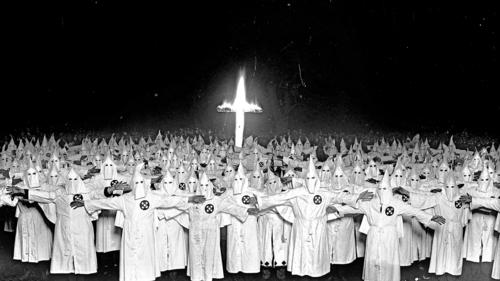
But the family visited again. And the pastor was summoned to a special meeting with the board. Upon entering the meeting, the board members pulled out their wallets and showed the pastor that they were all card-carrying members of the Ku Klux Klan. ku klux klan

I don’t know how that story ends. That wasn’t the point of our conversation. Our conversation revolved around people who consider themselves to be Christians yet behave in ways that many Christians believe to be contrary to how authentic disciples of Jesus behave.

But here’s the thing: we can’t tell people what they are. Or aren’t. people are allowed to self-identify however they like. Oh, sure, we can tell people that we don’t think their way of doing things fits into the mold, but people don’t usually listen when we try to tell them what they are.

Like an article I saw from not too long ago. A local KKK leader in Virginia claims that the KKK is a Christian organization. They just want to make sure that the white race stays white and isn’t diluted. As he says:

It’s not a hateful thing to want to maintain white supremacy.
Yet I would like to think that the majority of Christians in the world recognize that the KKK is NOT a christian organization. It’s not merely about history and heritage.ku klux klan with flag They’ve done some really atrocious things and propagate animosity and hatred towards other human beings.

But here’s the kicker: I think it IS possible for Christians to be card-carrying members of the KKK.

Don’t misunderstand me. I think the KKK is unequivocally evil. But humanity is predisposed to be evil. It’s in our nature. In theological terms we call it sin-nature. Left to our own devices there is no way we can ever achieve heaven – we will simply never be good enough. That’s the whole point of the cross – Jesus paid the price for sin because the price was TOO steep for us ever to pay.

For Christians, that means we’re all a bunch of sinners in the same boat. We’re simply on different places of our spiritual paths. Some of us are farther along than others. Some of us still have a long way to go. But faith in Christ isn’t predicated on a list of rules and behaviors. The Apostle Paul never said, “Give up all your old ways, come to Christ, and then you’ll be saved.” That’s getting the order mixed up.

We come to Christ FIRST. Then our behavior ought to be in an ever-evolving state as we grow in our Christ-likeness. I’m fond of saying:

God loves you as you are, but God does not love the way you are.

As we mature in our faith, the old way SHOULD die out. Can a Klansman be a believer? Sure, just like the Christian-murdering Paul could come to faith. But after Paul started the road of faith HE CHANGED. This is where the rubber meets the road. God loves everyone, but authentic faith brings us to a place where we are no longer the same.

Can the Christian church have Klan members in it? Yes. I would hope it did. Just as I would hope the church would have drug addicts, drug dealers, spouse abusers, porn addicts, tax-evaders, and any other horrible thing you can think of. If the church isn’t reaching sinners then we’re not doing our job.

But the beginning-of-the-journey sinner can’t stay that way. It’s not enough to come to Jesus if we refuse to change. When it comes down to it, though, it’s not our place to force change. We can welcome people and speak the truth as we know it. Then we need to trust God to do the real work of changing hearts. Because my words will most likely never change hearts. That’s not my job – it’s God’s.

That means we should treat people with a whole lotta grace, even when they’re on a different part of the journey than we are. You might have a Klansman in your church. Who knows where God will have him this time next year.

May God be patient with us all as we grow in the grace and knowledge of Him.

Starbucks Hates Jesus: When Conservatives Use Jesus to Push Their Own Ideologies

Ah, the holidays! I think my favorite part is our annual “War on Christmas” posts and news articles. war-on-christmasI’ve written about it before here in a post called “Liberals Are Killing Christ” when a previous persecution outbreak swept ‘Merica.

Christians love to feel persecuted when it comes to Christmas, even though there is no biblical mandate, “THOU SHALT CELEBRATE MY BIRTH AND DECRY ANYONE WHO DOESN’T CELEBRATE THE WAY YOU DO.” The latest entry in the persection complex – a video post from ultra-conservative Joshua Feuerstein. Take a look:

So let’s break down what Mr. Feuerstein is saying.

1. Starbucks wanted to take Christ and Christmas off of their cups.

Sure, that’s possible. Even likely. Starbucks is a secular organization. In their own words, they wanted cups that made the season welcoming to “all of our stories.” That sounds horribly reasonable. It’s not a war on Christmas. It’s about a non-Christian company doing things to welcome customers from all backgrounds.

2. Mr. Feuerstein “tricked” Starbucks into putting Merry Christmas on his cup.

Well, not really. It’s not a trick when, in essence, baristas ask, “What do you want me to write on your cup?” Clearly Mr. Feuerstein is upset. He’s even thought of boycotting the coffee chain. But instead of taking a stand by refusing to give Starbucks his money, he advocates people spending MORE money there and having baristas write Merry Christmas on cup at a time.

What a protest. -.-

Sounds like Mr. Feuerstein is the one who got tricked. Starbucks gets his money AND keeps their religious-neutral cups.

3. “Starbucks…guess what…just to offend you I made sure to wear my Jesus Christ shirt into your store….”

Yup. There it is. Because that’s the Christian way to behave. The gospel will be offensive because of what it proclaims. We shouldn’t be trying to be offensive. That’s rude and completely opposite of the kind of humility Christ calls us to embrace.

What happened to treating people the way we want them to treat us? What happened to doing good even when we suffer under harsh and unfair circumstances? Get this:

The REAL war on Christmas comes from these faux-Christians who are more concerned with their rights and with smacking dissenters with their Bible than they are with actually living out the principles Jesus taught.

Mr. Feuerstein, please take off the Jesus Christ shirt. Stop using my faith to push your political agenda and ideologies.

‘Cause I’m pretty sure that’s NOT WWJD.

The Big 10: No Other Gods

It’s my joy once again to lead an online devotional Bible study. This time we’re going to spend some time looking at the Big 10 – God’s foundational commandments to His people.

footballLegendary football coach Vince Lombardi had a habit every season; even if his players had been on the team for years, where he would get his players together, hold up a football, and say, “Gentlemen, this is a football.”

When we have the fundamentals in place, then we have a solid foundation for playing a strong game. That is what the 10 Commandments are for us. They are foundational for who we are and how we are to behave.

People get weird when we talk about laws and commandments, though. We don’t want to be told what to do. And sometimes laws can be funny things. There are some stupid laws on the books. These are some I found:

– It is illegal to impersonate a person of the clergy.
– Bear wrestling matches are prohibited.
– It is prohibited to sell peanuts in the county after sundown on Wednesdays.
– No member of the clergy is allowed to tell jokes or humorous stories from the pulpit during religious services.
– It is forbidden to fish while sitting on a giraffe’s neck.

Usually laws exist because something happened. WHO WAS SITTING ON A GIRAFFE’S NECK?!? We normally don’t put laws on the books to hurt people – we think they are going to help. Some poor giraffe got hurt because a doofus tried to fish from way up there.

This is the point of the 10 Commandments. It’s not about God trying to twist our arms into behaving appropriately. It’s about God trying to restore things back to the way they were created to be. God’s trying to teach us what a perfect world looks like.

And God spoke all these words: “I am the LORD your God, who brought you out of Egypt, out of the land of slavery.

1. “You shall have no other gods before me.”

It all begins here – you will have no other gods beside me. This one commandment provides the framework for all of the commandments. Israel had just come out of Egypt with their many gods. Have you ever hung around someone so much that you start to pick up on their mannerisms and expressions? It’s really easy to see this between parents and their kids. familyOne day the kid realizes, “Oh, gosh! I’ve turned into my mother!” Or, if it’s really bad, your wife will tell you, “You sound just like your dad.” Without realizing it, we begin to conform to the people we spend a lot of time around. As Proverbs 27:17 says,

As iron sharpens iron, so one person sharpens another.

The people you are around will influence and shape who you are. If you hang out with dull people you will become dull yourself. If you want to be sharp, you need to surround yourself with sharp people. Israel had allowed the foreign culture and foreign gods to have too much influence, and God begins his commandments by setting things straight.

Yahweh is not one among many – He is to be the ONLY one

This command is renewed in the New Testament in Acts 4:12 ~

Salvation is found in no one else, for there is no other name under heaven given to mankind by which we must be saved.

Even though this world frowns on religious exclusivity, we cannot escape it. The Bible is clear about it. There is no other way. All roads do NOT lead to God.

The question to us, then, is, “Who is influencing us and rubbing off against us?” What threatens God’s place as #1 in our lives?

There is only one God.

“You are my witnesses,” declares the LORD, “and my servant whom I have chosen, so that you may know and believe me and understand that I am he. Before me no god was formed, nor will there be one after me” (Isaiah 43:10).

Questions for Reflection
– What’s your number one commandment?
– What is the overarching principle that drives your life?
– Is God first? Or is he merely one among many?

5 Manly Christian Ideas That Belittle Christian Women

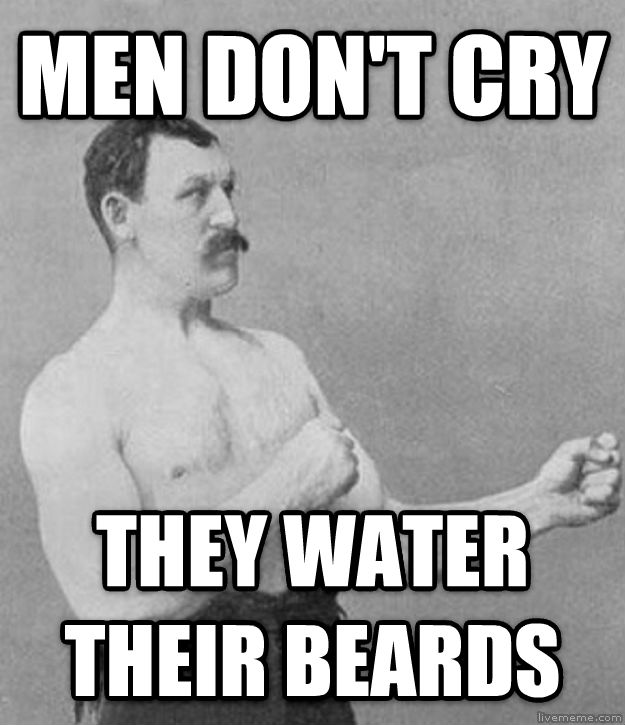
The other day I read an article from a pastor called, “5 Ways Your Church Can Be More Bro Friendly.” While I had hoped it would offer unique insight into ministry to men, it rather was merely the resounding gong against the “feminization of the church” – an accusation that is not new in conservative Christian circles. The answer to this horrible, horrible problem is to create a more masculine culture within the church.men don't cry

Barf.

Barf for a couple of reasons. First, the notion of what is masculine or feminine is not entirely static. It is fluid and changes from era to era and from culture to culture. Our notion of what it means to “be a man” today isn’t the same as it has been in our history or in the history of other cultures. This means that the ideals we’re promoting as “masculine” are not about biblical values but about our OWN notions and comfort. Second, the Bible clearly says that, in Christ, the cultural distinctions that exist in the world no longer have any value.

There is neither Jew nor Gentile, neither slave nor free, nor is there male and female, for you are all one in Christ Jesus. (Galatians 3:28)

It really shouldn’t matter how one does church, then. What we’re talking about is purely STYLISTIC differences and preferences, not anything that has a foundation in biblical truth. But for the sake of argument, let’s look at the author’s notions of what makes church better for men as opposed to a woman’s church.

1. Cast Compelling Vision – Pastor, if you want to keep men interested (especially men who are leaders), you must give your people a clear picture of where your organization is going and why you believe God is leading you to go there.

He fails to prove that this is a masculine characteristic. Rather, this is a HUMAN characteristic. Who wants to follow an aimless person? Men AND women want a clear picture of where and why organizations are heading in a particular direction.

2. Masculine Design – From the titles of sermon series, to the church’s logo, to the stained concrete replacing the carpet, even special parking for guys on motorcycles…

Ah, here it is. This is “preference central.” It’s not about any universal truth. It’s about stereotypes of what the author considers masculine and feminine. It’s about design, not truth. Now carpet is feminine? I happen to LIKE cushioned seats, but I guess real men prefer to have a numb butt by the end of a manly sermon – no cushions for those bros. And the stereotype about motorcycles? Yikes! I need to introduce this guy to my friend Junie, one hard-core female biker who attended a church I pastored. This guy’s stereotypes are ridiculous.

3. Involve Men in Projects – we are naturally fixers and doers.

Another laughable stereotype. I’ve known many women who are fixers and doers (and if my wife, mother-in-law, and sister-in-law are reading this, please know that I love you very much and I’ve got some projects that need to be finished when you have the time). Really, it’s a personality thing and not a gender thing.

4. Avoid Being Overly Emotional – Spiritual matters are emotionally heavy. Emotion should certainly be expressed in healthy ways. Too much of it from pastors or worship leaders may be perceived as weak and become a turn-off to many men.

manly-manYes! We want manly men to lead our churches. We don’t want any sissy poetry-spouting men. Give us real men like King David. Hey, wait a minute….

I’m emotional. I know emotional pastors, professors, even military commanding officers. Gimme a break.

And finally…

5. Challenge/Truth – Men starve to be given truth– good or bad, and typically are insulted by a shallow watered-down approach.

Pure garbage. I’ve known many men that prefer a shallow, feel-good message as opposed to a challenge. I’ve known many women who step up to challenges and HATE hearing shallow drivel.

Please STOP the stereotyping. People are people, and people are more unique than your gender stereotypes allow for.

But if you want to argue about it, let’s step outside and settle this like men.

——————————————————————–
I welcome all discussion, just keep it civil and polite. If this post resonates with you in any way, please share it on social media or email.